Heads up! David Vine on C-SPAN this weekend

by Barbara Miller

In three C-SPAN airings this weekend, David Vine  discusses his research on the presence of a US military base on the island of Diego Garcia in the Chagos Archipelago in the Indian Ocean. In his book, Island of Shame: The Secret History of the U.S. Military Base on Diego Garcia, Vine describes how the establishment of the base involved the forcible eviction of the 1500-2000 residents by the Americans and British in the late 1960s and early 1970s. The exiled Chagossians now live in poverty and social marginalization in Mauritius, the Seychelles, England, and  elsewhere while the base on Diego Garcia continues to be important to US military efforts as a launch pad for aircraft used in Iraq and Afghanistan. 

Vine’s research included interviews with many Chagossian refugees, and his book includes their voices. He also  provides a critical review of “the bases of empire,” “the strategic island concept,” and the use of military secrecy. Near the end of the book, he offers his views on “what we must do” to redress the damage, prevent future harm, and enable the refugees to return to their homeland immediately.

David Vine is assistant professor of anthropology at American University and an advocate for the Chagossian movement for a right of return. His book has received wide coverage including a major article in the New York Review of Books and high praise for his meticulous research, clear exposure of the links between imperialism and racism, and unflinching stand for the rights of the refugees to return.

Photo, “Diego Garcia (very small island)”, from Flickr via Creative Commons.
Dr. Omar McDoom @ GW on Thursday

To all our readers in the D.C. area, Dr. Omar McDoom, lecturer of political science at the London School of Economics (and a GW Elliott School alum), will give a presentation as part of our Culture in Global Affairs Research and Policy program. Details below.  Hope to see some of you there.

“Why They Killed: Security, Authority, and Opportunity in Rwanda’s Genocide”

Presented by Dr. Omar McDoom

Thursday, September 17, 7:00 – 8:30 p.m.

1957 E Street NW, Lindner Family Commons (6th Floor)

To RSVP, email grahamhc@gwu.edu

Listen to the people

by Barbara Miller

A feature of the Bulletin of the World Health Organization is called “Lessons from the Field.” This month’s features a report by Sabine Gabrysch and colleagues on a successful case of “cultural adaptation of birthing services” in rural Ayacucho, Peru. The project took two years and included detailed formative research, design of a new culturally adapted model, implementation, and evaluation of implementation and impact.

The problem was that birthing clinics, based on a Western model, were underutilized by women in the region for deliveries. After the “culturally adapted” birthing centers were provided, the number of births at the centers increased. The assumption is that maternal and child health will be improved by use of the center for birthing.

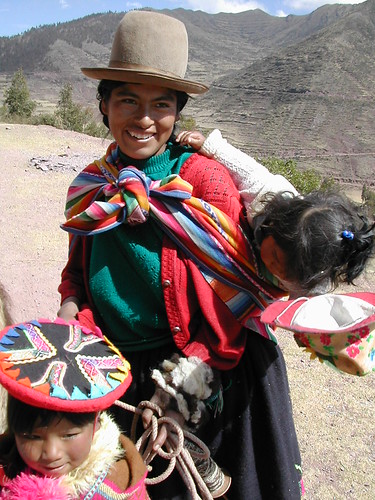
The increased number of births at the “culturally adapted” centers is attributed to a participatory approach which involved asking indigenous women about their views of what the center should provide in terms of services. They want staff to be able to speak Quechua. They want to be able to deliver squatting and not lying flat on their backs. They want the placenta returned to them for proper burial.

The centers took these factors into account including providing a rope and a bench in the delivery rooms to facilitate birthing in a crouched position. After a trial period, the professionals working at the centers agreed that it is possible to blend Western training in birthing with local preferences.

Thirty years ago, Brigitte Jordan’s path-breaking book, Birth in Four Cultures, was published. Among its many important lessons is that the Western way of birth is just one of many and one that has some costs along with its benefits. Brigitte Jordan pioneered the critique in cultural anthropology of Western birthing. More recently, Robbie Davis-Floyd, in her several publications, has helped moved it into the mainstream of anthropology and beyond.

It is wonderful, of course, that Gabrysch and colleagues have learned the lesson of why “professionals” must listen to the people and shrug off the choking cloak of their authoritative knowledge. But I fret that it continues to take so long for the professionals to learn. So many decades, so much grant money, so many lives lost and withered because we didn’t listen to them. It’s not rocket science.

Photo, “woman and children”, from Flickr via Creative Commons.

Anthro in the news 9/14/09

• A guest editorial by Nancy Scheper-Hughes in the August issue of the journal Anthropology Today on public/engaged anthropology was picked up by the British publication Times Higher Education on September 3. Scheper-Hughes argues that anthropologists should be publicly engaged but that universities do not reward public roles and contributions. UK academics, according to the article, are facing increased pressure to make their research relevant to public issues and thus face the challenge of how to convince their academic employers to recognize such contributions.

Hugh Gusterson, professor of anthropology at George Mason University is quoted in an article on the Human Terrain System (HTS) in the September 8 issue of Foreign Policy. Gusterson emphasizes that, according to the longstanding code of ethics of the American Anthropological Association, “The prime directive is that you do no harm to informants” and that the information produced by Human Terrain teams is “inherently double-edged” because, while it may indeed reduce the amount of force by providing leaders alternative courses of action such as negotiation or a development project, it can also be accessed by military intelligence who may use it to target Taliban operatives. Gusterson argues that involvement of anthropologists with the HTS may taint the entire discipline with a reputation of miilitary collaboration.

• It’s fascinating to observe when the mainstream media do and do not mention that a particular high visibility person is an anthropologist. Paul Farmer, for example, is often described as a charismatic doctor with no mention of his being a medical anthropologist with a PhD from Harvard. Ashraf Ghani, who recently ran for president of Afghanistan, has a PhD in anthropology from Columbia and taught anthropology before joining the World Bank and then serving as Minister of Finance in Afghanistan. His World Bank and government credentials tend to be given center stage. Much less frequent is the attribution of “anthropologist” to someone who isn’t. In the September 8 article in Foreign Policy, we are told that David Kilcullen, who played a key role in developing the Human Terrain System has a PhD in anthropology. He does not. He earned a PhD in politics at the University of New South Wales. His dissertation was based on ethnographic research carried out in Indonesia and South Timor, so he stands as a prominent example of a non-anthropologist who uses anthropological methods. It is perhaps significant that, as opposed to a U.S. anthropologist, Kilcullen (an Australian who is not an anthropologist) plays such an important role consulting for the U.S. Department of State in its war efforts and in promoting the use of social scientists, especially anthropologists in the HTS.

Are teens subconscious online racists?

Guest post by Chenkai Zhu

In a recent talk titled “The Not-So-Hidden Politics of Class Online,Danah Boyd used ethnographic methods to study the ways American teenagers engage social media websites like MySpace and Facebook. Boyd suggested that when teens choose one social network over the other, they reveal as much about their own self image as their choice did about the demographics of the community.

Take a look at the comments Boyd records in the section titled “MySpace vs. Facebook,” which respond to her questions, “Do social networking choices have unintentionally racialized effects?” and “Do these choices accurately reflect race-based divisions in real life?” Many of the teens say their network-selection is based on practical, technical and aesthetic preferences, not racial or class-oriented ones.

But it seems to me that a person’s race, ethnicity and class surely shape her or his practical, technical, and aesthetic preferences. How could it be otherwise?

Boyd challenges us to recognize that our everyday practices on the internet – from the way we type to the layouts we prefer, even our sense of humor and aesthetic taste – separate us along racial and social lines from people we have never known, seen, or interacted with.

For me, the bottom line is: Are social networking choices political? Ethnographic methods, which can get beyond the surface of what people say about what they do and why they do it, often reveal patterns that may be subconscious. Ethnographic data can be a rude awakening, but it can reveal to us the unintended effects of our choices.

Chenkai Zhu is a junior at The George Washington University majoring in international affairs and Asian studies. She spent the summer of 2007 in Shaoxing, southern China, conducting ethnographic research on how tourism and urban development have affected residents of the city. Her research was funded by a Cotlow Award from GW’s Anthropology Department. She is currently interested in the ways Sino-Latin American relations can influence indigenous peoples in the Andes.

Photo, “My social network…,” via Flickr user luc legay, courtesy of Creative Commons.

Chimpanzees eat the ants, and we eat the chimpanzees

By Barbara Miller

Chimpanzees and other nonhuman primates possess a range of cultural skills that enhance their lives. Depending on the species and location, these learned and shared capabilities include nest building, tool use to access choice food items such as ants and honey, greetings including the “raised hand clasp,” food preparation such as washing an item before eating it, and use of a leaf by males after sex for wiping off their penis.

Crickette Sanz, a professor of primatology at Washington University in Saint Louis, has devoted years to studying wild chimpanzee populations in the Goualougo Triangle, Republic of Congo. She and her co-authors have recently published important new findings about a “tool set” that chimpanzees use to access and eat army ants. The chimpanzees in several different communities use a wooden tool made from a sapling to perforate the ant nest. Then they use the flexible stem of a particular herb as a “wand” for attracting the ants from their nest so that the chimpanzees can eat them.

The more primatologists study nonhuman primates in the wild, especially the great apes, the more evidence they produce about the richness of nonhuman primate culture. But theirs is a race against time. Or, more aptly, a race against us and the ravages of “civilization” and consumerism.

The authors note: “Further research is needed to determine the ecological and social factors shaping the diverse and complex tool technology of these apes. There is an immediate need to conduct this research, as the conservation status of Great Apes in the Congo Basin is jeopardized by mechanical logging, bushmeat hunting, and disease epidemics…” (p. 6). Destruction of the habitat is also having detrimental effects on the ant population, especially army ants.

Protecting the chimpanzees and ants for science is definitely important and rational from the point of view of science. But isn’t there a larger reason? Shouldn’t the habitats, chimpanzees, and even the ants be protected for their own sake? And what about the local people whose ancestors have long lived in the region? If science can provide some muscle for organizations that lobby for regional habitat protection, then that’s certainly a good thing. An image of David and Goliath comes to my mind, with science facing off against massive commercial interests and greedy governments. But, after all, the small guy won.

Sanz, and a co-author, David Morgan, provide some practical insight into the complicated and urgent questions of preservation in a report prepared for the IUCN/SSC Primate Specialist Group, titled Best Practice Guidelines for Reducing the Impact of Commercial Logging on Wild Apes in West Equatorial Africa (2007).

What can we do? Change our consumption practices to rely more on pre-used items and to rely more on less stuff in general. Support organizations that work to protect the habitats where great apes and other primates live, as well as the indigenous/local populations:

The Great Ape Trust

Survival International

Cultural Survival

Map of Goualougo Triangle by David Morgan. Photo by Crickette Sanz. Special thanks for permission to use their images.

Anthro in the news 9/9

Interview with Jane Goodall

Jane Goodall’s contributions to primatology and primate conservation are monumental. In a brief interview with Cathy Areu that was published in the Sept 6 issue of the Washington Post Magazine, Goodall discusses her love of animals as a child, her meeting with Louis Leakey, her first visit to Africa, and her first experiences with a secondhand tent.

Decades later, as founder of the Jane Goodall Institute for wildlife research, education and conservation in Arlington, Va., she dedicates her time to protecting endangered primates. “It’s our responsibility to push forth and reach into people’s hearts and make them responsible for other animals on this planet. We’re part of this animal kingdom.”

Photo, “Jane Goodall”, from Flickr, via creative commons.

The nightmare lives on: Indian wars in our time

By Barbara Miller

An article in the Economist (“A national shame,” August 27, 2009) points the finger of blame at the Guatemalan government for the current high rates of childhood malnutrition in Guatemala, especially among the indigenous Maya people (August 29, p. 33). With almost half of its children malnourished, Guatemala is the sixth worst-performing country in the world on this measure.

Guatemala is not the poorest country in Latin America by any means. Other low-income Latin American countries such as Bolivia have reduced child malnutrition. So, the article says, government failure is to blame. The government is to blame for Maya victimization during the decades-long civil war and, now, for failure to put in place a progressive tax structure that would help improve life for impoverished Maya by providing schools and health care. The many very rich people in Guatemala City don’t seem to be listening.

But shouldn’t the finger of blame also point northward to the United States? The genocide and sustained trauma suffered by the Maya during the civil war have to do with hemispheric imperialism as well as state government failure (for more detail, see Jennifer Schirmer’s profile of human rights violations during the country’s civil war, The Guatemalan Military Project). The United States owes a huge debt to the indigenous peoples who suffered so much and who continue to be economically insecure in their own homeland. What does the Obama administration have in mind for Guatemala?

The Economist article says that the high rate of child malnutrition in Guatemala is a matter of national shame. That’s only partly right. We in the United States should be hanging our heads in shame and thinking of how to make things better for the people that our imperialism harmed so deeply.

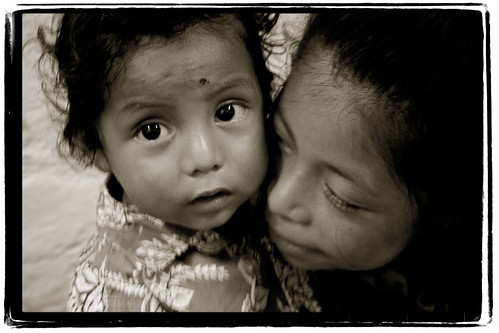
Photo, “Guatemala siblings”, via Flickr, Creative Commons.

Anthro in the news 8/31

New project to preserve endangered languages

Cambridge University has launched a project to help cultures under threat from globalization record their languages. The project, Oral Literatures, is led by the university’s Museum of Archaeology and Anthropology. It has awarded several grants already to collect myths, poetry and songs, among other aspects of people’s oral literature. The project leader is Dr. Mark Turin, research associate in cultural anthropology. He believes that protecting endangered languages and cultures is an “urgent challenge.”

Anthropologist creates medical knowledge network

Amy Farber had a doctorate in anthropology and was studying for a law degree in 2005 when she learned she had a rare and fatal disease called LAM that destroys young women’s lungs. She dropped out of law school and founded the LAM Treatment Alliance to raise money, connect patients around the globe and promote greater scholarly interchange among scientists worldwide who are working on the disease. Dr. Farber hopes and believes that online communities have the potential to transform medical research and improve patient care. The New York Times ran a fascinating article about her story last week.

Biological anthropologist enters the running shoe debate

Daniel Lieberman, professor of evolutionary biology at Harvard University, has researched the role of running in human evolution. Today, the sale of shoes designed to cushion impact on the feet of contemporary leisure runners is big business. A best-selling book by Christopher MacDougall, Born to Run, argues against running shoes. He presents information about the Tarahumara Indians of northern Mexico to back up his position. Tarahumara men and women run very long distances with only strips of rubber on their feet. Lieberman is quoted in the New York Times business section as saying “There’s not a lot of evidence that running shoes have made people better off” (p. 7).

Finally smoked ’em out

Guest post by Graham Hough-Cornwell

It has been surprising to find so little fuss in the blogosphere over the newly-passed smoking ban in Iraq. Articles on the subject have tended to express some sense of dismay or curiosity, a sort of “why now?” feeling that puts the Iraqi parliament’s priorities into question. With the most basic of services to worry about – security, electricity, etc. – does it make sense to take up this kind of cause at this particular moment?

The measure would ban smoking from all public places, and supposedly may include additional provisions down the road to ban smoking in private vehicles, too. Though certainly a forward-thinking measure and a positive step for public health, it comes with an oddly harsh penalty (the fine is equal to $4,300) that surely few Iraqis can afford to pay. And I can’t imagine many Iraqi smokers are enthusiastic about taking their cigarettes onto street corners in the midst of this month’s recent rash of attacks.

Yet of all the countries in the region, how come Iraq is among the first to potentially ban smoking fully in public places? A few have detailed the ingrained culture of smoking in the Arab world – from friends smoking sheesha in coffeehouses to the myriad members of Iraqi parliament lighting up in their offices. Others still have wondered about American troops – with possibly up to two-thirds of American soldiers in Iraq smokers, how could the ban affect them and their morale?

Perhaps most interesting is the medical anthropological angle; that is, how the knowledge of health problems associated with smoking is imparted, and how it interacts with cultural practices. It would be interesting to see some examples of smoking education in Iraq, or from other countries in the region (such as Jordan, which has a public ban in place). I find myself very curious about the cultural backlash or resistance to the ban, but then again, there was and is resistance to similar bans in the United States – by smokers and businesses, in particular – but that has not measurably slowed its progress.

Graham Hough-Cornwell is an M.A. candidate in Middle East Studies at the Elliott School of International Affairs, The George Washington University.

Image: “Smoking Kid,” licensed under Creative Commons on Flickr.