anthro in the news 3/27/17

Source: Heatlhextent.com

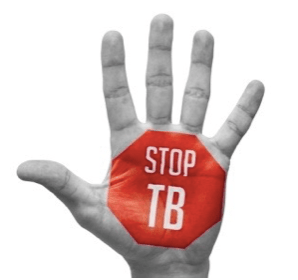
TB is winning

In a piece in The New York Times, medical anthropologist and professor at Harvard University, doctor, and health care advocate Paul Farmer writes: “One of TB’s lamentable champions is a common strain of public-health expertise, which has long lowballed what it takes to cure tuberculosis and halt transmission of increasingly resistant strains of it. A host of ill-conceived and unambitious policies have all but ignored TB’s innovations. That’s why humans aren’t winning the war against TB, which last year killed 1.8 million people, regaining its old title as the world’s leading infectious killer of adults. Happy World TB Day.”

World TB Day was March 24.

Society for Applied Anthropology meetings
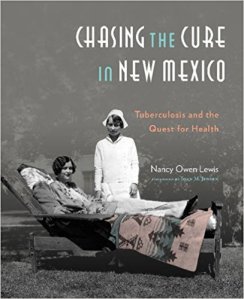
The Santa Fe New Mexican reported on the annual meeting of the Society for Applied Anthropology, being held in Santa Fe from March 28 through April 1. The article spotlighted the work of Nancy Owen Lewis including her comments from an interview. Lewis is a School for Advanced Research (SAR) scholar-in-residence and chairwoman of the SfAA conference. The conference has the theme of Trails, Traditions, and New Directions. Its 280 page-long program lists scores of presentations by experts on topics in physical anthropology, archaeology, and cultural anthropology. Lewis’ most recent book, Chasing the Cure in New Mexico: Tuberculosis and the Quest for Health, was published last year by the Museum of New Mexico Press.  In the interview, she said discussions related to Trump administration policies “will thread through the conference,” noting that one presentation confronts a White House initiative head-on: the Crucial Conversations roundtable on Sanctuary vs. Sanctions looks at Trump’s xenophobic stance on sanctuary cities like Santa Fe.


Continue reading “anthro in the news 3/27/17”

anthro in the news 3/20/16

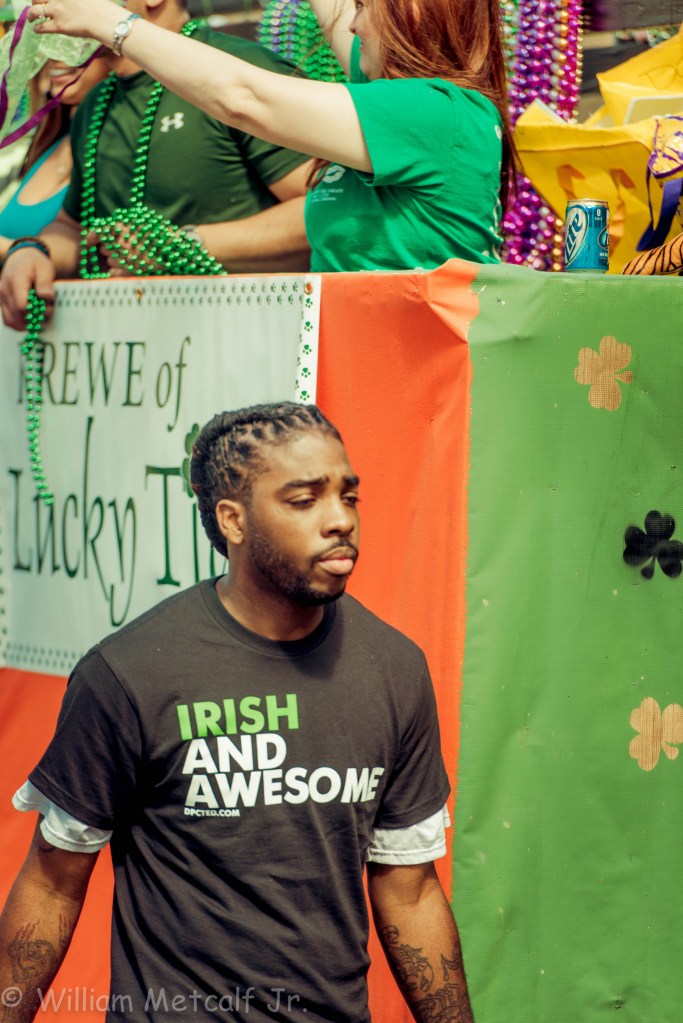
celebrating St. Patrick’s Day in Baton Rouge, Louisiana, 2013 Source: thepipe26, Wikimedia

holidays and sociality

The Daily Item (Sunbury, PA) carried an article about local celebrations of St. Patrick’s Day, noting that  restaurant and pub owners don’t need much Irish luck when it comes to bringing the crowds out on St. Patrick’s Day, especially when it falls on a Friday. The article quotes Clare Sammells, associate professor of anthropology at Bucknell University, who said holidays are designed to bring people together: “Consuming something with someone re-enforces kinship.” Sammells explained St. Patrick’s Day started out as a more somber holiday in Ireland, but it became more lively and communal in the United States as more Irish immigrants arrived: “St. Patrick’s Day became a way to celebrate their Irish- American heritage and their recent immigration to the United States.” But it was also an opportunity to show their fidelity to their new country and improve their public image. [Blogger’s note: I have a hunch that, at least in the DC area, people who have no genetic or cultural connection to Ireland nevertheless find St. Patrick’s day a good reason to party – a kind of social solidarity with fuzzy social boundaries, and often the fuzziness is created by Guinness perhaps].

salad cake

Caption: Mitsuki Moriyasu, a cafe owner and food stylist, invented the Vegedeco Salad as a guilt-free alternative to traditional baked goods.

CNN reported on a food innovation from Japan: salad cake. It is made to look like a sugary dessert cake but the ingredients are vegetables including tofu. Salad cakes, which can be eaten for breakfast, lunch, or dinner, are said to have a unique taste.  The article includes comments by cultural anthropologist Merry White of Boston University: “The salad cakes represent attention to detail … and perfectionism…Food is, and has always been, a place for creativity and innovation in Japan. Salad cakes are just one manifestation of food play in that nation.”


Continue reading “anthro in the news 3/20/16”

anthro in the news 3/13/17

Source: Google Images Commons

not all lives are equal 

Al Jazeera published an op-ed by Alex Shams, anthropology doctoral student at the University of Chicago:  “Earlier this week, Donald Trump announced a new executive order to ban refugees and immigrants from six Muslim-majority countries. Hidden in the new order is a clause that says the United States government will begin tracking and publicizing, “honour killings” committed by foreign nationals in the US. The idea draws upon a programme Trump unveiled last week that will track crimes committed by undocumented immigrants, part of an effort to show the unique threat they pose to American lives. These laws are not intended to protect these lives. They rest on the idea that human life has a different value based on nationality, and that the life of an American killed by a foreigner has greater worth than a foreigner killed by an American. There is no other way to justify a law that intends only to highlight victims based on the national origin.”

standing up, speaking up

Source: Rony Michaud, Google Images Commons

CBC News (British Columbia) reported on the contribution of John Wagner, professor of anthropology at the University of British Columbia, in detailing problems with the new water city plan in Kelowna, Canada. Wagner argues that areas like the South East Kelowna Irrigation District where he lives will be left underfunded and unable to accomplish upgrades needed to improve water quality: “I feel like I’m being discriminated against because my water utility, unlike the City of Kelowna or regional district water utilities, cannot get the infrastructure support we need to upgrade our service.”


Continue reading “anthro in the news 3/13/17”

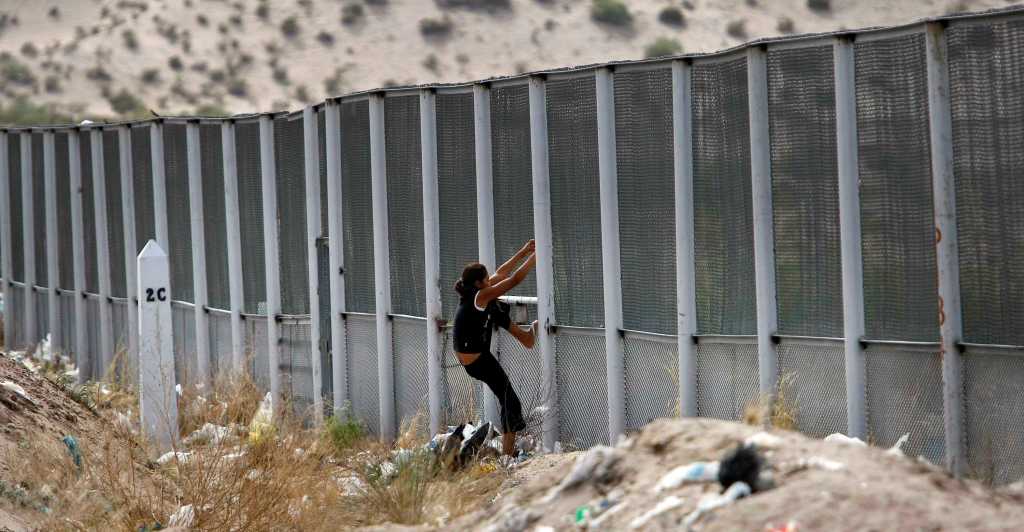
presentation explores dangers of crossing the border

A young Mexican national climbs on a section of old pedestrian barrier fencing on the U.S. and Mexico border near Rancho Anapra, Chihuahua Mexico Tuesday, May 6, 2008. The young woman was climbing the fence to get a better look at US Porder Patrol agents working the other side. (Tom Pennington/Fort Worth Star-Telegram/MCT)

Jason De Leon, an anthropology professor at the University of Michigan, journeyed to San Diego State to host the 23rd annual Adams Lecture in the Humanities, held by the SDSU Department of Classics and Humanities on Feb. 7.

De Leon is the director of the Undocumented Migration Project, which is an anthropological study of border crossings into the United States from Latin America, according to the University of Michigan website.

The study uses ethnographic, archaeological and forensic approaches to scrutinize these movements along both the U.S.-Mexico border in Arizona, and the southern border of Mexico with Guatemala.


Continue reading “presentation explores dangers of crossing the border”

anthro in the news 3/6/17

Source: Google Images Commons

science education K-12 must include humans

The Idaho Statesman published an op-ed by John Ziker, chair of the anthropology department at Boise State University in Idaho, with contributing writers Katherine Reedy, anthropology chair at Idaho State University, and archaeologist Mark Warner of the University of Idaho Moscow. They write: “We urge the Idaho Legislature to adopt the standards for Idaho’s K-12 science students that include the science of human activities on the global environment. Preparation of the next generation to tackle this great challenge of the 21st century is at stake.”

Trump deters international scholars

As reported in The Albuquerque Journal (New Mexico), Trump’s immigration policies and statements are having a negative effect on international scholars. [Blogger’s note: I realize that Trump would not be at all concerned about this situation because he is anti-scholarship, but “we” are]. Nancy Owen Lewis, research associate at Santa Fe’s School for Advanced Research and program chair for the annual Society for Applied Anthropology (SFAA) conference, said a frequent conference attendee who is Muslim, Mexican scholar Salomon Nahmad, will not come this year. She is quoted as saying that Nahmad “was so distressed with Trump’s policies and attitudes towards immigrants,” he didn’t want to risk it.


Continue reading “anthro in the news 3/6/17”

anthro in the news 2/27/17

Multiculturalism. Source; True Tube U.K.

assault on multiculturalism

The Huffington Post published an article by Paul Stoller, professor of anthropology at West Chester University in Pennsylvania. Stoller is a frequent contributor to The Huffington Post as well as a public lecturer and commentator on National Public Radio programs and the National Geographic Television Network. Stoller writes:

“There is an unmistakable assault on multiculturalism in America. Millions of Americans have come to believe that life was better in the past when multiculturalism was barely known and little practiced. Critics of multiculturalism suggest that it is a potential poison that could lead to social and cultural decline. Walter E. Williams, a professor of economics at George Mason University and a prominent critic of multiculturalism, provides a typical argument against it. ‘Multiculturalists argue,’ he wrote in a recent widely circulated op-ed, ‘that different cultural values are morally equivalent. That’s nonsense. Western culture and values are superior.’ [Blogger’s note: Money from the Koch brothers and other wealthy donors supports extremely conservative research and teaching, in economics especially, at George Mason University, including funding of its think tank, the Mercatus Center. Williams is John M. Olin Distinguished Professor of Economics, a position funded to some extent at least in the past by the conservative Olin Foundation. My kudos to universities across the U.S. that have refused such funding.]

cultural revival in New Zealand

A selection of Taonga pūoro from the collection of Horomona Horo. Source: Wikipedia

New Hubs (New Zealand) reported on the appointment of Rob Thorne, an anthropologist and musician, the first in his field to be named as composer-in-residence at Victoria University. Thorne is a specialist in Taonga Puoro, Māori instruments, and, along with others, is helping to revive interest in their distinctive sound. Thorne says playing the distinctive sounds of Taonga Puoro has brought him closer to his culture: “The greatest thing that I may have learned about my own culture is that we were very deeply artist and musical.” Traditionally the instruments were used in entertainment, when planting crops, to sound a warning in warfare, and to communicate with the gods. [with audio].


Continue reading “anthro in the news 2/27/17”

anthro in the news 2/20/17

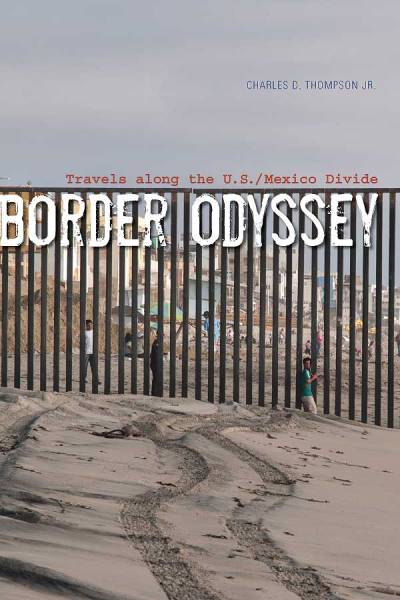
9780292756632

not “beautiful”

A letter to the editor by Charles Thompson appeared in The New York Times. He is professor of cultural anthropology and documentary studies at Duke University and author of Border Odyssey: Travels along the U.S.-Mexico Divide. His letter responds to an earlier article in The New York Times, Life Along the U.S.-Mexico Border:

I have traveled the roughly 2,000 miles of the border and have witnessed every section of the wall up close. I have visited with dozens of people along the way and crossed at every crossing. I have learned these truths: The border wall is ineffective except for killing the poorest migrants and wildlife. It is a colossal waste of money and does little to prevent violence or curtail drugs. There is nothing “beautiful” about it. Instead of keeping us safe, our wall sends a message to our southern allies that we have closed off all communication. Any talk of a new wall serves only to underline our lack of imagination for solving problems collaboratively. I reject this symbol for the land of the free.

anthropology day

anthroday_button-width-600The Huffington Post published a piece called “What Is This Anthropology Anyway?” by Therese Muranaka, a retired California State Parks archaeologist who taught anthropology part-time for many years:  In honor of Anthropology Day on February 16, help the Anthropology students in your life celebrate the inherent value of their discipline. For those of you with college children not majoring in Anthropology, suggest an Anthropology minor. Those of you able to do so, take a community college or continuing education Anthropology class. Nothing would be more broadening of your horizons. The world is a very, very big place.” 


Continue reading “anthro in the news 2/20/17”

anthro in the news 2/13/17

Contemporary version of a blue-eyed doll Source: covermyfb

dolls in international relations

The Japan Times published an op-ed by Hirokazu Miyazaki, professor of anthropology at Cornell University and director of its Mario Einaudi Center for International Studies: “One hundred years ago this month, the U.S. Congress passed the Immigration Act of 1917. The law was intended to keep out broad categories of immigrants, including those who were illiterate, indigent or mentally ill. It also barred entry to people from wide swaths of Asia and the Pacific. Japanese and Filipinos were exempted, but seven years later President Warren Harding pushed through an even stiffer measure, the Immigration Act of 1924, which extended the restrictions to citizens of Japan. The Japanese government protested, as did many American citizens and civil society groups. When it became clear there was little chance of changing the minds of the president or Congress, a man named Sidney Gulick decided to turn his attention to the next generation.” And thus began the exchange of dolls between Japan and the U.S. 

reflection on racism in the U.S.

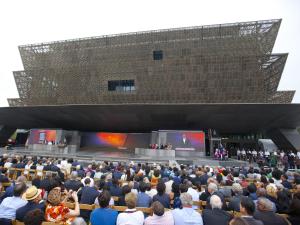
Caption: President Barack Obama speaks during the dedication ceremony for the Smithsonian Museum of African American History and Culture in Washington, D.C., on September 24, 2016.
Source: Pablo Martinez Monsivais/AP
Caption: President Barack Obama speaks during the dedication ceremony for the Smithsonian Museum of African American History and Culture in Washington, D.C., on September 24, 2016.
Source: Pablo Martinez Monsivais/AP

The latest piece on U.S. public radio by Barbara J. King, emerita professor of anthropology at the College of William and Mary, is a reflection on her visit to the Museum of African American History and Culture in Washington, D.C. “As I walked along, I experienced moments of emotion. Yet I was also aware, acutely so, that for some people also visiting the museum that afternoon, a ‘highly personal moment’ would be rooted in experiences I could never truly fathom. For decades, I taught College of William and Mary students about race and racism from the point of view of anthropology — explaining that race is not a biologically meaningful category, and sharing the American Anthropological Association’s statement that ‘the racial’ worldview was invented to assign some groups to perpetual low status, while others were permitted access to privilege, power, and wealth.” A white American, she concludes by commenting that teaching important facts is not the same as living them. 


Continue reading “anthro in the news 2/13/17”

best cultural anthropology dissertations of 2016

Here are my 50 cultural anthropology dissertation selections for 2016. As in past years, my search was based on Dissertation Abstracts International, an electronic database available through my university library which consists of almost 100 percent U.S. dissertations. As always, I rely only on the abstract of each dissertation as the basis for my selection. I have taken the liberty of trimming long abstracts so that all entries are roughly the same length. My apologies to the authors for any possible offenses created by my editing.

The search terms I used reflect the focus of the anthropologyworks blog: food, resources, and livelihoods; power and politics; health; conflict and violence; population dynamics; stratification including race, class, gender, and age; activism, programs and policies; and the importance of cultural anthropology in describing and analyzing the complexity of these topics within particular and changing contexts – local, regional, and global. 

The selected dissertations of 2016 offer a rich array of topics and approaches. Health-related research predominates. Other recurrent subjects are politics and power, migration, rights, and the effects of policies and programs. Cities are a notably frequent site, while several studies are based on multi-sited research. 

Congratulations to writers of these 50 dissertation. Best wishes to you all.

See also the best cultural anthropology dissertations of 2009, 2010, 2011,20122013, 2014, and 2015.


Continue reading “best cultural anthropology dissertations of 2016”

anthro in the news 2/6/17

Bet for Nothing. Source: Hapal. Flickr Creative Commons

trumped-up conflict with Iran

The Berkeley Daily Planet published an opinion piece by William Beeman, professor of cultural anthropology at the University of Minnesota. In his view, “…the Trump administration appears to be renewing the possibility of violent confrontation with Iran using a questionable pretext—Iran’s testing of conventional missiles. No one in the U.S. government or the press seems to understand that Iranian ballistic missiles do not fall under the Joint Comprehensive Plan of Action, or JCPOA (the ‘Iran Deal’). The JCPOA has nothing at all to do with conventional weapons, only nuclear technology. The current controversy over Iran’s missile testing has entirely to do with interpretations of United Nations Security Council Resolution 2231 (20 July 2015), which endorsed the JCPOA after it had been ratified. UNSC Resolution 2231 stated flatly that ALL of the previously existing UN sanctions against Iran were terminated…”

view of U.S. politics from Japan

World. Source: David Flores. Flickr Creative Commons

The Japan news reported on a 2016 poll in the U.S. asking how much the United States should be involved in international disputes. Fifty-three percent of Democratic Party supporters responded that the United States should keep its current level of involvement. Republican Party supporters’ views were divided: 40 percent called for reduced involvement, 30 percent for the current level of involvement and 29 percent for increased involvement. The article includes commentary from Yasushi Watanabe of Keio University, who specializes in cultural anthropology and United States studies. He interprets the results as “indicative of the divide within the Republican Party between the interventionist mainstream and the isolationist Trump supporters.”


Continue reading “anthro in the news 2/6/17”