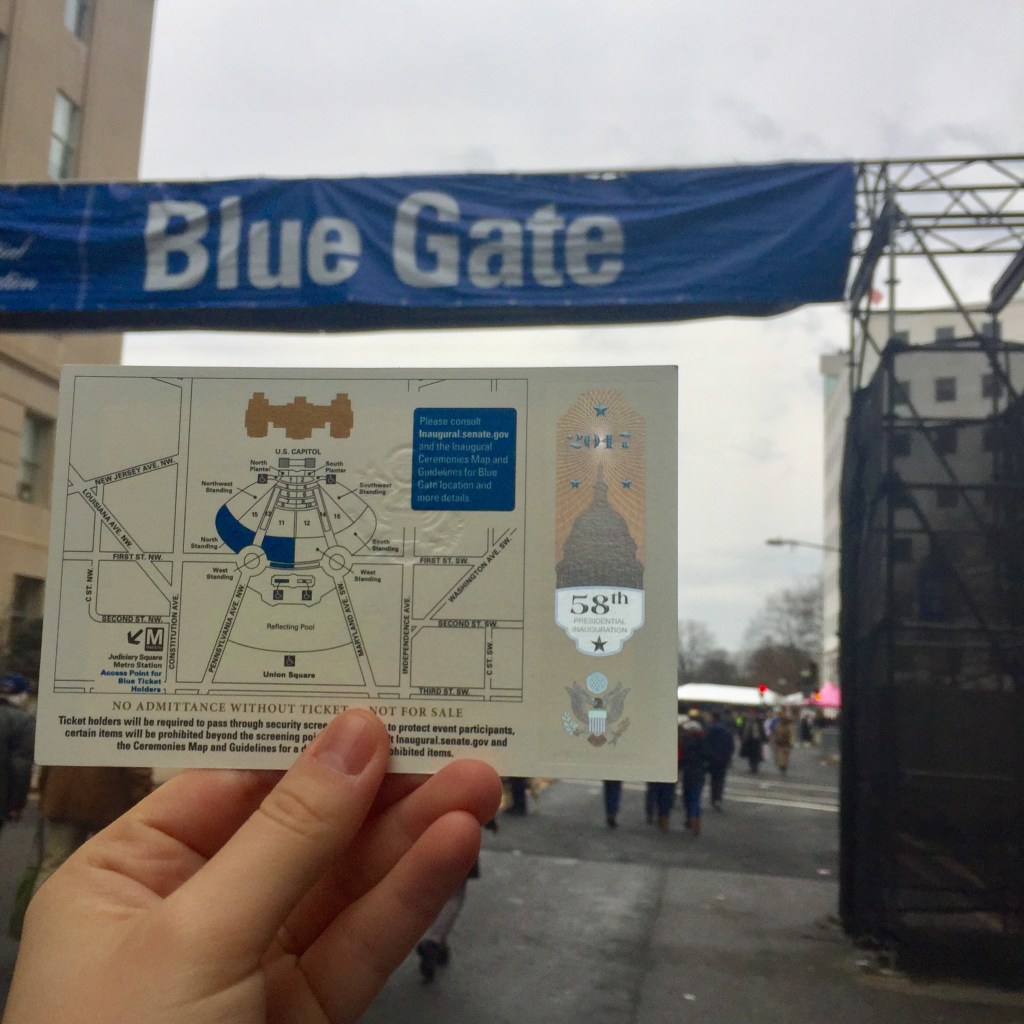
the U.S. inauguration 2017 from the ground through foreign eyes

Source: Crystal H. Rie
The blue ticket for the 2017 Inauguration Source: Crystal H. Rie

On January 20th 2017, Donald J. Trump became the 45th President of the United States. This was a historic moment for the U.S. in many different ways and depending on your political views you can judge the context around this inauguration, and the 2016 election as a whole, for yourself. But I am not here to do that. What I am here to do is to talk about what I observed on that fateful day. First, however, I would like to tell you a little bit about my background to illuminate the position which I was observing this event from.

I am a South Korean national who came to the United States to attend college in 2008, and I have alternated living in the U.S. and Korea since then. In 2015, I came to Washington, D.C. to pursue a master’s degree in Asian Studies. Although I live in the hub of politics and policy, my interests and passions diverge from what the city is typically known for. I am enthusiastic about studying the transformation of culture in historical contexts. As a result, this post does not intend to analyze politics or policies behind the inauguration; rather, this is my personal observations of the events of that day, from a foreigner’s perspective. Continue reading “the U.S. inauguration 2017 from the ground through foreign eyes”
anthro in the news 1/30/17

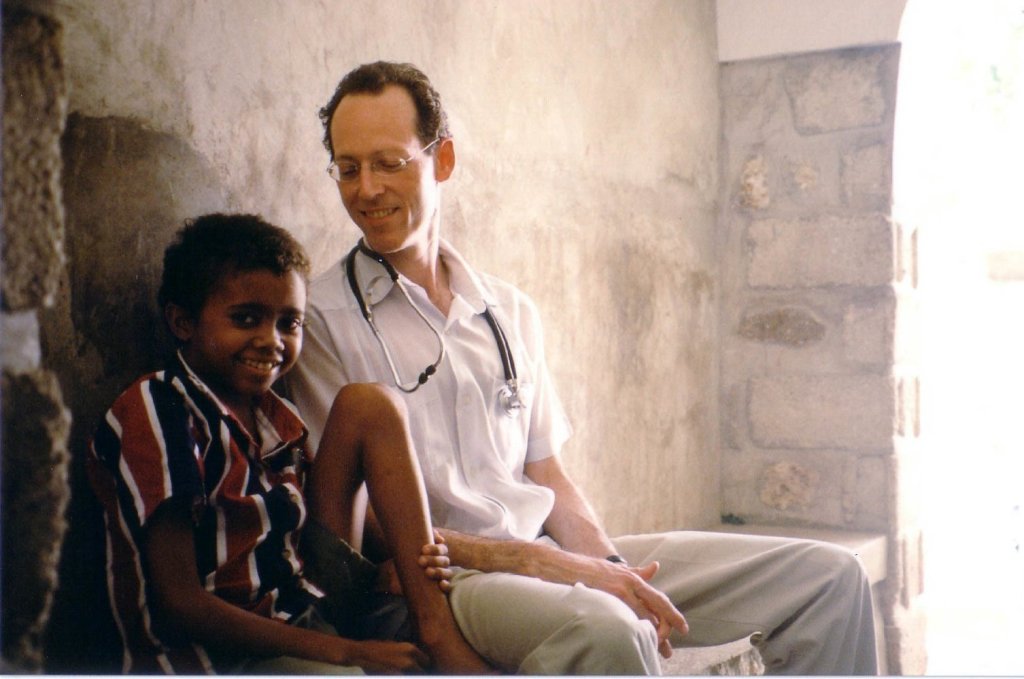
Paul Farmer, physician and medical anthropologist, at a Partners in Health clinic Source: Bending the Arc website
Paul Farmer, physician and medical anthropologist, at a Partners in Health clinic
Source: Bending the Arc website

documenting care and hope

As reported in the Salt Lake Tribune the Sundance Film Festival premiered a documentary, called Bending the Arc, about Partners in Health (PIH). Co-founded by medical anthropologists Paul Farmer and Jim Yong Kim, PIH employs 18,000 people and brings health care to many  communities around the world.

fact checking

The Earth is Flat After All, by Ray. Flickr Creative Commons

Barbara J. King, professor emerita of anthropology at the College of William and Mary, contributed a piece to National Public Radio (U.S.) in which she discusses recent statements made and actions taken by the Trump team, providing a science fact check for each. Topics include climate change, vaccines and autism, human rights, and human evolution.


Continue reading “anthro in the news 1/30/17”

anthro in the news 1/13/17

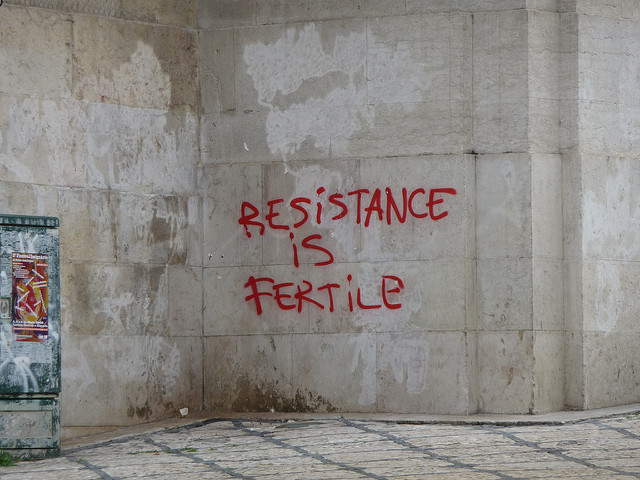
 Graffiti in Lisbon, 2009 Source: Dan Benton, Flickr Commons
Graffiti in Lisbon, 2009
Source: Dan Benton, Flickr Commons

public anthropology in the time of Trump

Paul Stoller, professor of anthropology at West Chester University, published a piece in The Huffington Post, describing some public events organized by anthropologists around the Trump inauguration. He argues that anthropologists and other social scientists have the responsibility not to just produce knowledge but to move it into the public domain, and that this task is especially urgent now as a form of resistance to anti-social policies. [Note: one such event, hosted by Georgetown University, included a cultural anthropologist among the panelists; it has been headlined by Breitbart.com as a session for “instructing students” in “how to resist the Trump presidency” – in other words, it was more like brain washing than consciousness raising in their view. Thanks to Graham Hough-Cornwell of Georgetown for alerting me, via Facebook, to the Breitbart article.]

rethinking schizophrenia

Foreign Policy published an article reviewing new research on schizophrenia that offers a culturally-informed critique of the bio-psychiatric model. The article mentions the work of Juli McGruder, professor emerita of anthropology and occupational therapy at the University of Puget Sound. Her research in Zanzibar indicates that anyone who violated social norms, including speaking out of turn to hallucinating, is viewed as possessed by a spirit. Rather than stigmatizing them, their communities offer support. Research by Stanford University anthropology professor Tanya Luhrmann points in a similar direction. She and colleagues interviewed voice-hearers in the United States, India, and West Africa. Americans were more likely to hear voices that threatened and belittled, while participants in other countries heard family members, friends, or deities, and engaged in conversations with them. Luhrmann is quoted as saying: “I think the consequence of the American idea that the mind is broken is so horrifying and upsetting for people that they feel assaulted by these voices.”


Continue reading “anthro in the news 1/13/17”

anthro in the news 1/17/17

Friday the 13th fears

The Apopka Voice (Florida) carried an article about the roots of fear surrounding the date of Friday the 13th. The article includes commentary from Phillips Stevens Jr., associate professor of anthropology at Buffalo University:  “Most buildings don’t have a 13th floor, you won’t find 13 people seated a table and some airlines don’t have a 13th row…The taboo comes directly from Biblical stories.” The main story is that of the Last Supper.

picture1
source: The Telegraph

silencing sanctuary

picture2
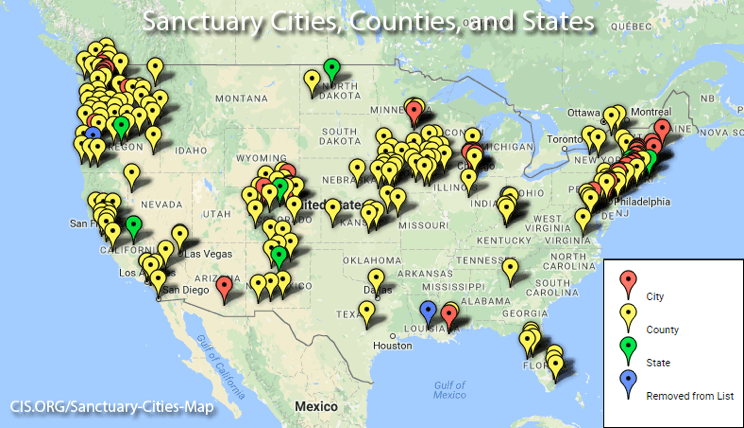
Sanctuary sites in the U.S., January 2016. source: Center for Immigration Studies

The Centre Daily (Pennsylvania) reported on a teach-in on immigrants’ rights held at Penn State University and organized by its Immigrants’ Rights Clinic. One speaker, Linda Rabben, associate research professor of anthropology at the University of Maryland and author of Sanctuary and Asylum: A Social and Political History, said universities are often directed by their lawyers not to use the term “sanctuary.” She referenced a letter signed in December by Penn State President Eric Barron, and more than 400 other university presidents in support of DACA (the policy on deferred action for childhood arrivals), noting that nowhere in the letter was “sanctuary” mentioned. “But just because it isn’t mentioned, doesn’t mean people aren’t going to seek it,” Rabben said.

Continue reading “anthro in the news 1/17/17”

anthro in the news 1/11/17

22GENDERLESS-4-1482326457051-master675.jpg
Toman Sasaki, a genderless danshi, at a Japanese shopping mall where he performed with his band, XOX. source: Ko Sasaki for The New York Times

gender blending in Japan

The New York Times carried an article describing how some young Japanese men are bending fashion gender norms, coloring their hair, wearing colored contacts, and applying brightly colored lipstick. The small but growing group of “genderless danshi” (danshi means young men in Japanese) are developing a public identity and sometimes a career out of a new androgynous style. The article quotes Jennifer Robertson, professor of anthropology and the history of art at the University of Michigan: “It’s about blurring the boundaries that have defined pink and blue masculinity and femininity…They are trying to increase the scope of what someone with male anatomy can wear.”


Monsanto as the “big bad” of GMOs

An article in World Finance on GMOs spotlights Monsanto as the “big bad” of GMO manufacturers and distributors. The article quotes Glenn Davis Stone, professor of anthropology and environmental studies at Washington University in St. Louis:

“Herbicide tolerance is by far the most widely planted GM trait. Its advantage is not in yield – it actually tends to have a yield drag – but because it makes the use of cheap herbicide convenient.”

150622_gmohero-jpg-crop-fresca2-xlarge
source: Slate

Continue reading “anthro in the news 1/11/17”

anthro in the news 1/2/17

Source: Google Images

too much complexity

The Guardian carried an op-ed arguing that greatly increased social complexity and global connections are recipes for disaster: “…the endless marketisation and contracting-out that now define policies across the planet have only made things worse.” The author includes a quotation from social anthropologist David Graeber, professor at the London School of Economics, defining his “iron law of liberalism”: “Any market reform, any government initiative intended to reduce red tape and promote market forces will have the ultimate effect of increasing the total number of … regulations, the total amount of paperwork, and the total number of bureaucrats the government employs.” 

politics and policies in Nepal

Earthquake destruction in a village. Source: Practical Action

Catch News (India) published a piece describing the political and policy failures of Nepal following the 2015 earthquake. It points to the focus on getting a constitution approved instead of placing a priority on disaster relief and reconstruction. The related growth in state power did little to help improve people’s lives. The article includes insights from cultural anthropologist Sara Shneiderman of the University of British Columbia which she offered at the second annual conference of the Central Department of Anthropology of Tribhuvan University in Kathmandu. In the Dolakha region, where she has done research for several years, in order to receive paltry grants or soft loans from commercial banks, a survivor has to strictly adhere to guidelines set by government agencies. Compliance with the conditions of assistance is checked before releasing every tranche of the loan.


Continue reading “anthro in the news 1/2/17”

anthro in the news 11/21/16

imgonline-com-ua-twotoone-ctrsobwujpo9

two views on the Trump win: class or region?

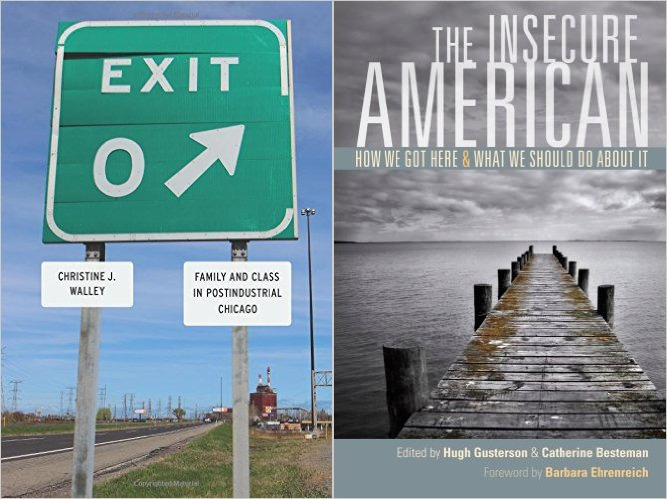
An article in The Minneapolis Star Tribune included commentary from two social anthropologists at the annual conference of the American Anthropological Association. Christine Walley, professor of anthropology at the Massachusetts Institute of Technology, showed a documentary she made, Exit Zero, about the closing of a steel mill in Illinois, and drawing from her book with the same title. It is an example of the changes that caused white, rural Midwestern workers to turn to Trump. Hugh Gusterson, professor of anthropology and international affairs at George Washington University, agrees. He wrote a book, The Insecure American, which looked at the U.S. in 2009 when many in the middle class retreated to gated communities and were worried about their retirement funds, health insurance, terrorist attacks and immigrants. “A lot of people are trying to understand this election in terms of class,” Gusterson said. “But I’m more struck by how geographical it was.”

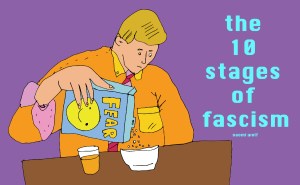
fascism in the land of the free

From Naomi Wolf, The End of America: Letter of Warning to a Young Patriot Source: Adbuster Magazine, 11/10/15
From Naomi Wolf, The End of America: Letter of Warning to a Young Patriot
Source: Adbuster Magazine, 11/10/15

Mark Schuller, professor of anthropology and NGO leadership at Northern Illinois University, published an article in CounterPunch reviewing social repercussions of Trump leadership and values which have strong elements of fascism. He ends by noting that: “…the historical and anthropological record[s] show that empires often descend into fascism during their final decline. Whether this is the end of empire, and whether there are alternatives, is up for we the people to decide.”


Continue reading “anthro in the news 11/21/16”

anthro in the news 11/14/16

imgonline-com-ua-twotoone-tppb0k53z38w

anthropology in the time of Trump

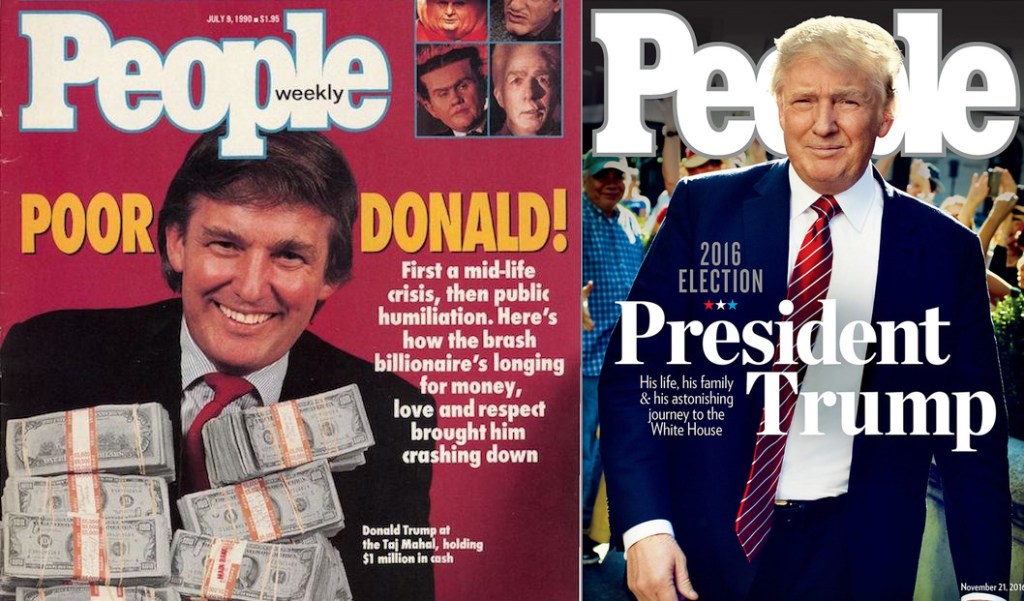
Cultural anthropologist Paul Stoller, professor at West Chester University, published an essay in The Huffington Post revisiting his article of March 2016, The Anthropology of Trump: Myth, Illusion and Celebrity Culture: “In that piece, I tried to demonstrate how Mr. Trump had brilliantly manipulated the fundamentals of celebrity culture—glitz, illusion and fantasy—to create a kind of alternative reality in which shallow perception is more appreciated than profound insight. In the mythic culture of celebrity, as President-elect Trump understands so well, lies become truth and conspiracies become convincing evidence that our system is ‘rigged.’” Stoller argues that ethnography, thick description, and cultural critique are of even greater importance now.

immigrant anxiety in the time of Trump

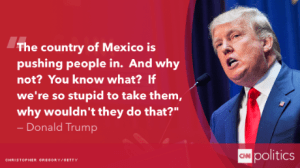
WTNH News (Connecticut) reported about widespread anxiety among immigrants in the U.S. about a Trump presidency given his many statements about illegal immigrants including this one 150709094619-donald-trump-quote-mexico-large-169that he made at rally: “Day one my first hour in office those people are gone.” Joyce Bennett, assistant professor of anthropology at Connecticut College, is quoted as saying: “It’s putting people in a really nervous position.” She works closely with immigrants in New London, Connecticut. In Connecticut, undocumented immigrants can get a driver’s license, and they have access to health services.


Continue reading “anthro in the news 11/14/16”

anthro in the news 11/7/16

screen-shot-2016-11-07-at-9-49-39-amnot all hair is equal   

BBC News reported on the research of social anthropologist Emma Tarlo tracing the global industry in human hair, especially wigs, weaves, and extensions. Tarlo, professor of anthropology at Goldsmiths, University of London, is the author of Entanglement: The Secret Lives of Hair. While China is the biggest exporter and importer of human hair and harvests huge amounts from its own population, European hair is the most valuable because of its fine texture, variety of its colors, and relative scarcity. Tarlo is quoted as saying: “People who work in the industry are conscious of the fact Made in China is viewed as a negative label and market it in more glamorous ways instead.” [with audio]

welcome to the Drone Age9780262034678

Foreign Affairs published a review of five books on drone warfare including one by Hugh Gusterson,  professor of anthropology and international affairs at George Washington University. The reviewer refers to Drone as “gently critical” and a “thoughtful examination of the dilemmas this new weapon poses.”


Continue reading “anthro in the news 11/7/16”