anthro in the news 8/1/16

Listen to the data: Police in the U.S. fatally shoot more blacks than whites

Source: Creative Commons, Lorie Shaull

The Chronicle of Higher Education carried an article describing findings from a county-level quantitative analysis by Cody Ross, a doctoral candidate in anthropology at the University of California Davis. His research confirms that blacks, unarmed or armed, are more likely to be shot and killed by police than whites. In his paper, he examines the independent effect of a range of county-level indicators and finds several clear associations including between the higher the level of inequality within a county and more killings, and greater racial segregation and more killings. These findings contradict those of Harvard economist, Ronald Fryer, who used a different data set based on police reports and found that police officers are less likely to fire their weapons at blacks than at whites.


In the field: Preventing and dealing with danger
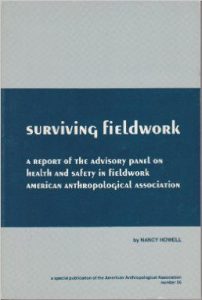
41Ftg6Ts0KL._SX269_BO1,204,203,200_Two social anthropology doctoral students at the University of Cambridge, Corinna Howland and Christina Woolner, published an op-ed in The Guardian about how universities must do more to prepare students to prevent and cope with danger during fieldwork. They write: “No risk assessment or training course can ever address all fieldwork complications. But increased attention to student preparedness and support, and a willingness to engage in difficult conversations, will promote safer, and ultimately better, research.” Their suggestions: talk openly about difficulties, encourage early visits, provide alternative mentoring support, develop contingency plans, and cultivate local networks. [Blogger’s note: Nancy Howell’s ground-breaking report, Surviving Fieldwork, published in 1990, would benefit from a re-study including  attention to recently discussed problems such as sexual harassment by supervisors and options, such as those mentioned in this op-ed, for prevention and coping].

Continue reading “anthro in the news 8/1/16”

anthro in the news 7/25/16

Mass killings are local and global

Source: Creative Commons

Nancy Scheper-Hughes, professor of medical anthropology at the University of California Berkeley, published an article in Counterpunch (U.S.) on how recent mass attacks in Dhaka and Nice take Americans into a “gray zone” of terrorism, showing “…how totally vulnerable we all are and how deficient are our national and international security systems.” Her essay begins by stating that one Berkeley student was killed and three wounded in the Nice attack, and one Berkeley student was killed in the Dhaka attack.


Gender, power, agency, and blame in transactional sex

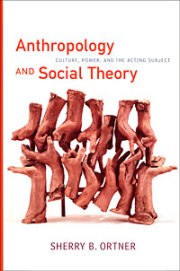
978-0-8223-3864-2_prSABC News (South Africa) reported on the trending terms for transactional sex participants: blesser and blessee. The article include an interview with one blesser, the person who provides money and gifts to the blesse who normally is expected to return the favors with sex. In discussing how blessees in South Africa often have a negative public reputation as vixens or evil, the article mentions cultural anthropologist Sherry Ortner‘s book, Anthropology and Social Theory:  Culture, Power and the Acting Subject, in which she looks at why women who use their agency are often depicted as evil.

Continue reading “anthro in the news 7/25/16”

anthro in the news 7/18/16

Colonial legacy and racism feed resentment in France

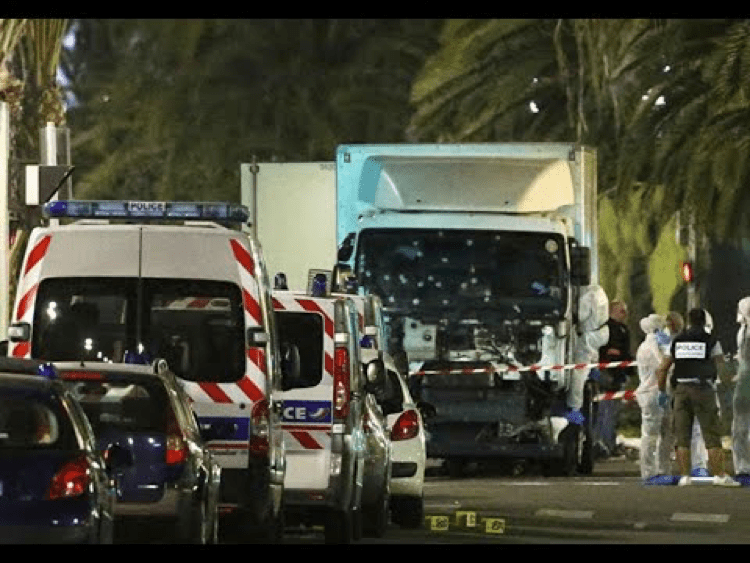
Following the attack in Nice, France. Source: Creative Commons

The Sun (U.K.) carried an article on factors behind the attack in Nice, France, quoting cultural anthropologist John Bowen, professor at Washington University in St. Louis, U.S.: “Unlike other European colonial powers, the French never really left their former colonies, continuing to intervene economically and militarily to defend France’s national interests in Africa and the Near East…Now this means battling al Qaeda and ISIS in Mali, Iraq and Syria. So when disaffected young men and women tune in to jihadi websites, they find French-speaking Muslims telling them of the sins their government is committing against their ‘brothers and sisters’ in Iraq and Syria. Resentment at French racism, at the series of largely symbolic measures taken against Muslims, such as the 2010 ban on wearing face-veils in public, add to this anger, and lead some towards fighting.”


Helping refugees in Hungary

Picture2
Source: Creative Commons

The Monitor reported on the work of social activist Babak Arzani in Hungary. As a refugee from Iran in 2010, he was alone in a foreign land where he did not speak the language. His experiences fueled his passion for the work of Migszol, the Migrant Solidarity Group of Hungary. Formed in 2012, it is an informal, independent group of immigrants, refugees, and Hungarians who serve as advocates for the political and social rights of refugees and asylum-seekers in Hungary. The article includes insights from social anthropologist Prem Kumar Rajaram of Central European University (CEU) in Budapest where he is associate professor in the Department of Sociology and Social Anthropology and academic director of CEU’s Roma Graduate Preparation Program.  He comments:  “Migszol has been important in thinking about new political possibilities and in questioning the government’s insistence on excluding migrants and refugees from everyday life…they have continued to struggle against the Hungarian government’s attempt to make migrants invisible in the public sphere, drawing attention to the injustice and even illegality of some of the government’s actions.”

Continue reading “anthro in the news 7/18/16”

anthro in the news 7/11/16

Attack in Dhaka

News coverage of the attack in the Gulshan neighborhood of Dhaka. Source: Creative Commons
News coverage of the attack in the Gulshan neighborhood of Dhaka. Source: Creative Commons

The Pioneer (Bangladesh) reported on the background of most of the Gulshan attackers of July 1-2 as upper class and thus not conforming to the stereotype of “terrorist” killers as underprivileged and marginalized. The article includes insights from Seuty Sabur, associate professor of anthropology at BRAC University:  “With the neoliberal turn in the early 1980s, we saw major shifts in the economy and lifestyle in Bangladesh. It was not only the MNCs and NGOs penetrating the economy, but the corporate education system as well…. English-medium schools mushroomed in Dhaka. Many members of the aspiring cosmopolitan middle class thought these schools would be the playground for global citizens, and a gate pass for achieving a higher status. Surely this served as entry to a lifestyle which was alien to these parents.”


Minangkabau community through photos

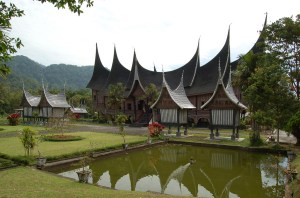
Minangakau longhouse. Source: Creative Commons

The Washington Post carried a photo essay documenting life in a changing Minangkabau village in West Sumatra, Indonesia. The Minangkabau, the world’s largest matrilineal society, are facing challenges in terms of maintaining their traditional long houses as well as livelihoods and kinship system in the face of increased outmigration among other factors. The text includes a comment from cultural anthropologist Frederick Errington, emeritus professor at Trinity College in Hartford, Connecticut, about how adat (custom) allows for assimilation of new elements, as long as the core remains. Continue reading “anthro in the news 7/11/16”

anthro in the news 7/4/16

Presidential woes in Afghanistan

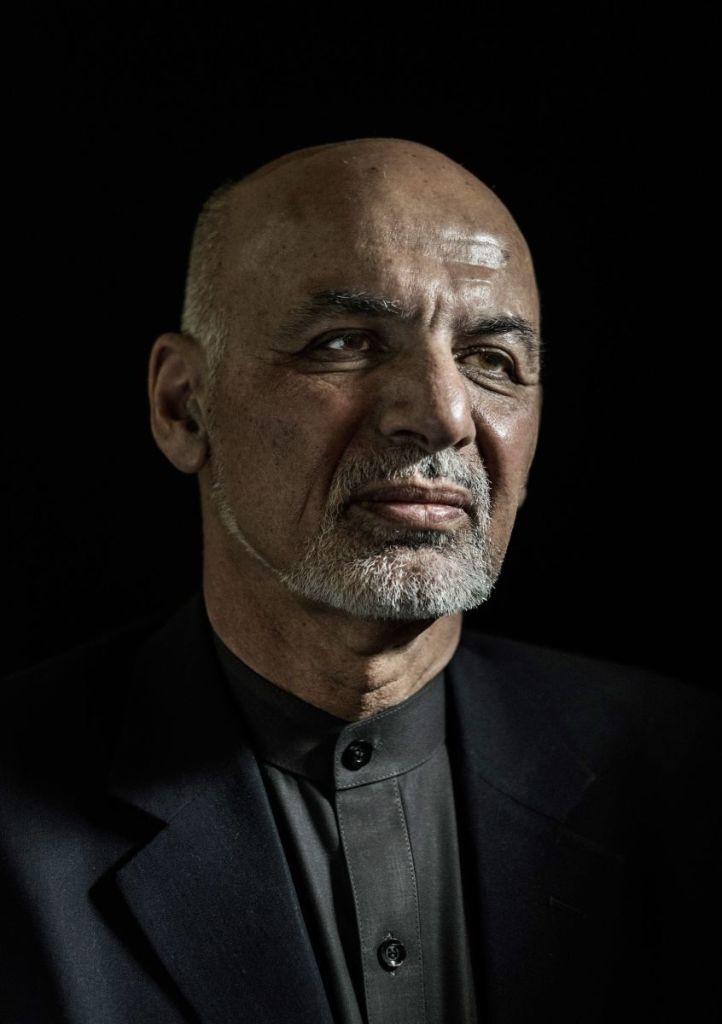
Source: Adam Ferguson/The New Yorker

The New Yorker carried a long piece describing the role of Ashraf Ghani, who trained as a cultural anthropologist, as president of Afghanistan. It is entitled, Afghanistan’s Theorist-in-Chief, with this question appearing in the subtitle: Can he save his country from collapse? The answer is: likely not, mainly because his presidency is at risk. The article quotes Scott Guggenheim, a World Bank advisor to Ghani: “Ashraf’s biggest problem is not that he’s a bad politician but that he has a twenty-five-year vision and everyone thinks it means next year. He throws out completely unrealistic dates as placeholders.” [Blogger’s note: the article says that Guggenheim is an economist; there may be two similarly named people who work for the World Bank and wear Indonesian shirts, but my guess is that this Scott Guggenheim is actually an anthropologist].


World Bank President on pandemics

Source: Felipe Dana/Associated Press

The Washington Post published an op-ed by Jim Yong Kim, President of the World Bank Group, physician, and medical anthropologist. He outlines how “the world” should deal with the Zika virus through improved ways of moving money [Blogger’s note: the World Bank is, after all, a bank]: “Pandemics are a global security threat, and they demand a truly global response…This, in fact, is about to happen. The world will now be able to automatically send money, medical teams and lifesaving supplies to any of the 77 poorest countries to prevent a major outbreak from spreading and escalating. The newly created Pandemic Emergency Financing Facility will leverage money from wealthy countries, capital markets and the reinsurance industry, and use those funds if needed to mount a rapid early response to shut down an outbreak with pandemic potential — and at a fraction of the cost of delayed action.” [Blogger’s note: while moving money may be essential, so is expert knowledge that is socially/locally informed…no money-focused bank can manage that need].

Continue reading “anthro in the news 7/4/16”

anthro in the news 6/27/16

Heed this: Political break-ups in comparative perspective

Source: Creative Commons

Wired carried an article about the Brexit vote, drawing on research by Peter Turchin, associate professor of evolutionary anthropology at the University of Connecticut, and his colleagues there.  He is quoted as saying: “I think of the European Union as an empire…[It] is unusual because it was constructed without conquest, but in terms of functionality it is not unlike other historical examples.” Comparative research indicates that, in a successful civilization, the ruling class cooperates among itself to create functional rules. It also cooperates with the general population to make sure those rules keep everybody reasonably happy, employed, and safe. In turn, the general population cooperates by not revolting. “One of the signs you see in civilizations going the wrong direction is where the elites make policy choices that bring about increasing inequality.”


Brexit fears

The Independent published an op-ed, written in advance of the Brexit vote, by social anthropologist Michal Garapich, research fellow at the University of Roehampton and author of London’s Polish Borders. He expresses his fear of Brexit from the perspective of being a Polish immigrant to the U.K.: “…I feel increasingly uneasy about the turn of British politics and public discourse. I suddenly realize that, in fact, around half of Brits do not want me or my family around.”


Continue reading “anthro in the news 6/27/16”

anthro in the news 6/20/16

Gun speak is louder than words

Source: Creative Commons

National Public Ratio (U.S.) interviewed Robert Myers, a professor of anthropology and public health at Alfred University in New York, about his research on language, violence and culture. He said that listening to people’s talk reveals cultural themes, namely “gun speak” and how it reflects the prevalence of guns in the U.S. Myers notes that gun speak – including expressions such as silver bullet, getting shot down, stick to your guns — permeates American culture and is used by everyone including men and women, Republicans and Democrats, gun owners and people who have never even seen a real gun: “It’s just part of our way of talking…It’s so common. It reflects this longstanding obsession that we have with guns…”


Wall Street culture

978-0-8223-4599-2_prMarketplace (U.S.) carried an interview with Karen Ho, associate professor of anthropology at the University of Minnesota and author of Liquidated: An Ethnography of Wall Street. The interview topics include the people and culture of Wall Street, the effects of the 2008 financial crash, and the possibility of change on Wall Street. In terms of change, Ho says: “…there are bigger steps and smaller steps…One is certainly to change the policy landscape so that Wall Street financiers and investors are actually measured by what happens five to seven years from now, as opposed to yearly or quarterly bonuses.” [with audio] Continue reading “anthro in the news 6/20/16”

anthro in the news 6/13/16

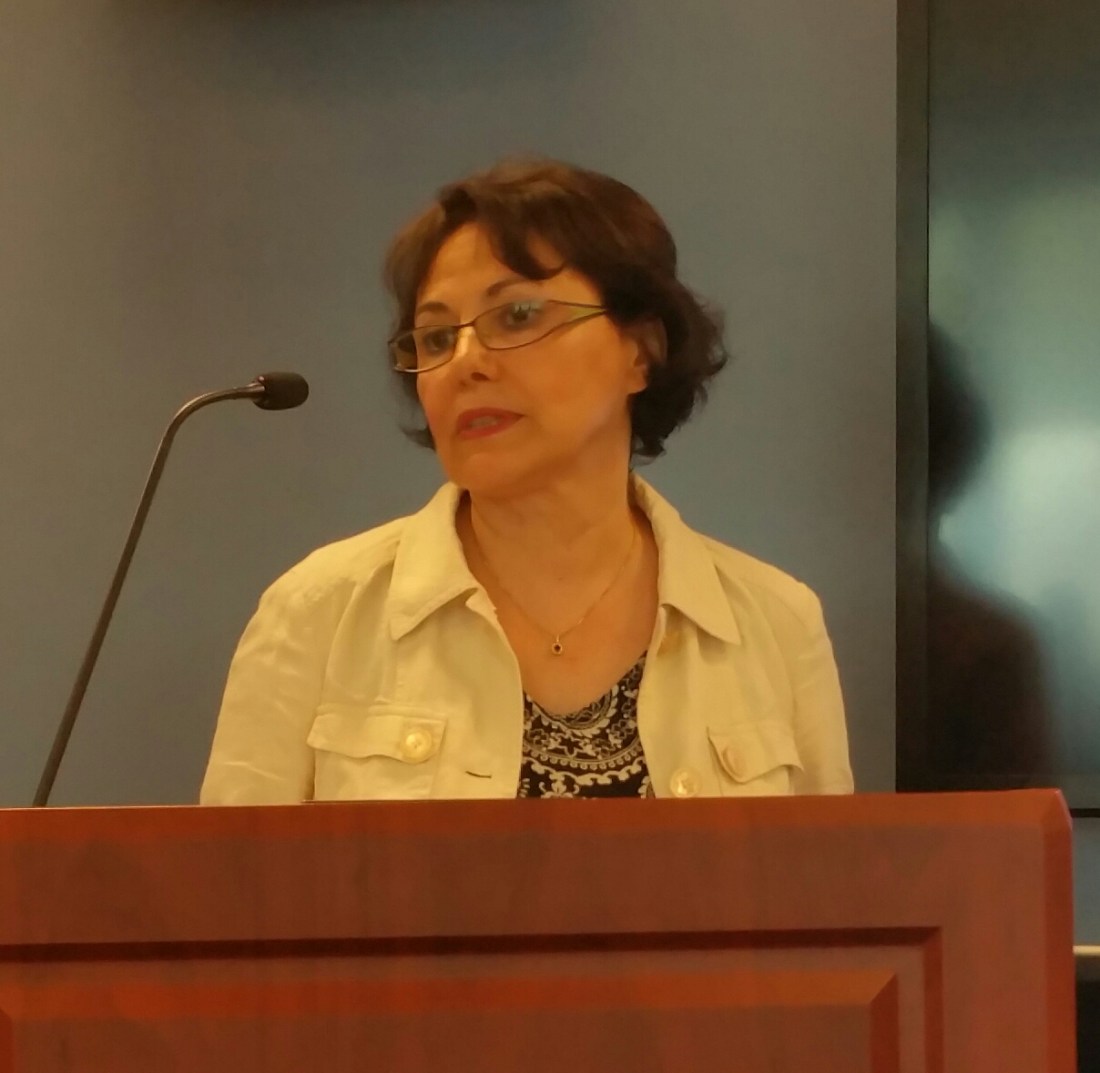
Anthropologist jailed in Iran without charge

Hoodfar speaking at George Washington University in 2015. Source: Barbara Miller/GW

The National (Abu Dhabi) reported that sociocultural anthropologist Homa Hoodfar, professor emeritus at Concordia University, has been jailed in Iran while there doing research and visiting family. No charges have been made against her, and she is not allowed legal counsel. CBC (Canada) carried an article on Canada-Iran relations which included Hoodfar’s imprisonment as an issue of Canadian national concern. [Blogger’s note: a petition in support of her release will soon be circulated publicly; please stay tuned].


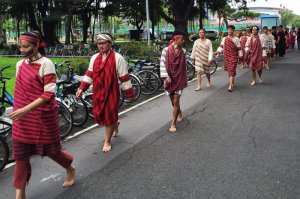
Living in hope: Taiwan’s indigenous people

University students who belong to indigenous tribes prepare for a ceremony to affirm their ethnic identity. Source: Anthony Kuhn/NPR

According to coverage by National Public Radio (U.S.), the recent election in Taiwan of a new president, Tsai Ing-wenin, has raised indigenous people’s hopes of improved rights, given her promise to make amends for mistreatment by previous governments. The article quotes anthropology professor Wang Mei-hsia, who explains that before the Chinese Nationalist Party settled on Taiwan when the Communist Party took over mainland China in 1949, the island had been a Japanese colony for half a century. The Japanese were the first to take aborigines’ ancestral lands. The Taiwanese state has owned the lands ever since.

Continue reading “anthro in the news 6/13/16”

anthro in the news 6/6/16

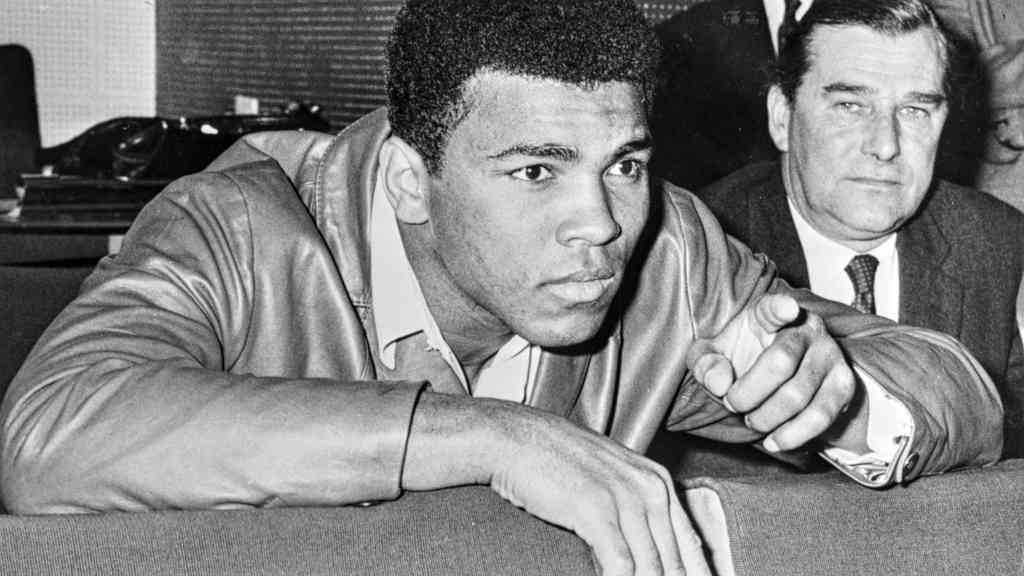
Muhammad Ali, The Greatest: Boxer and social activist

Muhammad Ali in 1966. Source: Wikimedia Commons
Muhammad Ali in 1966. Source: Wikimedia Commons

Newsday reported on the death of Muhammad Ali. It quoted cultural anthropologist Orin Starn of Duke University on Ali’s refusal to fight in the Vietnam-U.S. war in 1966: “There was a lot of noise and confusion but not a lot of understanding of his motivation…The great patriotic tradition is to go off and fight wherever the Stars and Stripes call you. For somebody to say, ‘I’m a conscientious objector’ on religious reasons, ‘I’m not going to go to fight in Vietnam,’ was something most people didn’t know what to make of.” [Blogger’s note: The Newsday article says that Starn is a professor at Georgetown University; the Internet says he is still at Duke].


When a “hobo” could be famous

Caption: Century-old graffiti under a bridge in Los Angeles. Source: AP Photo, J.C. Hong.
Century-old graffiti under a bridge in Los Angeles. Source: AP Photo, J.C. Hong.

The Santa Cruz Sentinel and other media described the research of cultural anthropologist Susan Phillips of Pitzer College.  After spending many years studying the graffiti that covers walls, bridges, and freeway overpasses in the LA area, she was surprised to find graffiti nearly a century old and made of grease pencil, not spray paint. “It was like opening a tomb that’s been closed for 80 years.” Back then, people signed their names as Oakland Red, the Tucson Kid, and A-No. 1.  A-No. 1 was the name used by a man once arguably America’s most famous hobo, one of the many itinerant wanderers who traveled from town to town in the 19th and 20th centuries, often by freight train, in search of work and adventure.

Continue reading “anthro in the news 6/6/16”

anthro in the news 5/30/16

Because he can

File:Blast-Location-Hiroshima.jpg
Schema of the Hiroshima nuclear bomb blast displayed in the Peace Memorial Museum. Source: Micha Rieser, Creative Commons

The Daily Mail reported on U.S. President Barack Obama’s trip to Japan and Vietnam. The article includes commentary from Hugh Gusterson, professor of anthropology and international affairs at the George Washington University. In reference to Obama’s his visit to Hiroshima, Gusterson is quoted as saying: “He is going because it’s possible now…Twenty or 30 years (ago)…Just the symbolism of going there as an American president was more than many Americans could bear.”


New-old idea: Sharing water in the Southwest U.S.

AcequiaAn article in The Taos News (New Mexico) described the work of the New Mexico Acequia Association which is promoting the traditional acequia system, community-based management and sharing of irrigation water rooted in the value of auxilio, helping when others are in need. The article quotes Sylvia Rodriguez, professor emerita of anthropology at the University of New Mexico and author of Acequia: Water Sharing, Sanctity, and Place. She says that the acequia model is conducive to sustainability and resilience in a semiarid climate afflicted by frequent scarcity: “We have the wrong world view here in the West, the idea of unlimited expansion, and it just doesn’t work…I think land-based people who generally live on a small scale know that there’s a limited good. The basic idea is that shortages are shared.”

Continue reading “anthro in the news 5/30/16”