anthro in the news 12/26/17

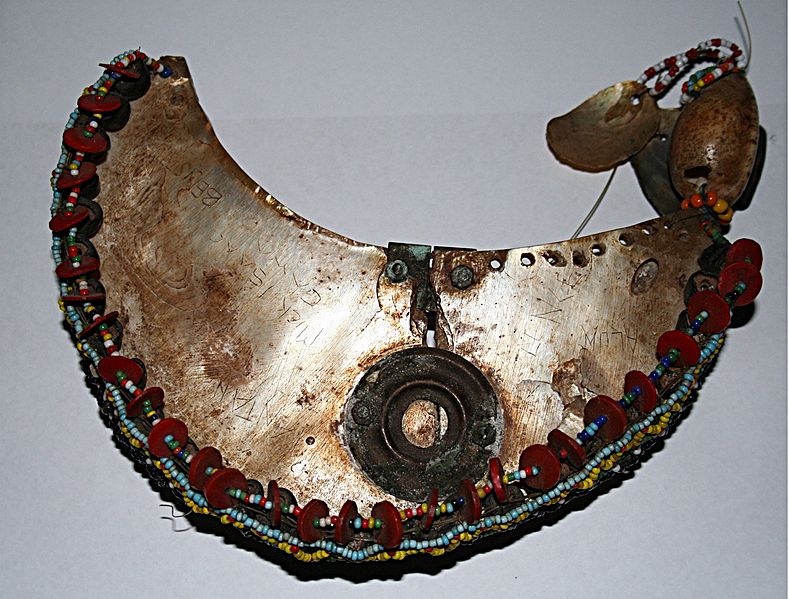
An arm bracelet from Nabwageta Island, Papua New Guinea. The names of the people who have owned the bracelet are written on it. It was part of a gift exchange network called the kula in which gifts are kept for a while and re-gifted. Credit: Brocken Inaglory/Wikimedia Commons

gift-giving is a key to culture

The Guardian published a piece on gift-giving and culture: “Exchanging stuff – as gifts or economic transactions – and reciprocating those exchanges in a socially acceptable way – is a practice found in all human cultures. The rules and scope of the exchanges may be very different, but the fact of them is universal…French anthropologist Marcel Mauss doesn’t attempt to explain the politics and practice of the office Secret Santa (alas) – instead, he describes “archaic societies” in Melanesia, Polynesia and the north-west coast Native American peoples who practiced ‘potlatch’, a ceremonial gift-giving and feasting ritual characterised by competitive shows of conspicuous giving and consumption. These, Mauss says, are systems of gift-giving that aren’t just about gifts, but carry legal, economic, spiritual and moral significance that saturates the whole social fabric…In these societies, items given as gifts take on the spiritual significance of the giver. The value of the relationship is embodied in the thing given.” Mauss’ insights are relevant to societies, of course, because any gift is a social thing, with embedded social meaning.

new wave of anti-Semitism in Sweden
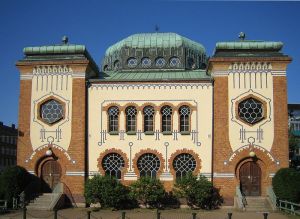
Synagogue in Malmo. Credit: jorchr/Wikimedia Commons

The Washington Post published commentary by Aje Carlbom, associate professor of social anthropology at Malmö University in Sweden, on the resurgence of anti-Semitism there: “During anthropological fieldwork here in Sweden’s third-largest city 20 years ago, I interviewed a young Palestinian man who thought it was a shame that the “Nazis didn’t get to finish their job with the Jews” during World War II. This is of course an extreme example of one man who does not speak for his community. Unfortunately since then, Malmö — with its significant community of Muslim immigrants — has become infamous for its growing anti-Semitism, which has prompted many Jews to leave. More recently, Trump’s decision to relocate the U.S. embassy in Israel to Jerusalem has provoked attacks on synagogues in Sweden as well as openly expressed threats to kill Jews.”


Continue reading “anthro in the news 12/26/17”

anthro in the news 12/18/17

Hashtag #MeToo, December 2017. Credit: Wolfmann/Creative Commons

sexual harassment survey

U.S. News and World carried an article about the results of a recent survey of thousands of women in the U.S. about sexual harassment. A much higher percentage of younger and college educated women reported personal experience of sexual harassment or by a female family member. The article includes commentary from Hillary Haldane, associate professor of anthropology at Quinnipiac University, who thinks that two federal policies have shaped awareness of gender-based violence and harassment: “Young women in college now were all born near or after the signing of the Violence Against Women Act, and they’ve always had Title IX, which more recently has been used as a bulwark against gender violence on college campuses…During their formative years, they’ve heard public service announcements, and services have always been provided to them. Plus, there are documentaries and social media…They’re not necessarily experiencing more sexual harassment — they’re just far more aware of how they can come forward.”

the meanings in a gift

Untitled. Credit: Pixabay

An article in The Detroit News addresses the author’s quandary of holiday gift-giving, especially the choice between fun gifts and practical gifts. The discussion draws on the work of the pre-eminent scholar of “the gift,” Marcel Mauss, and concludes with the thought that a person’s gift-giving choice conveys their personal/social identity: “Marcel Mauss was a French anthropologist and sociologist who in the mid-1920s published his book, ‘The Gift,’ which made the argument that gifts are never free. His work was based on studying several cultures and he identified several obligations: giving, which is the first step in forging and maintaining a social bond; receiving, which means refusing a gift would be to reject that social bond; and reciprocating. According to Mauss, giving gifts requires reciprocation. And without that reciprocation, relationships can be threatened.” Therefore, a holiday gift-giver’s choices reveal his or her identity and is a way of saying, “this is who I am, and do we still have a relationship?” Whether the gift is a fun gift or a practical gift.


Continue reading “anthro in the news 12/18/17”

experiencing fine Indian dining in Mayfair

By Sean Carey

“Why do you want to go to a posh Indian restaurant and spend a small fortune when you can go to the Lahore or Needoo’s in Whitechapel and get a really good two-course meal for £15?” I asked my Nairobi-born British Punjabi friend, Kamal, after he expressed a keen interest in a high-end Indian dining experience.

“Don’t worry about the cost,” he reassured me with a smile, “it’ll be my treat.”

That conversation explains why the two of us recently ended up at Gymkhana, part of the fast-expanding JKS Restaurants group, which is located in Albemarle Street, Mayfair, a stone’s throw from the razzle-dazzle that is Piccadilly Circus. Since its opening in 2013, Gymkhana has won high praise from many food critics. The Times’ often acerbic restaurant critic, Giles Coren, proclaimed, “Gymkhana is the best restaurant I have ever been to.” The Observer’s Jay Rayner declared that we should “give thanks” for Gymkhana “which manages to be glossy and yet still deliver food with a serious kick and intent”.

Continue reading “experiencing fine Indian dining in Mayfair”

anthro in the news 12/11/17

Kutupalong, the world’s fastest growing refugee camp, is located in Bangladesh’s Chittagong province. Credit: U.K. Department for International Development/Flickr [no changes were made to this photo] https://www.flickr.com/photos/dfid/24775405808

we were going to be killed

The Toronto Star reported on the research of Nasir Uddin, professor of anthropology at the University of Chittagong in Bangladesh, who spoke at the Asian Institute at University of Toronto’s Munk School of Global Affairs. He has recorded the stories of over 500 Rohingya who have fled to Chittagong. He asked them where they lived, what situations they left their home in, and how they crossed the border. When he asked why they fled, the answer was always: We were going to be killed. The narratives are filled with instances of unimaginable trauma.  “This is 2017.” said Uddin. “This is the twenty-first century, this is not Middle Ages…and we’re not doing anything substantial to solve the problem.”

power to the person of the year

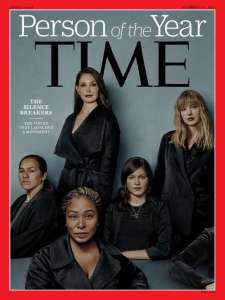
December 14, 2017 cover of Time. Credit: Time.

The Salt Lake Tribune (Utah) published a piece about Time magazine’s naming of The Silence Breakers as 2017 Person of the Year. The author discusses the silencing of women in many cultures, drawing on insights from cultural anthropology: “In the mid-1970’s, social anthropologist Edwin Ardener noted that fellow anthropologists claimed they had ‘cracked the code’ of a society they had been studying without actually talking to any women of that society or culture. Ardener pointed out that the ‘high status groups of a culture largely determine the communication system of that culture. At the same time, subordinate groups in the society are rendered inarticulate.’ In other words, they were silenced. Muted.” He and his colleague Shirley Ardener “…came to realize that the group or groups were silenced not because they lacked language but because they lacked power…muted group theory holds that people belonging to anything but the dominant class are disadvantaged (muted) when communicating, either orally or in written form. Power, therefore, belongs to those who control communication.”

Continue reading “anthro in the news 12/11/17”

anthro in the news 12/4/17

Goldfish Glitter Goldfish Glitter

goodbye to glitter 

CNN and several media covered a proposed ban on glitter in the U.K. Most glitters are microplastics, known as hazardous to marine life when ingested. Trisia Farrelly, an environmental anthropologist and senior lecturer at Massey University in New Zealand, has been quoted as saying that “all glitter should be banned.” Farrelly’s research includes the political ecologies of plastic production, consumption, and disposal.

fraught presidential election

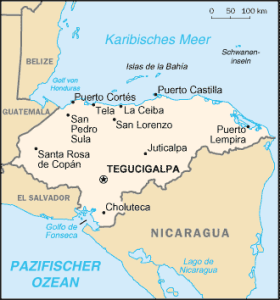
Map of Honduras. Credit: Wikimedia Commons

The Los Angeles Times reported on the presidential election in Honduras and included a comment from Rosemary Joyce, professor of anthropology at the University of California Berkeley, about how elections in Honduras are frequently fraught with problems. In the past, election officials have declared winners well before all of the votes have been counted, instead predicting who will win based on early returns.


Continue reading “anthro in the news 12/4/17”

anthro in the news 11/27/17

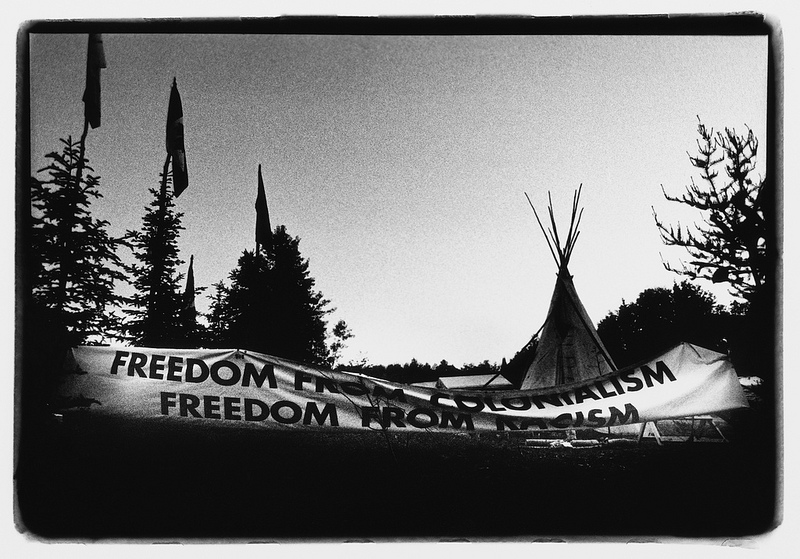
Grassy Narrows, Ontario, 2006. Credit: Howl Arts Collective/Creative Commons

a crime against humanity

The Toronto Star published commentary co-authored by Stephen Bede Scharper, associate professor of environment and anthropology at the University of Toronto at Mississauga and Annamaria Enenajor, a criminal defense and constitutional lawyer. They argue that mercury poisoning at Grassy Narrows by the Canadian government and industry is a crime against humanity and is part of the legacy of decades of mistreatment of Canada’s indigenous people. Ninety percent of the community suffers from some form of mercury poisoning and it is intergenerational. They write: “One of the international crimes against humanity is persecution. A crime against humanity requires that a perpetrating state know that its conduct is part of a widespread or systematic attack directed against a civilian population. To be guilty, the government of Canada would have to know that what is happening in Grassy Narrows is happening by design and not by tragic accident.”

the costs of war crimes tribunals

An article in U.S. News & World Report reported on the end of the special Yugoslav tribunal of The Hague and considered its accomplishments and

Scales of justice. Credit: Pixabay

costs. The war crimes tribunal [for Yugoslavia] has been expensive to maintain. Just since 2010, more than $700 million has been spent to fund the activity of the tribunal. The article quotes Richard Wilson, Gladstein Chair and professor of anthropology and law at the University of Connecticut: “Their budget dwarfs in comparison to even the state criminal justice budgets of most American states…I believe [the special tribunal] cost over $1 billion. But it’s been running for 20 years and its budget is extremely small when comparing to national criminal justice budgets. And it had to undertake the very arduous work of examining crimes that took place almost 20 years ago.”


Continue reading “anthro in the news 11/27/17”

anthro in the news 11/20/17

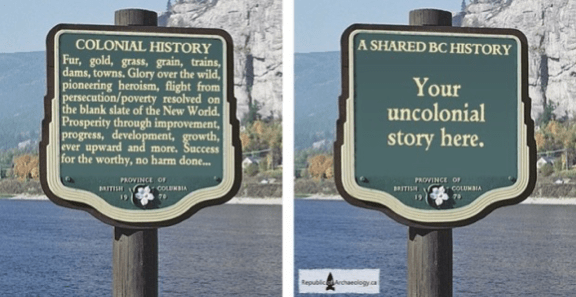
Joanne Hammond started an online campaign to rewrite “stops of interest” signs to include precolonial and Indigenous history. She is one of the first contributors to Culturally Modified. Credit: Joanne Hammond/Republic of Archaeology

online magazine launch

An article from CBC News (British Columbia) describes the launch of a new online, open access magazine, Culturally Modified, edited by anthropologist Rick Budhwa, executive director of the Bulkley Valley Research Centre in British Columbia. Published twice a year, the magazine explores the different ways people value physical landscapes and seeks to promote discussion of cultural resource management across Canada. The first issue includes an article about what motivated residents to stay in their homes during a wildfire evacuation this past summer, a story about Witsuwit’en headstone pulls, and a reflection from archeologist Joanne Hammond about a project that imagines what roadside heritage signs in British Columbia would look like if they were written by indigenous peoples.  

first Thanksgiving: no turkey, no pumpkin pie

A possible side dish is sobaheg, a stew of meats and vegetables, which would have been cooked in a clay pot. Credit: manyhoops.com.

The Conversation published a piece by Julie Lesnick, assistant professor of anthropology at Wayne State University. She writes: “Most Americans probably don’t realize that we have a very limited understanding of the first Thanksgiving, which took place in 1621 in Massachusetts. Indeed, few of our present-day traditions resemble what happened almost 400 years ago, and there’s only one original account of the feast. As an anthropologist who specializes in reconstructing past diets, I can say that even though we don’t have a definitive account of the menu at the first Thanksgiving, letters and recorded oral histories give us a pretty good idea of what they probably ate. And we know for a fact that it didn’t include mashed potatoes and pumpkin pie.”


Continue reading “anthro in the news 11/20/17”

anthro in the news 11/13/17

Chitimacha baskets from Louisiana. Credit: National Museum of the American Indian, Joseph Keppler Collection, gift of Dr. Margaret J. Sharpe. http://tinyurl.com/y9zbwwt4

ancestry rights and wrongs

The Washington Post described the efforts of a group of Biloxi-Chitimacha-Choctaw in asserting their identity and rights as American Indians. Environmental changes have made their current island home in the Mississippi delta uninhabitable, so they must relocate. Inaccurate documentation of their identity by a Smithsonian anthropologist in the early 20th century hampers their attempt to gain federal recognition which would give them a larger role in deciding about their new location. The good news is that the Smithsonian Institution is working with the community to support their ancestral claim while simultaneously improving their understanding of their collections. Some community members, including the chief, recently visited the Smithsonian. The connection they were able to make to the anthropological artifacts offers “an identity trajectory that can be proven,” explained Gwyneira Isaac, director of the Recovering Voices program. “It allows them to say, ‘These materials, these techniques, this way of life is our way of life.’”

activism for moral accountability

Gate to Mar-a-Lago. Credit: Wikimedia Commons/tommietheturtle. http://tinyurl.com/y986tz9o

Commons Dreams (Portland, Maine) published commentary by George Karandinos, an MD/PhD student in anthropology at Harvard University, and three co-authors who are also pursuing medical degrees. All four are health justice advocates. They write: “Over the course of the past year, several healthcare-related organizations have decided to stop holding fundraisers at Trump’s Mar-a-Lago resort. Some of them had held annual events at Mar-a-Lago for decades, but given the president’s consistent escalation of racist, sexist, and transphobic comments and policies, these organizations felt that they could no longer financially support him. In addition to outcry from local and national communities, tenacious pressure from healthcare professionals was a key factor in this exodus from Mar-a-Lago, demonstrating the impact that our sustained engagement can have in successfully holding our institutions accountable. We write to highlight some successful elements of our campaign and to encourage our peers to speak up when their home institutions are not living up to their stated principles.”


Continue reading “anthro in the news 11/13/17”

anthro in the news 11/6/17

Credit: Pixabay

the casting couch

The Guardian published commentary by David Graeber, professor of anthropology at the London School of Economics, about his awakening to the pervasiveness of sexual harassment in the U.S.: “This is a very difficult column for me to write because it’s about my mother…Mom was a prodigy. Arriving in America at age 10, speaking not a word of English, she skipped so many grades she was in college by 16. Then she dropped out of college to help the family (it was the Depression) by getting a factory job sewing brassieres. The union had the crazy idea at that time to put on a musical comedy performed entirely by garment workers. The play (Pins and Needles) surprised everyone by becoming a smash hit on Broadway, with mom (then Ruth Rubinstein) as female lead…[she] was featured in Life, met FDR and Gypsy Rose Lee, and for three years hobnobbed with celebrities and was gossiped about in gossip columns. Then she went back to working in the factory again…When I later asked [why she left show business] she’d just say, “I lacked self-confidence.” But once I remember the phrase “casting couch,” came up and I asked her if such things had existed in her day. She threw her eyes up and said, “well, why do you think I never pursued a career in show business? Some of us were willing to sleep with producers. I wasn’t.” …In endless ways, the violence of powerful men plays havoc with our souls. It makes us complicit in acts of mutual destruction. It’s too late now for my mother. She died ten years ago…Let’s stop pretending these things can’t really be happening…

transgender health and social justice

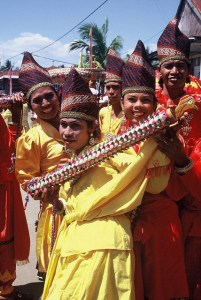
Waria of Indonesia, 2015. Credit: Sharyn Davies/Flickr. No changes were made to this photo. http://tinyurl.com/yary7mu6

National Public Radio (U.S.) carried an article about the challenges that socially excluded transgender people, waria, in Indonesia face in accessing health care. It provides a profile of Sandeep Nanwani, a doctor from Indonesia who is a candidate for a master’s in global health delivery at Harvard University. As part of his graduate studies field work, Nanwani provides medical care to many   waria in Yogyakarta. The article quotes Byron Good, professor of medical anthropology at Harvard University, who says the young doctor’s commitment to social justice is rare even among global health physicians. Good compared him to medical anthropologist and doctor Paul Farmer, who is known for his work providing health care to the rural poor in Haiti. “Sandeep has a remarkable commitment to the poor and to issues of social justice,” Good said. “It’s difficult to find physicians anywhere in the world like that.”


Continue reading “anthro in the news 11/6/17”

anthro in the news 10/30/17

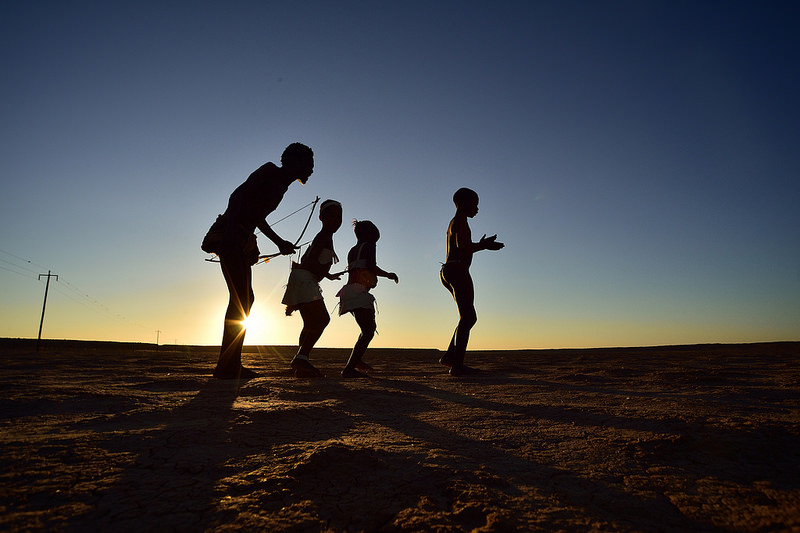
Elia Fester & children, Kalahari Khomani San Bushman, Boesmansrus camp, Northern Cape, South Africa. credit: South African Tourism

maintaining minimalism and equality

The Guardian published a piece by anthropologist James Suzman, author of Abundance without Affluence. He describes how the Bushmen long maintained social equality and abundance without overconsumption and damaging the environment and draws lessons from their culture for our times: “Crucially, their success was based not on their ability to expand and grow into new lands or develop new productive technologies, but on the fact they mastered the art of making a good living where they were. It is no coincidence that the continent with the evidence of the longest continuous human habitation is the only place unaffected by the extinction events that put paid 75% of the megafauna species – including mammoths, cave bears and sabre-tooth cats – when Homo sapiens expanded into Europe, Asia and the Americas.” Their minimalist consumption patterns were maintained through derision directed at boastful, self-aggrandizing people which had a social levelling effect.

clock time vs event time

Quartz carried an article about the sociological classification of people into those who follow clock time or event time. It includes commentary from Kevin Birth, professor of anthropology at Queens College (CUNY) in New York City. He notes that for most of human history, event time was the norm:  “Clock time really came into its own, he explains, when wage hours took over as a handy tool that employers used to start standardizing labor costs in the 18th century, when people began migrating for work. Suddenly, a day’s wages could equal a wide range of output depending on the length of “days” in locations at different latitudes. Employers began thinking in terms of wages per hour, and work days came to be demarcated by the clock, not the rising and setting sun.”


Continue reading “anthro in the news 10/30/17”