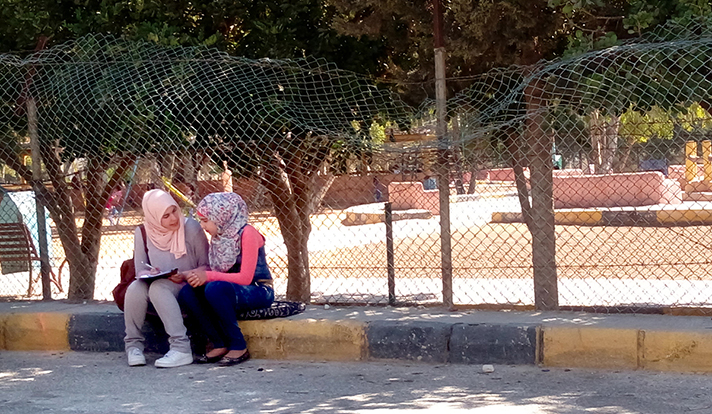
A researcher surveys a young Syrian girl using a new survey tool developed by researchers at Yale and partnering universities to measure resilience in Arab-speaking youth affected by war.
Researchers from Yale University, together with partners at universities in Canada, Jordan, and the United Kingdom, have developed a brief and reliable survey tool to measure resilience in children and adolescents who have been displaced by the brutal conflict in Syria.
Over 5 million people have been forced to flee the six-year-old conflict in Syria, and over 650,000 Syrians are now rebuilding their lives in neighboring Jordan. Building resilience in people affected by war is a priority for humanitarian workers, but there is no established measure that could help assess the strengths that young people in the Middle East have in adversity. This makes it difficult to assess the nature of resilience and to track changes over time.
Efforts to reduce teen pregnancy rates in Brazil have shown mixed results, and new research from Vanderbilt University suggests that the recent growth of psychological approaches to teen pregnancy prevention may have detrimental effects.
Teen pregnancy has traditionally been seen as a problem linked to poverty, low educational opportunities and family dysfunction. In recent years, researchers have linked teen pregnancy to measures of developmental immaturity, sexual risk-taking and long-lasting depression. This new body of research has started influencing the content of teen pregnancy prevention campaigns.
The New Statesman published commentary by David Graeber, professor of social anthropology at the London School of Economics, in response to the recent U.K. parliamentary election. He writes: “…How did we get to the point where the candidate of a major party was judged not by his political vision, programme or sensibilities, but by an estimation of how different classes of imagined voters were likely to respond to him? How is it that this has become our basic standard for judging politicians? And by “we” I am referring not just to political junkies, professional or otherwise, but to the electorate as a whole.”
honeymoon in France
Credit: re-inventingfabulous.com
The New York Times carried an article about the political success of France’s new president, Emmanuel Macron, as well as the challenges he faces. The article quotes Marc Abélès, professor of political anthropology at the École Des Hautes Études en Sciences Sociales. He is optimistic: “There is a sort of change in the culture…There was an atmosphere that was a bit deadening, the impression that one couldn’t get out, that one was cornered…And I think against that backdrop something was pushed. We were completely looking at things negatively, and now people have a tendency to see things more positively.”
The Washington Post reported on efforts by DuPont Pioneer, the division of DuPont that produces GMOs, to build consumer trust through focus groups, a website, and animated videos. The article includes commentary from Glenn Davis Stone, professor of anthropology and environmental studies at Washington University in St. Louis: …the controversy over GMOs has become so fractious that even independent scientists have “let their role in educating be trampled by their interest in convincing.” Many are so frustrated by the impasse, he added, that they’ll gloss over questions such as regulation, rather than risk giving the other side anti-GMO ammunition.
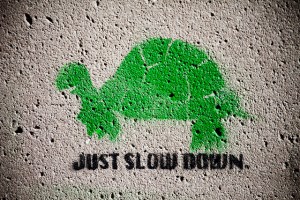
The Huffington Post published an article by cultural anthropologist Paul Stoller, professor at West Chester University in Pennsylvania, in which he recommends cultural anthropology during the Trump presidency: “In the Age of Trump a slow and shared approach to human social relations fosters knowledge in a time of ignorance. It creates webs of social and emotional understanding that transcend our social and cultural differences. By way of edifying conversation, a slow and shared approach to human relations goes a long way toward reclaiming a humanity that fast culture threatens to decimate.” He spotlights the work of Lisbet Holtedahl, a Norwegian anthropologist and filmmaker, who embodies a slow and shared approach to her scholarship and her films.
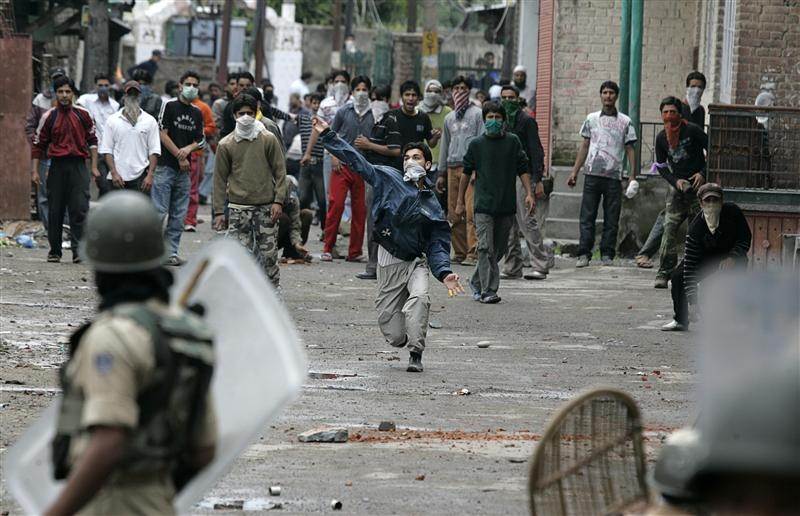
A scene in Kashmir. Credit: Quora.com/Google Images Commons
when a national army threatens its people
The Wire published commentary by Partha Chatterjee, professor of anthropology & Middle Eastern, South Asian and African Studies at Columbia University, in which he addresses the question: When does a nation’s army start to believe that to preserve its authority, it must be feared by its own people? He writes: “The example of Israel that is often cited these days as the model from which India should learn is, in this context, particularly troubling. Israel is, properly speaking, a settler colony that regards Palestinians as a hostile and rebellious other that must be subdued and kept apart. Is that what India’s political leaders believe their relation must be to the people of Kashmir or Manipur or Nagaland? One can only hope that as a nation, we have not reached the edge of a slippery slope.”
The Guardian reported on challenges facing Brazilian higher education in improving enrollment rates of students in lower income categories and black, brown, and indigenous students. Brazil’s law of social quotas was passed in 2012 and was meant to be in full compliance by 2016.A major problem is rooted in the practice of aspiring students reporting their own racial category. Abuses have been reported with white-looking students gaining admission by claiming to be non-white. The article quotes Rogerio Reis, an anthropology professor: “We saw the most incredible situations unfold…People would shave their heads, wear beanies, get a tan. Just a series of strategies to turn themselves black.” [Blogger’s note: self-stated “racial” identity and “looks” are extremely questionable criteria for determining access to a coveted university slot. Though far from perfect, an income/poverty measure seems preferable depending on the information source].
Credit: Strategic Culture Foundation online journal 8/31/16
hope for democracy at the grassroots
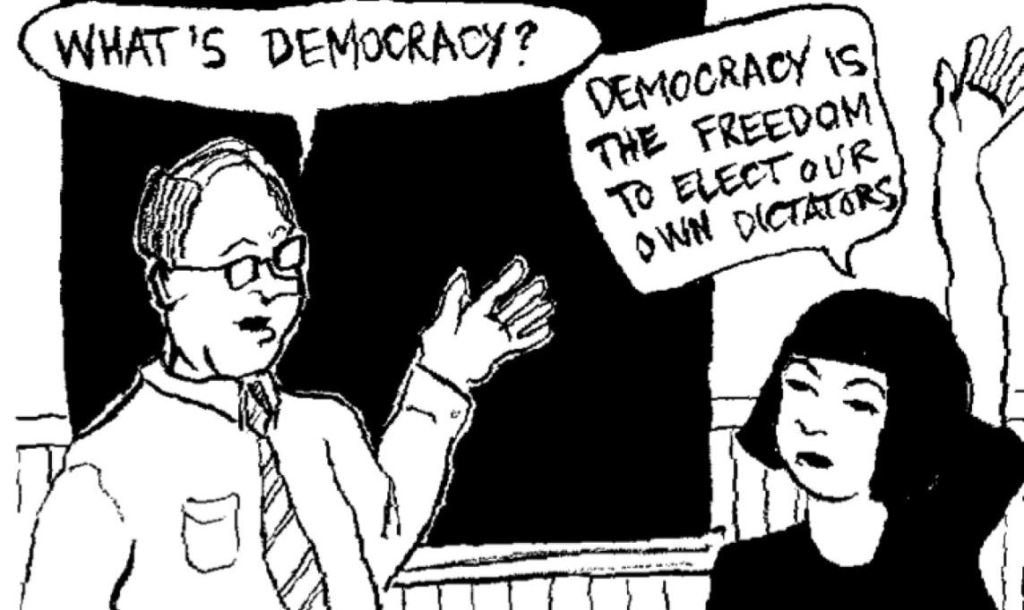
Japan Today published commentary from social anthropologist Dame Henrietta Moore, director of the Institute for Global Prosperity at University College London where she also holds the Chair in Culture, Philosophy and Design. Noting the seeming political disarray in several major democratic countries, she writes: “Yet all around the world, there are growing grassroots movements challenging this status quo. Recognizing the shortcomings of the political and economic systems around them, people are seizing the opportunity to effect change for themselves and their communities.”
gay sex conviction in Korean military decried
Credit: Heezy Yang/The Korea Herald
The Korea Herald reported on the response from Americans living in the Republic of Korea to the recent conviction by the Korean military of a gay soldier for having consensual sex. The article includes comments from Timothy Gitzen, an activist for Solidarity for LGBT Human Rights for Korea and a Ph.D. candidate in anthropology at the University of Minnesota: “…it’s state-sanctioned violence against its own people…It is the same argument people would use in the US to talk about segregation in the military between people of color and white soldiers…”
Salon reported on the popularity of Soylent, a meal replacement powder, in California’s Silicon Valley. The article quotes Jan English-Lueck, professor of anthropology at San Jose State and Distinguished Fellow at the Institute for the Future. She has been studying Silicon Valley culture for years and points to how “people are fascinated with speed and efficiency.” Further, “Food is very much a part of how we express our culture…Soylent is one form of highly functional, highly efficient food that isn’t going to interfere with your ability be productive.”
luxury cultures
Scene from the movie Breakfast at Tiffany’s. Credit: Wikipedia
The Huffington Post published an interview with cultural anthropologist David Abèlés, director of the French-Argentine Centre in Buenos Aires, about his latest research on luxury markets and arts around the world. He comments: “We cannot distinguish the trends affecting the industry and commerce of luxury from broader changes within capitalism. Anthropology provides a multifaceted point of view by approaching luxury as a total social artefact.”
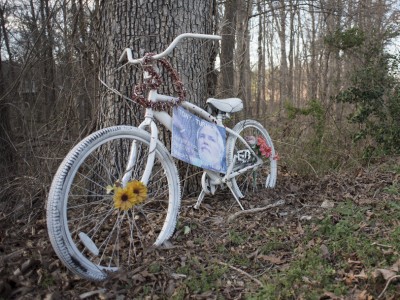
Ghost bike memorializing cyclist Tony Turner at the intersection of Roxboro Street and Chateau Road in Durham, North Carolina.
What are the relationships between body, health, mobility and urban environments? What happens when these connections are out of balance? And how do traffic and mobility—by vehicle or bicycle—fit into this equation?
These are some of the questions undergraduate students creatively explored this spring in Duke Global Health Institute assistant professor Harris Solomon’s Anthropology and Global Health seminar, which centered around the theme of injury, with ghost bikes as a case study.
The course culminated in three final small group projects—a podcast, a community action event and a website. Each group focused on a different ghost bike in Durham, North Carolina.
A piece in TIME magazine on the U.S. Mexico border quotes Jason De León, assistant professor of anthropology at the University of Michigan, who has conducted long-term studies of undocumented border crossings: “As soon as security is increased [in one place], it’s the balloon affect — you grab one area and the flow goes to another area.” He and other experts say that a wall between the U.S. and Mexico, like the fences that are in place now, will not deter immigrants who are willing to risk their lives to cross the border.
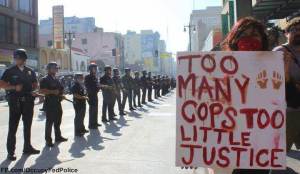
stopping police violence
Credit: Nevada CopBlock/Google Images Commons
USA Today carried an article by Sirry Alang, assistant of cultural anthropology professor in the Health, Medicine and Society Program in Lehigh University’s Department of Sociology and Anthropology. She offers a seven-point list of what people in the U.S. can do to end police violence and create a more equitable society in the U.S. They include advocacy work, learning about structural violence, and remembering those who have been killed.
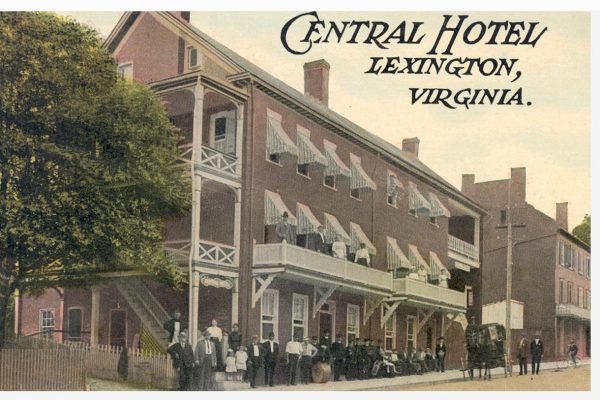
Central Hotel, Brower Post Card Collection, W&L Special Collections
Families and people of all ages are encouraged to take part in “The Many Stories of Main Street,” an interpretive downtown Lexington walking tour where one can learn about past generations who lived and worked in Lexington’s historic buildings.
The tour is based on research comprised of both archival and oral history, completed over the past few years by anthropology students at Washington and Lee University. “Students taking a variety of courses, including the Anthropology of American History and Qualitative Methods, researched the original owners and proprietors of downtown Lexington’s historic buildings and developed interesting and engaging ways to tell their stories,” said Alison Bell, associate professor of anthropology at W&L.










 anthropologyworks