An article in The Huffington Post by two anthropologists says that the French election is good news for refugees: “Macron’s win marks a small victory for the left and anti-populist movements, especially for the millions of forced migrants seeking refuge in Europe. Macron ran on an immigration platform that commended German chancellor Angela Merkel’s generous refugee policy and promised to prioritize asylum issues in his first six months in office.” The authors are Elizabeth Wirtz, doctoral candidate in anthropology at Purdue University, Mark Schuller, associate professor of anthropology at Northern Illinois University and affiliate at the State University of Haiti.
anumerism as a way of life
The Conversation published an article by linguistic anthropologist Caleb Everett, Andrew Carnegie Fellow and professor of anthropology at Miami University, on anumerism, or the practice of not using many words for numbers:“Numbers do not exist in all cultures. There are numberless hunter-gatherers embedded deep in Amazonia, living along branches of the world’s largest river tree. Instead of using words for precise quantities, these people rely exclusively on terms analogous to ‘a few’ or ‘some…’” In a new book, I explore the ways in which humans invented numbers, and how numbers subsequently played a critical role in other milestones, from the advent of agriculture to the genesis of writing.”
Health is about more than just individual behavior and clinical care, it’s about politics and power, say UConn medical anthropologists. In fall 2016, these migrants were forced to leave the ‘Jungle’ camp in Calais, France, when authorities decided to demolish the site. Some 7,000 people had been estimated to be living in the camp in squalid conditions. (Christopher Furlong/Getty Images)
The most powerful influences on human health are not the foods we eat or whether we have access to medical care, but how societies are organized, how power is distributed, and how some people are better positioned to make healthy choices than others, decades of public health research have shown.
These “upstream” factors are at the heart of Syndemics, a field of applied health research with roots in medical anthropology. UConn professor of anthropology Merrill Singer coined the term – a combination of “synergy” and “epidemic” – in the 1990s, and authored a 2009 textbook on the concept. Last month, the leading British medical journal, The Lancet, published a special series on the topic, featuring papers by Singer and UConn assistant professor of anthropology Sarah Willen, among others. The series grew out of a 2015 workshop co-sponsored by the Research Program on Global Health and Human Rights, of which Willen is director, at UConn’s Human Rights Institute.
She and an interdisciplinary team of researchers with an interest in migration co-authored the third of three papers in the series. Drawing on a variety of case studies, they consider how an approach that combines insights from syndemics and human rights can advance research, public health, and clinical care for migrant populations – all growing concerns in the face of rising anti-immigrant politics and policies in the United States and abroad.
In a recent interview with UConn Today, Willen discusses the significance of the series, her paper, and this innovative way of studying and confronting health inequities.
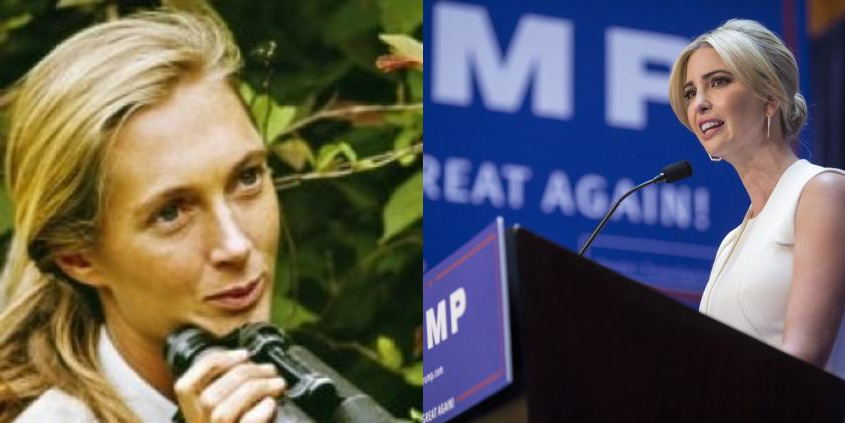
[Left] Jane Goodall, pioneering primatologist. [Right] Ivanka Trump quotes wisdom from Jane Goodall in her new book. Credits: Google Images Commons,
speaking truth to power
The Washington Post reported on the reaction of primatologist and activist Jane Goodall to being quoted in Ivanka Trump’s book, Women Who Work: “I understand that Ms. Trump has used one of my quotes in her forthcoming book,” Goodall said…“I was not aware of this, and have not spoken with her, but I sincerely hope she will take the full import of my words to heart.”Goodall said legislation passed by previous governments to protect wildlife — such as the Endangered Species Act, efforts to create national monuments and other clean air and water legislation — “have all been jeopardized by this administration.”Further: “She is in a position to do much good or terrible harm…I hope that Ms. Trump will stand with us to value and cherish our natural world and protect this planet for future generations.”
helping heroin-addicted children
Caption: Students at Prop Roots Education Center.
The South China Mail carried an article about the widespread heroin-addiction among children in China living along the Myanmar border.Drugs have become ubiquitous, according to Fu Guosheng, a former graduate student of anthropology at Minzu University of China in Beijing. Fu, originally from a village in the area and now an artist and aid worker, noted in her master’s thesis that opium was routinely used in her home town as a gift to greet guests. And it was not rare to see villagers taking heroin on the streets. Zhang Wenyi, who teaches anthropology at Guangzhou-based Sun Yat-sen University, explained in a recent article how a widening income gap between ethnic groups and modern China had knocked the local Jingpo people off balance, making some turn to drugs. Fu cited family problems and school drop-out rates as other driving forces.
The Tehran Times published a piece by William O. Beeman, professor and head of the anthropology department at the University of Minnesota in which he states that the United States is mostly concerned about its “strategic interests” versus promoting human rights and democracy around the world: “The United States measures its relationships with other nations solely in terms of American strategic interests. The United States makes a show of talking about human rights and democracy, but these concerns never really govern American policy…” In terms of Turkey and the recent referendum that gave more power to president Erdogan: “Turkey is a member of NATO and that is the principal tie between the U.S. and Turkey. If Turkey fulfills its NATO responsibilities, including opposition to Russia and support of the campaign against ISIS/ISIL/IS/DAESH, that is what will govern the relations with the United States.”
free speech in Berkeley
Credit: Google Images Commons
The New York Times published a letter to the editor by Robert Launay, professor of anthropology at Northwestern University in Chicago. He writes:“Free speech is meant to prevent censorship, to allow people to express any ideas in public, however unpopular or unsettling. It does not imply that these ideas must be expressed anywhere, anytime, under any conditions. The New York Times, for example, is under no obligation to publish an outrageous and offensive letter in the name of ‘free speech.’ Ann Coulter has had ample opportunity to express her opinions in public. It would be perverse to portray her as a victim of censorship simply because she cannot express her ideas on the Berkeley campus.”
MSU Denver Professor Dr. Jeremy Stoll sits at his comic-cad booth at the DiNK Comic and Art expo in Denver on April 9. Photo by McKenzie Lange • mlange4@msudenver.edu
As students, we sit in our classrooms listening to professors that we often know little about. They tell us their credentials the first day of class and as the semester passes they might offer tidbits about themselves, but we rarely learn much about their hobbies or passions.
Professor Jeremy Stoll is no different. He teaches Anthropology courses at MSU Denver, but he is just as passionate about creating comic books. As a cultural anthropologist specialized in folklore, telling stories through comic books doesn’t seem unfathomable. But the extent of how deep Stoll has dipped into the comic book world might surprise his students that don’t know him very well.
The Huffington Post published an op-ed by cultural anthropologist Paul Stoller, professor at West Chester University in Pennsylvania. He comments on Trump’s first 100 days: “It’s pretty clear that Donald Trump wants to govern in the same manner he would undertake a real estate development project. In real estate development there are two ways to move forward on a project: (1) raze the existing structure and replace it with something that is entirely new; or (2) keep the existing structure but gut it from the inside and replace it with revolutionary interiors.” Stoller compares Trump’s style to that of leaders of millenarian, or cargo cult movements.
what the world needs now
What is a business? Credit: Google Images Commons/Business Dictionary
Gillian Tett, former social anthropologist and now journalist with The Financial Times, writes in the FT about the value to business of anthropology and other social sciences:“Companies realise that as the world becomes more globalised, there is more — not less — need to understand cultural difference…as a former anthropologist myself, I am delighted that parts of the business world are actually recognising the benefits of social science; and I am doubly excited if it means that long-neglected anthropology departments might get more funding, and that their graduates might find jobs.” [Blogger’s note: the presence of anthropologists in business might, importantly, lead to transforming business practices to be more socially responsible by including attention to….people and no just profits].
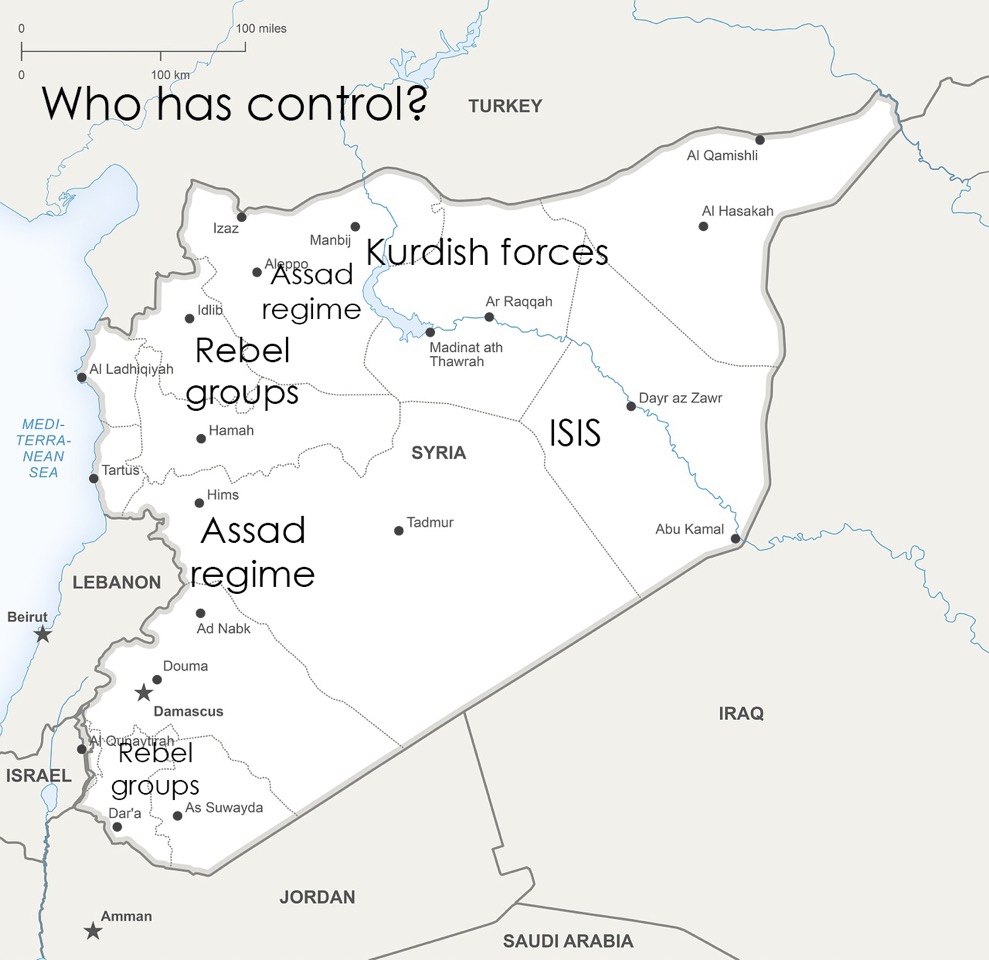
Though Syrian communities pre-date the modern world, Syria’s national identity is only about 72 years old. Since 2011, the country has been involved in a civil war with Sunni rebel groups, ISIS, Al Qaeda affiliates and Kurdish forces up against the Alawite authoritarian Assad regime. All sides of the war have committed human rights violations and contributed to the mass refugee crisis that has only been worsening in recent months. Last month, the United Nations led Geneva peace talks on Syria, but no agreements have been reached and the fighting continues.
Pro-“Yes” protests outside the Dutch embassy in Turkey. Credit: Wikipedia
macho-man Erdogan
BBC News reported on how Turks in the Netherlands feel about Turkey’s controversial referendum on April 16.The article quotes Thijl Sunier, professor of cultural anthropology at the Free University of Amsterdam: “It just makes them more passionate about him.” He says that Dutch-Turks see Erdogan through rose-tinted glasses: “They don’t experience the negatives caused by his policies, all the economic crumbling… they’re looking at him from a distance, they’re impressed by the macho way he does politics.”
gender rights
Transgender model Natachat Chanchiew. Credit: The Bangkok Post.
An article in The Bangkok Post described how The Face Thailand, a reality model contestant show, will feature a transgender model among the remaining nine contestants.It is the first time that the reality model competition has allowed transgenders to compete alongside other aspiring female models. The article includes a comment from Wipavee Phongpin, a gender expert from Thammasat University’s faculty of sociology and anthropology: “Compared to other countries, Thailand is considered quite open for the LGBT community, but it has still has some way to go.”
Tomahawk Block IV cruise missile during a flight test Credit: U.S. Navy, Wikimedia Commons
Trump strike on Syria
Two newspaper reports on Trump’s April 6 missile attack on Syria included commentary from cultural anthropologists. An article in The Providence Journal (Rhode Island) offered several points of view on the effectiveness of the attack from experts in Providence, Rhode Island including that of Catherine Lutz, Thomas J. Watson Jr. Family Professor of Anthropology and International Studies at Brown University: “The launch of 59 Tomahawk missiles is not only a major act of war that threatens to have killed as many people as the recent heinous chemical attack, but it is in violation of the War Powers Act…The financial cost is not insignificant, either: at an estimated $1.4 million each, that makes for a total of $83 million that might have been used to assist the refugees of that war rather than to accelerate it.”
In The Press Republican (Plattsburgh, New York), James Armstrong, professor of anthropology at the State University of New York Plattsburgh commented that the attack was not the best way to effect a positive outcome: “The Syrian situation is so complicated, you can never be sure what kind of reaction your action will produce.”
who has Trump’s ear?
Credit: Ear Sound Gallery, Wikimedia Commons
The Tehran Times carried an interview with cultural anthropologist William Beeman, chair of the department of anthropology at the University of Minnesota. The topic was: who is shaping Trump’s foreign policy? Beeman comments that “Both Bannon and Miller are, in my personal opinion, extremely dangerous ideologues in a government where the president is deeply inexperienced and impressionable…Bannon and Miller seem to be the most influential people. Many of Trump’s cabinet appointees seem to be peripheral. For example, Rex Tillerson, the new Secretary of State not only seems to be almost absent from policy decisions, he has not been able to appoint a deputy, and the budget for the Department of State seems to be about to be reduced by 30% or more. This is unprecedented in U.S. history. Outside of Bannon and Miller, President Trump seems to be listening to military generals.”
women’s secret language
OZY magazine carried an article about Nüshu, a secret script used by women in Hunan Province, China. It started as a simple way to communicate and later became “a log of a woman’s private torment and misery. Women would often weep while writing the script, expressing fears about arranged marriages, the anguish of leaving one’s family and all of life’s misfortunes.” Fei-wen Liu, anthropology research fellow at Academia Sinica in Taiwan and author of Gendered Words: Sentiments and Expression in Changing Rural China, says that Nüshu was meant to be written in verse and sung or chanted aloud: “The core of Nüshu are feelings of misery and bitter experiences.” It provided a rare window into the everyday misgivings of rural daughters, wives and mothers as they transmitted life lessons on how to survive in a society that was harsh to women.“Nüshu was about sisterhood,” and they called themselves “sworn sisters,” using Nüshu as “a way to bind them together.”
book launch
The Montreal Gazette reported on the launch of a new book by Homa Hoodfar, professor emerita of anthropology at Concordia University in Toronto. Publication was delayed by a year because of her imprisonment in Iran on specious allegations that were eventually dropped. The book, an edited collection, focuses on how women fighting for their rights in sports extends into the political arena. IT was originally planned to appear before the run-up to the 2016 Olympics as a contribution to the discussion about women in sport accompanying the Rio Games. Hoodfar commented that there are many parallels between the sports arena and the political sphere when it comes to women negotiating their rights. In the Muslim world, women have often had to fight just to be able to participate in sports.In Iran, she said, women pushed back against the notion that it was “un-Islamic” for them to play sports by arguing physical activity is a part of healthy living, “and taking care of health is everyone’s responsibility because health is a gift from God.”
take that anthro degree and…
…become a professor of religion and Middle East Studies. Amira Mittermaier is an associate professor in the Department for the Study of Religion and the Department of Near and Middle Eastern Civilizations, with a cross-appointment to the Anthropology Department, at the University of Toronto. Bringing together textual analysis and ethnographic fieldwork, her research has focused on modern Islam in Egypt. Her first book, Dreams that Matter: Egyptian Landscapes of the Imagination explores Muslim practices of dream interpretation, as they are inflected by Islamic reformism, Western psychology, and mass mediation. Professor Mittermaier’s current book project, tentatively titled The Ethics of Giving: Islamic Charity in Contemporary Egypt, examines different Islamic modes of giving in post-revolutionary Egypt. Mittermaier provides opportunities for student supervision in areas such as modern and postcolonial Islam, Sufism, anthropological approaches to religion, and ethnographic method and writing. She has a B.A. from the University of Michigan (major unspecified) and an M.A. and Ph.D. in socio-cultural anthropology from Columbia University.
being a woman archaeologist
The Lake County News (California) interviewed archaeologist Seetha Reddy in honor of International Women’s History Month which was in March. Reddy, president of Reddy Consulting, commented:
“In terms of role models, there are several women who I hold in great regard and respect – of particular mention are Dr. Diane Gifford Gonzales (UC Santa Cruz), and Dr. Kathleen Morrison (University of Pennsylvania). These women have been active in fieldwork and laboratory research, and have demonstrated how women make valuable contributions to the field while balancing other aspects of life.”
DNA and the First Americans
The Columbus Dispatch (Ohio) reported on recent DNA findings about the first peoples of the Americas published in the American Journal of Physical Anthropology. Biological anthropologists Connie Mulligan, of the University of Florida, and Emoke Szathmary, of the University of Manitoba, consider how genetics informs current understandings of the population history of the Americas. In addition to describing the DNA findings, the authors address the perspectives of American Indians on genetic research as it affects their identity. Mulligan and Szathmary suggest that the use of the term “migration” to describe the initial movement of peoples from Asia into the Americas can be interpreted to imply that indigenous Americans are simply another immigrant population with no special rights to the lands their ancestors were the first to discover. They suggest dropping the word “migration” to describe a process that involved “occupation over several millennia of a consolidated Asian-American land mass.
U.S. birth rate rising among 30 year-olds
The St. Louis Dispatch (Missouri) reported on changes in the U.S. birth rate including the fact that women in their 30s are having babies at the highest rate since the 1960s. Otherwise, the population is generally stagnating. In Missouri, the number of births to women in their 30s increased 17.3 percent, while births among other age groups dropped by 18.4 percent. The article included commentary from biological anthropologist Sarah Lacy, assistant professor at the University of Missouri-St. Louis. She points out that the population of Missouri has gotten older and whiter than in other parts of the country that have added more Hispanic immigrants. “If the state is getting older, you are already pushing the fertility numbers back because younger people are living elsewhere.”
parent-child co-sleeping debate fired up by a post
Oklahoma City resident David Brinkley posted a photo of his wife, Alora, on Facebook in a post that went viral. Credit: Facebook/Alora Brinkley
The pros and cons of parent-child co-sleeping (usually glossed as mother-child co-sleeping) are matters of ongoing debate among scholars and regular people. A father recently posted on social media a photo of his two children sleeping with their mother: it went viral. A CBS article on the topic quotes biological anthropologist James J. McKenna, professor of anthropology and the director of the Mother-Baby Behavioral Sleep Laboratory at the University of Notre Dame. McKenna, a supporter of co-sleeping, says statistics and warnings against co-sleeping shouldn’t be used to scare parents: “You have to go out of your way to make [co-sleeping] dangerous…No matter how many warnings or misrepresentations of inherent dangers moms and babies find themselves… Babies have always slept and always will sleep next to their mothers.”
credit: Creative Commons, The Blue Diamond Gallery
cultural anthropologists make great politicians
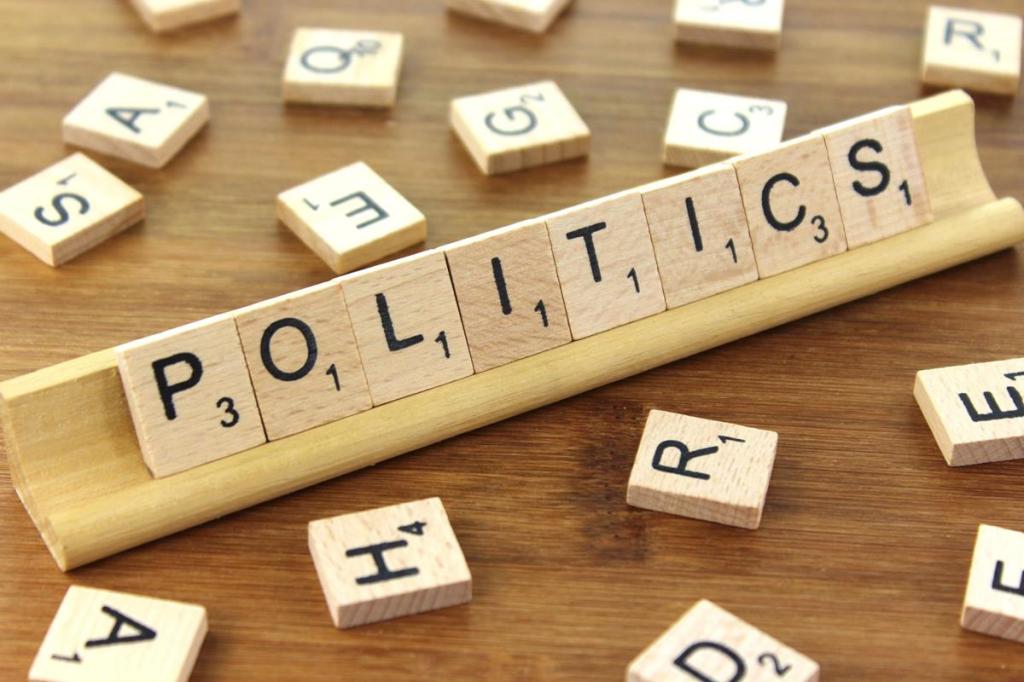
The Huffington Post published an article by Debra Rodman, associate professor of cultural anthropology and director of women’s studies at Randolph-Macon College in Virginia. She is also an asylum expert witness and cultural consultant. Rodman argues that cultural anthropologists have a lot to offer to politics: “In order to create positive, progressive, empirically-based policy decisions, we need science. In a time when fear and bigotry has blurred the line between fact and fiction, it seems like a pretty good time to count on people who have to get their facts straight before they say anything.” Rodman is running for Virginia Delegate for the 73rd district.
trashed: pollution in Indonesia
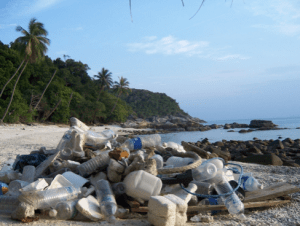
Beach scene in Malaysia. Credit: Wikimedia Commons
Channel News Asia carried a piece by Thomas Wright, doctoral candidate in Anthropology at the University of Queensland. He describes the growing environmental problems in Bali such as pollution and freshwater scarcity. Popular tourist destination beaches are covered in waste, most of which is plastic that washes ashore during the rainy season.Indonesia is the world’s second-biggest marine polluter after China, discarding 3.22 million metric tons of waste annually, accounting for 10 per cent of the world’s marine pollution. Wright describes volunteer and NGO efforts to raise awareness about trash pollution and a conference in February organized by The Economist that left out such voices.


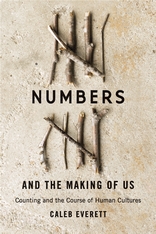 The Conversation published an article by linguistic anthropologist Caleb Everett, Andrew Carnegie Fellow and professor of anthropology at Miami University, on anumerism, or the practice of not using many words for numbers: “Numbers do not exist in all cultures. There are numberless hunter-gatherers embedded deep in Amazonia, living along branches of the world’s largest river tree. Instead of using words for precise quantities, these people rely exclusively on terms analogous to ‘a few’ or ‘some…’” In a new book, I explore the ways in which humans invented numbers, and how numbers subsequently played a critical role in other milestones, from the advent of agriculture to the genesis of writing.”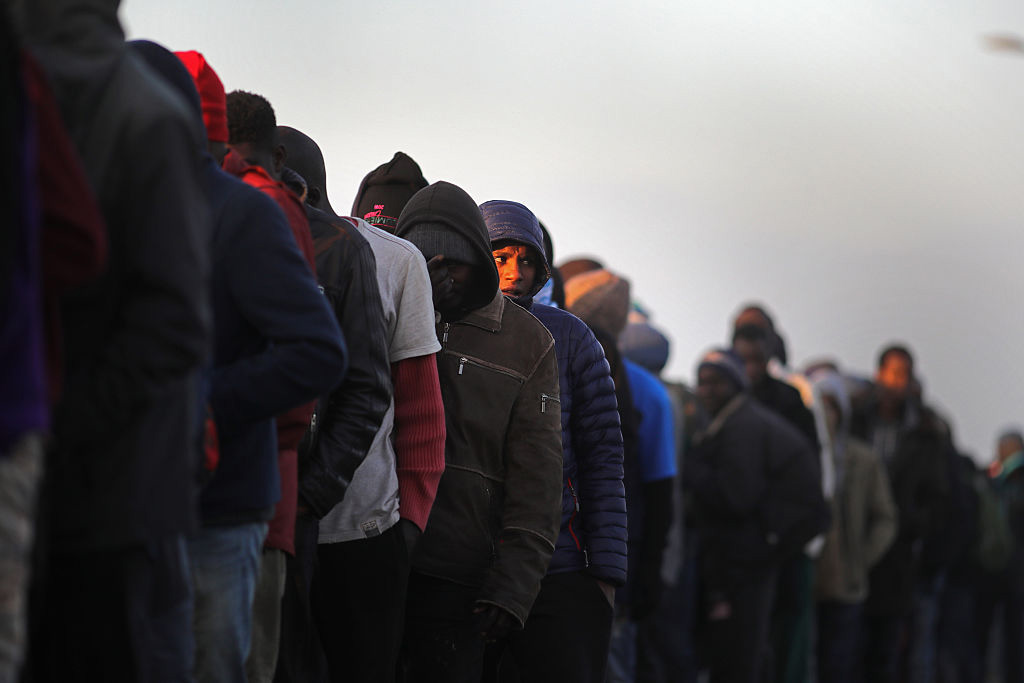









 OZY magazine
 anthropologyworks