

Guest post by Mayumi Sakamoto
As of March 18, the situation is very serious in Fukushima prefecture due to the nuclear power plant problem. The complex after-effects of the tsunami are disturbing the entire S&R (search and rescue) efforts and related disaster response activities, as well as creating problems for economic activity, agriculture, the environment and people’s lives.
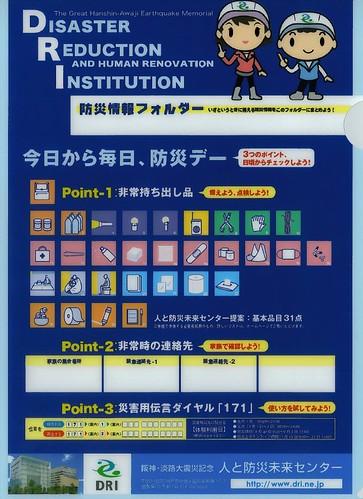
In Fukushima, many people are making amazing efforts, in spite of clear health risks to themselves, in order to prevent the situation from worsening.
The DRI dispatched our expert team on Monday to Miyagi prefecture to support the local government. We will continue our operation for the next several weeks.
So far, the recovery of infrastructures is just amazing. After one week, electricity, water-supply, roads and the banking system are recovering. In terms of resilience of infrastructure I would say we are very resilient.
On the other hand, the many evacuated people are in a severe condition, and these displaced people will face many long-term challenges.
The disaster-affected area in Japan is one of the most well prepared area for tsunami. But planning was based on reasonable estimates which, in this case, nature has exceeded. So how can one be prepared for such massive destruction?
The DRI believes we have to pay keen attention to social impact of the disaster and find a way to establish some framework to analyze it. I am collecting information regarding to this disaster in national level and also trying to establish archives for this disaster. I am also interested in learning about relevant experiences from other post-earthquake/disaster situations to learn about how to address the social impact including many displaced persons.
Mayumi Sakamoto, who holds a Ph.D. from Kyoto University, specializes in disaster recovery assistance (particularly in Aceh during the 2004 tsunami) and international cooperation at Japan’s Disaster Reduction and Human Renovation Institution.


 MR: What regions of Pakistan and sectors of the population are affected most by the tragic flooding?
 • Book review in JAMA
 anthropologyworks