More tattoos, more sex?

In many cultures, the human body is not good enough as it is: it requires remodeling and marking of various types. Tattoos, piercing, scarification and other forms of bodily modification are widespread across contemporary human cultures, and they have long existed.

Archaeological and other prehistoric evidence indicates that head elongation, ear piercing and tattooing have been practiced for hundreds of years. Patterned blue dots appear in various places on the skin of Ötzi, the Neolithic “Ice Man,” and scientists theorize that the location indicates a possible healing function.

Tattoos among highland peoples in Southeast Asia can protect the bearer against harm such an animal attack or can enhance one’s intelligence, strength or attractiveness. Cultural anthropologists have written extensively about body modifications representing human agency and choice as well as being oppressive “inscriptions,” such as foot binding, breast enhancement or genital cutting. Evolutionary anthropologists seek to understand how such behaviors as tattooing and piercing relate to biological fitness. The bottom line: do tattoos and other forms of body modification help people find a mate and reproduce their genes?

Anthropologist Slawomir Koziel and colleagues propose two hypotheses about tattoos and piercing drawn from evolutionary biology:

  1. because tattoos and piercings involve biological risks due to possible blood-borne infections, they signal a higher biological quality
  2. tattoos and piercing increase a person’s physical attractiveness or hide a problem with appearance specifically low body symmetry (high symmetry is taken as an indicator of healthy development).

To test these hypotheses, the researchers recruited participants in two tattoo salons in two cities in Western Poland. A total of 64 men and 52 women took part. All reported having tattoos or piercings beyond earlobe piercing. All were Polish, and the mean age was 23 years. Most had completed secondary school and 25 were postgraduates.

A control group was composed of 38 men and 48 women who had no tattoos or piercing. All participants completed a questionnaire asking about basic demographics: age, gender, place of birth and residence, education and marital status. Their second and fourth digits were measured, as was finger length from basal crease of the digit to the tip along the ventral surface of the hand. These measurements were used to create a composite index for body symmetry.

Among males, the most common location for tattoos was the upper and lower extremities. For females, it was the back and stomach. Men had more tattoos covering more of their body than women did. Piercings were most often on the face for males and on the stomach for females.

Results offered no support for the first hypothesis about attractiveness for either the men or the women. In terms of the second hypothesis, tattooing among the men was positively related to higher body symmetry and thus appears to be an “honest signal” of biological quality. Among the women, no relationship was found. The authors see the need for further research on the biological function of tattoos/piercing especially among men in different social contexts and in varying social strata in relation to the men’s personality, risk-taking behavior and hormones. The body symmetry measures used in this study could also be improved upon in terms of assessing “genetic quality.”

Food for thought for readers who have opted, or not opted, for body modification: Do you find either hypothesis compelling?

Photo: “Ben (01), Tattoo Artist”, from Flickr, licensed for Creative Commons.

Anthropologyworks 10 best of 2009

The following list was determined by a panel of one, though, as you can see, many of the choices are externally validated. Congratulations to one and all!

  1. Best Student Essays in Public Anthropology: The public anthropology award winners of 2009 are 19 students in Diana French’s Anthropology 100 class, Introduction to Cultural Anthropology, at the University of British Columbia-Okanagan.
  2. Best Anthropology Song … or was it the only one? Certainly the only one performed at the AAA meetings.
    http://vimeo.com/moogaloop.swf?clip_id=8035515&server=vimeo.com&show_title=1&show_byline=1&show_portrait=0&color=&fullscreen=1
  3. Best Long-term Field Research: Olga Linares, of the Smithsonian’s Tropical Research Institute in Panama, has been doing fieldwork in three regions of Senegal for 40 years. She has witnessed many changes including a doubling of the number of poor people, declining rainfall, abandonment of rice fields and effects of the drop in currency value. She describes how Senegalese women farmers creatively cope with these changes.
  4. Best Contribution to Anthropological Ethics: the AAA-commissioned report (PDF) on the Human Terrain System was submitted in November; the product of many months of work by several contributors, it condemns the role of anthropologists in U.S. military operations.
  5. Best Special Issue of a Journal: Social Science and Medicine, Volume 70, issue 1 (requires login), edited by Catherine Panter-Brick of Durham University, contains 20 articles on conflict, violence and health. I will be assigning several of them in my spring medical anthropology seminar.
  6. Best News About One of My GW Colleagues: Patty Kelly, research professor of anthropology, is co-winner of the Sharon Stephens Prize and runner-up for the Victor Turner Prize for her book, Lydia’s Open Door: Inside Mexico’s Most Modern Brothel.
  7. Best New Journal: Collaborative Anthropologies, edited by Luke Eric Lassiter.
  8. Best Anthropology Conference: The September meeting of the Society for Medical Anthropology at Yale University. Although I wasn’t able to attend, my colleagues who did have praised the plenary speakers, rich array of papers, impressive attendance and organization, including meals for the attendees.
  9. Best Kinship Story: The President of the United States’ mother was a cultural anthropologist, and Duke University Press published a revised version of her dissertation, Surviving against Odds.
  10. Best Public Impact: A shared shout-out to Antonio N. Zavaleta, professor of anthropology at the University of Texas at Brownsville and Texas Southmost College, who received the Premio Otli Award from the Mexican government for his work improving the quality of life for Mexican citizens living abroad, and to Patricia Easteal, associate professor in the University of Canberra’s faculty of law, who won the Australian of the Year Award for her efforts in advancing human rights and justice in Australia. More info here.

Anthro in the news 12/28/2009

• Mexican national award to U.S. anthropology professor

Antonio N. Zavaleta, professor of anthropology at the University of Texas at Brownsville and Texas Southmost College, received the Premio Otli Award. It is given by the Mexican government to non-Mexican citizens who work to improve the quality of life for Mexican citizens living abroad.

• Australian of the Year Award goes to legal anthropologist/law professor

The Australian of the Year Award goes to an Australian recognized for bettering the world and inspiring others to do so as well. Patricia Easteal, associate professor in the University of Canberra’s faculty of law, won the award for her efforts in advancing human rights and justice in Australia by highlighting equity issues in the law, courts, prisons and policing. She earned a Ph.D. in cultural anthropology at the University of Pittsburgh and is a dual citizen of the United States and Australia. Her publications, including 13 books authored or co-edited and more than 100 journal articles, have had an impact on legal reform and public policy especially in the area of violence against women. “There is still a way to go,” she says.

• Liberté, égalité, sexualité

An article in The Independent describes how schools across France may be facing student revolts about the right to wear sexy clothes in school. Some schools forbid low-slung trousers (for males presumably), short garments (for females presumably) and piercings. A rumor at one school of a potential ban on all contact between couples prompted students to threaten a “day of kissing.” Sociologist Michel Fize of the Centre Nationale de la Recherche Scientifique says that he is not surprised at the increase in teenagers wanting to dress provocatively. He places the blame on television and a “hyper-erotic” society: “How can you say to a teenage girl that she is baring too much of her shoulder when those on television are doing exactly that?” In the meantime, isn’t this the same country that gets upset when Muslim girls want to cover their heads in school?

• A community of heroin addicts

WHYY Radio interviewed cultural anthropologist Philippe Bourgois, professor of anthropology at the University of Pennsylvania, about his 12 years of research with homeless heroin addicts and crack smokers in San Francisco. Bourgois and photographer Jeff Schonberg published their findings in a 2009 book, Righteous Dopefiend. An exhibit by the Slought Foundation in Philadelphia provided an “ethno-photographic” display during December.

• Chimpanzee cutlery

For the first time, chimpanzees have been seen using tools, specifically cleavers and anvils, to cut food into bite-sized bits, according to a report from BBC. In other words they are processing food with tools, a significant step beyond using tools to procure food as in ant-fishing and nut-cracking. The study of chimpanzees in the Nimba Mountains of Guinea was carried out by Ph.D. student Kathelijne Koops and William McGrew of the University of Cambridge and Tetsuro Matsuzawa of Kyoto University.

• First foreign geisha or not?

Mainstream media picked up on the debut of cultural anthropologist Fiona Graham, an Australian by birth with a Ph.D. from Oxford, as Sayuki, a trained geisha who bills herself as the first foreign geisha. In the 1970s, however, American cultural anthropologist Liza Dalby, with a Ph.D. from Stanford, did long-term participant observation in a geisha community and trained to be a geisha, making her the more likely first foreign geisha. Dalby is the author of Geisha, among other books. Graham seems to be suggesting that Dalby didn’t go through all the necessary steps and dressed and acted as a geisha simply through the courtesy of her geisha friends.

• Modern human behavior = compartmentalized activity areas

One indicator of “modern humans” is the existence of defined living areas for different activities which is taken to indicate formalized conceptualization of living space and organizational skills. A new study by archaeologists at Hebrew University, published in Science, has pushed back the date for such behavior to as early as 750,000 years ago. Evidence comes from the site of Gesher Benot Ya’aqov in northern Israel. Excavations were carried out under the direction of Naama Goren-Inbar. Members of the international research team include Ella Werker, Nira Alperson-Afil, Gonen Sharon, Rivka Rabinovich, Shosh Ashkenazi, Irit Zohar and Rebecca Biton of the Hebrew University Institute of Archaeology; Mordechai Kislev and Yoel Melamed of Bar Ilan University; Gideon Hartman of the Max Planck Institute; and Craig Feibel of Rutgers University. Archaeologist Alison S. Brooks, an anthropology professor at The George Washington University and not involved in the research, is quoted in The New York Times as saying: ”This is an extraordinary site,” and the evidence of hearths itself “implies some kind of spatial organization.” But what would Foucault say? Didn’t he write that the disciplinary use of space occurred in the late 18th century?

• Precolonial farming in Hawai’i

A multidisciplinary team including archaeologist Patrick Kirch, professor of anthropology at the University of California at Berkeley, has found evidence of extensive dryland farming systems dating from precolonial times that could have supported one million people. Ecologist Samuel Gon III, cultural advisor and senior scientist with the Nature Conservancy, is quoted in the Star Bulletin as saying that the findings suggest “we can wean our reliance on food from the outside.” The research is described in the Journal of Archaeological Science.

• Headless in Vanuatu

The oldest and largest skeleton find in the Pacific Ocean has been discovered in a coral reef in Vanuatu. The multidisciplinary research team is led by Stuart Bedford and Matthew Spriggs of Australian National University in collaboration with the Vanuatu Cultural Centre. So far, 71 individuals have been recorded. They are all headless and some have their limbs broken, perhaps so they could be stuffed into crevices in the reef. Mads Ravn, team member and head of research at the University of Stavanger’s Museum of Archaeology in Norway is quoted in Science Daily: “The way these people are buried bears witness of a body concept which is different from the whole-body concept in Europe…”

• Nazareth house dated to the time of Jesus

A dwelling in Nazareth appears to be dated to the time of Jesus and was probably one of about 50 houses in what was then a remote hamlet. The research is being carried out by a team of Israeli archaeologists led by Yardena Alexandre, excavations director at the Israel Antiquities Authority. Alexandre said, “There was a logical possibility that a young Jesus could have played around the house with his cousins and friends.”

• Tis the time for lists

Several news media have presented their list of notable deaths in 2009. Three English-language sources that I have seen — The Sunday Times (London), The Observer (England), and the Los Angeles Times — include French cultural anthropologist Claude Lévi-Strauss on their lists. The Sunday Times has a modest list of four, so that’s quite a tribute. The Observer‘s list, organized chronologically by death date, is too long to count. Ditto for the list in the LA Times which organized individuals into categories such as “from the halls of power,” “big screen and small,” “cultural trailblazers,” “wordsmiths” and “LA legends.” Lévi-Strauss’ name appears in the “agents of change” group which also includes Eunice Kennedy Shriver and Norman Borlaug.

Stunned by the massive New York Times obituary coverage (starting on the front page with a photo and continuing with an interior full-page) following the death of American economist Paul Samuelson, this blogger feels that there may be some justice in the world after all since Professor Samuelson didn’t make it on any of the lists discussed here.

To market, to market

Farming women hold up more than half the sky in rural Senegal. Olga Linares, a researcher with the Smithsonian’s Tropical Research Institute in Panama, has been doing fieldwork in three regions of Senegal for 40 years. She has witnessed many changes over this period including a doubling of the number of poor people, declining rainfall and abandonment of many of the rice fields, and the effects of the drop in the value of African currencies. During this period, the World Bank has admitted to neglecting agriculture.

Although variations exist across the three regions, Linares finds a general pattern of women developing gardens that they cultivate on their own or with groups of women to produce vegetables for sale in nearby markets. The installation of drip irrigation systems, with the assistance of NGOs, is the single-most important innovation in saving women countless hours carrying water over long distances to their gardens.

Linares points out that it is women’s traditional knowledge of farming that is critical in this new endeavor, along with help from NGOs and extension services. Their familiarity with what works and what doesn’t is “ultimately responsible” for the success of their gardens. With cash from sales, they support the household economy including clothing, rice for daily meals, and children’s schooling. Vegetables that are not sold are consumed by household members or fed to their domestic animals.

All in all, it’s a win-win situation that builds on women’s traditional knowledge, capabilities, and cooperation can lead to life-sustaining change.

Image: A farmer in Senegal by Flickr user vredeseilanden. Licensed by Creative Commons.

Sexism, racism, and death in Second Life

Virtual worlds research can provide insights into important social questions such as racism and ethnic discrimination. An exploratory study of a “Muslim” avatar in Second Life provides intriguing findings that beg for more in-depth research.

Methal Mohammed teaches English as a second language in the Department of Teaching, Learning and Culture at Texas A&M University. She first came to the US as a Fulbright Scholar from Baghdad, Iraq. As part of a class in visual culture, she created a Second Life (SL) personal avatar, “noorelhuda Beb”. “Noorelhuda” first dressed in long trousers, a long sleeved shirt and white shoes. She had “basic” features and long brown hair. She teleported to several sites to make friends but spent most of her time sitting alone.

The researcher decided to add a hijab (headscarf) to her avatar. Noorelhuda with her hijab then set out to a variety of sites to meet other avatars using the question, “I am new here, can you please help me?” Avatars she met either commented briefly or turned away and kept going.

A handful of vignettes from noorelhuda’s visits reveal that she was making some progress establishing contacts and engaging in constructive conversations related to her hijab and its cultural meaning. Things were going well until noorelhuda decided to revisit an earlier site: a beach resort where other avatars were sunbathing or dancing. She was approached by a male avatar policeman who pushed her into the sea where she drowned. She was “killed.”

This brief study connects to many questions about what SL interactions reveal about Real Life (RL) including racism, sexism, exclusion, appearance-based judgments, and aggression. It also raises the issue of research ethics: in cultural anthropology, it is unethical to carry out undercover research. One has to inform research participants about the goals of the research and protect their anonymity. “Informed consent” is thus an important guideline, but it has the downside of preventing anthropologists from doing research in “natural” situations where actors are not influenced by knowing that their words, thoughts, and behaviors are being observed and recorded.

Research in SL necessarily protects the anonymity of “research participants.” So is it okay for someone like “noorelhuda” to conduct “under cover” research in SL? If she had told people that she was visiting sites and trying to meet people as part of a research project, would her experiences have been different? Would people have been more interested in talking with her, or the opposite? Would people displayed less racism? Would the policeman have “killed” her?

Photo, “A Muslim lady in SL”, from Flickr and Creative Commons.

Listen to the people

by Barbara Miller

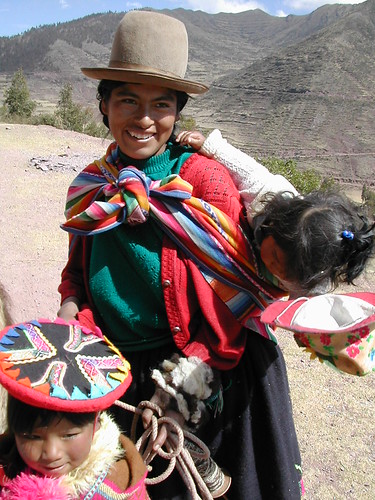
A feature of the Bulletin of the World Health Organization is called “Lessons from the Field.” This month’s features a report by Sabine Gabrysch and colleagues on a successful case of “cultural adaptation of birthing services” in rural Ayacucho, Peru. The project took two years and included detailed formative research, design of a new culturally adapted model, implementation, and evaluation of implementation and impact.

The problem was that birthing clinics, based on a Western model, were underutilized by women in the region for deliveries. After the “culturally adapted” birthing centers were provided, the number of births at the centers increased. The assumption is that maternal and child health will be improved by use of the center for birthing.
The increased number of births at the “culturally adapted” centers is attributed to a participatory approach which involved asking indigenous women about their views of what the center should provide in terms of services. They want staff to be able to speak Quechua. They want to be able to deliver squatting and not lying flat on their backs. They want the placenta returned to them for proper burial.

The centers took these factors into account including providing a rope and a bench in the delivery rooms to facilitate birthing in a crouched position. After a trial period, the professionals working at the centers agreed that it is possible to blend Western training in birthing with local preferences.

Thirty years ago, Brigitte Jordan’s path-breaking book, Birth in Four Cultures, was published. Among its many important lessons is that the Western way of birth is just one of many and one that has some costs along with its benefits. Brigitte Jordan pioneered the critique in cultural anthropology of Western birthing. More recently, Robbie Davis-Floyd, in her several publications, has helped moved it into the mainstream of anthropology and beyond.

It is wonderful, of course, that Gabrysch and colleagues have learned the lesson of why “professionals” must listen to the people and shrug off the choking cloak of their authoritative knowledge. But I fret that it continues to take so long for the professionals to learn. So many decades, so much grant money, so many lives lost and withered because we didn’t listen to them. It’s not rocket science.

Photo, “woman and children”, from Flickr via Creative Commons.

Tourism, human rights, and who is in control

By Barbara Miller

Lead articles in the travel sections of the Sunday August 24 issues of The Washington Post and The New York Times raise some interesting questions about tourism in relation to indigenous peoples.

Both articles offer food for thought for anthropologists who work with indigenous peoples to protect, preserve, and “manage” their cultural heritage and for cultural tourists who want to avoid harming indigenous peoples and fragile environments. The articles also provide a useful source for classroom discussions around issues of heritage, rights, and responsibility.

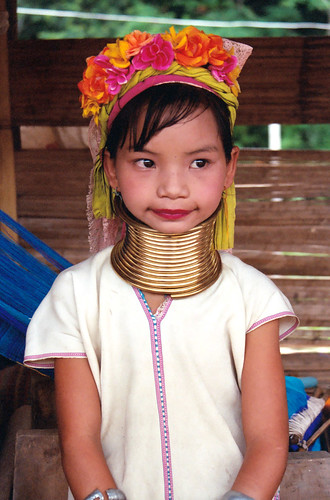
The Washington Post article is about possible human rights abuses of Padaung women in northern Thailand. Their necks are elongated by wearing a stack of brass coils. They have long been an attraction to outsiders — photographers, journalists, tourists, and other voyeurs. Human rights activists and some eco-tourist company owners have expressed concern that unscrupulous businessmen are keeping Padaung women in “human zoos” across a wide area of northern Thailand.

The author of the article visited one village in which the women told him they are paid to live there and wear traditional clothing including their brass rings. It’s a village created for and sustained by tourists. The author asks: “So it is unethical to visit the long-necked women?” (p F4). The author notes that the women he talked with said that their life in the fake village where they earn money is preferable to poverty.

The New York Times article on the Navajo highlights the value, to indigenous people, of controlling tourism including the narrative conveyed to the tourists in terms of the complicated concept of “authenticity” and the profits generated from tourism. The contrasts with the situation of the Padaung women are clear. While the Navajo in this article are also putting parts of their culture on display for outsiders, they are in control of what to make publicly available and how, including an emphasis on respect for heritage and environmental concerns which responds to a new generation of tourists.

Wouldn’t it be wonderful if the Padaung could be liberated from the “businessmen” and become in charge of their heritage and its consumption by outsiders?

Image: “Padaung Village,” licensed under Creative Commons from Flickr.

Anthro in the news 8/24

Cognitive anthropologist has a message for Obama about health care reform

Cognitive linguistic anthropologist George Lakoff lists nine things that the Obama administration should have done earlier on in the campaign to reform health care. He also offers specific advice for how to win the campaign through a more effective communications system, including a brilliant suggestion to rename the “public option” as the “American Plan,” which will remove any taint of “socialism” and instead invoke feelings of patriotism.

This blogger likes Lakoff’s idea very much but wonders about the chances of a label change in reminding Americans that patriotism and love of country can include compassion to fellow Americans who have less than they do.

Economic development can exacerbate gender inequality.

In many patriarchal situations (patriarchy is when men dominate most or all social domains including the economy, politics, family, and belief systems), sons are highly preferred to the extent that people opt to abort female fetuses or systematically neglect daughters in terms of food, health care, and affection.

Areas where such preferences are particularly include northern India’s richest states: Punjab and Haryana.

An article in a special issue of The New York Times Magazine (August 23, 2009, pp. 23- 25) devoted to women’s rights internationally highlights the field research of cultural anthropologist Monica Das Gupta in rural Punjab in the 1980s.

Her data revealed the double-edged sword of development: richer, more-educated people have fewer children than poorer, less-educated families, but they still want to have at least one son. So the pressure to avoid having a daughter is more extreme. Das Gupta is currently a senior social scientist in the World Bank’s Development Research Group.

The article offers no recommendations, just a faint note of hope that the “clash” between modernity and exacerbated masculine bias in infant and child sex ratios in highly patriarchal situations may be a problem of only “the short and medium terms” (p. 25). Whatever that means.

Note: For historical context on northern India’s extremely unbalanced sex ratios, see Chapter 2 of my book, The Endangered Sex: Neglect of Female Children in Rural North India, 2nd ed., Delhi: Oxford University Press, 1997; originally published by Cornell University Press, 1981.

Male-biased sex ratios of pet dogs in New Delhi

By Barbara Miller

The wealthy of New Delhi have taken to buying pedigreed dogs as status markers, and the vast majority buys male dogs. Owners are resorting to advertising to find female mates (in the sexual sense, it seems) for their dogs, but the search is often fruitless due to the scarcity of females.

The skewed set ratio among pet dogs appears to be even more severe than in the human population, though perhaps it may be driven by a general societal preference for males that has long been documented by anthropologists, sociologists, demographers and others. In the human population, the larger number of males occurs mainly through sex-selective abortion and neglect of female children putting them at greater risk of death through malnutrition and untreated illnesses.

As with the pet sex ratio problem, highly unbalanced sex ratios among children is not most characteristic of the poor, but is more prominent among middle and upper groups.

Are dog breeders systematically culling female puppies, or are they keeping them as future breeders rather than selling them? Perhaps a combination thereof? Either way, male dogs seem to come out on top, as do men more often than women in India.

Readers with access to JSTOR may be interested in my related article “Female-Selective Abortion in Asia: Patterns, Policies, and Debates” in American Anthropologist, New Series, Vol. 103, No. 4 (Dec., 2001), pp. 1083-1095, accessible here.

Image: Young mother and her son in a village in North India. By Barbara Miller.

The politics of women’s clothing

By Barbara Miller

The Economist reports that Sudan’s criminal law forbids “indecent clothing in public” with little in the way of further details. Sudanese journalist Lubna al-Hussein was recently arrested in Sudan along with 12 women for being improperly dressed. Ten of the 12 accepted the charge, and each was punished with 10 lashes and was forced to pay a fine equal to U.S. $100. Ms. Hussein is contesting the charges. The problem seems to be that she was wearing trousers.

In Sudan women are flogged for wearing pants. In France, women appearing in public fully covered with a head-to-toe veil has become a volatile policy question for the government and an important cultural rights issue for Muslims along with the 2004 ban against girls wearing headscarves in schools. France has the largest Muslim population of any country in Europe. Muslims constitute about 10 percent of the national population.

How does all this square with liberté, egalité, and fraternité? Are such hard-fought-for values to be lost in the wake of contemporary concerns for “national integration” and “national security”? And how important a role, behind the veil of national policy, is being played by xenophobia and anti-immigrationist fears?

Image: Female students in Alexandria, Egypt. By Barbara Miller.