Listen to the people

by Barbara Miller

A feature of the Bulletin of the World Health Organization is called “Lessons from the Field.” This month’s features a report by Sabine Gabrysch and colleagues on a successful case of “cultural adaptation of birthing services” in rural Ayacucho, Peru. The project took two years and included detailed formative research, design of a new culturally adapted model, implementation, and evaluation of implementation and impact.
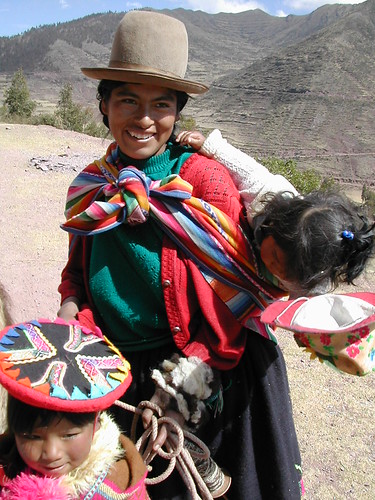
The problem was that birthing clinics, based on a Western model, were underutilized by women in the region for deliveries. After the “culturally adapted” birthing centers were provided, the number of births at the centers increased. The assumption is that maternal and child health will be improved by use of the center for birthing.

The increased number of births at the “culturally adapted” centers is attributed to a participatory approach which involved asking indigenous women about their views of what the center should provide in terms of services. They want staff to be able to speak Quechua. They want to be able to deliver squatting and not lying flat on their backs. They want the placenta returned to them for proper burial.

The centers took these factors into account including providing a rope and a bench in the delivery rooms to facilitate birthing in a crouched position. After a trial period, the professionals working at the centers agreed that it is possible to blend Western training in birthing with local preferences.

Thirty years ago, Brigitte Jordan’s path-breaking book, Birth in Four Cultures, was published. Among its many important lessons is that the Western way of birth is just one of many and one that has some costs along with its benefits. Brigitte Jordan pioneered the critique in cultural anthropology of Western birthing. More recently, Robbie Davis-Floyd, in her several publications, has helped moved it into the mainstream of anthropology and beyond.

It is wonderful, of course, that Gabrysch and colleagues have learned the lesson of why “professionals” must listen to the people and shrug off the choking cloak of their authoritative knowledge. But I fret that it continues to take so long for the professionals to learn. So many decades, so much grant money, so many lives lost and withered because we didn’t listen to them. It’s not rocket science.

Photo, “woman and children”, from Flickr via Creative Commons.
The nightmare lives on: Indian wars in our time

By Barbara Miller

An article in the Economist (“A national shame,” August 27, 2009) points the finger of blame at the Guatemalan government for the current high rates of childhood malnutrition in Guatemala, especially among the indigenous Maya people (August 29, p. 33). With almost half of its children malnourished, Guatemala is the sixth worst-performing country in the world on this measure.

Guatemala is not the poorest country in Latin America by any means. Other low-income Latin American countries such as Bolivia have reduced child malnutrition. So, the article says, government failure is to blame. The government is to blame for Maya victimization during the decades-long civil war and, now, for failure to put in place a progressive tax structure that would help improve life for impoverished Maya by providing schools and health care. The many very rich people in Guatemala City don’t seem to be listening.

But shouldn’t the finger of blame also point northward to the United States? The genocide and sustained trauma suffered by the Maya during the civil war have to do with hemispheric imperialism as well as state government failure (for more detail, see Jennifer Schirmer’s profile of human rights violations during the country’s civil war, The Guatemalan Military Project). The United States owes a huge debt to the indigenous peoples who suffered so much and who continue to be economically insecure in their own homeland. What does the Obama administration have in mind for Guatemala?

The Economist article says that the high rate of child malnutrition in Guatemala is a matter of national shame. That’s only partly right. We in the United States should be hanging our heads in shame and thinking of how to make things better for the people that our imperialism harmed so deeply.

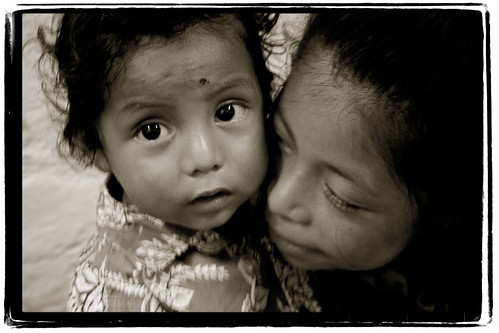
Photo, “Guatemala siblings”, via Flickr, Creative Commons.

Anthro in the news 8/31

New project to preserve endangered languages

Cambridge University has launched a project to help cultures under threat from globalization record their languages. The project, Oral Literatures, is led by the university’s Museum of Archaeology and Anthropology. It has awarded several grants already to collect myths, poetry and songs, among other aspects of people’s oral literature. The project leader is Dr. Mark Turin, research associate in cultural anthropology. He believes that protecting endangered languages and cultures is an “urgent challenge.”

Anthropologist creates medical knowledge network

Amy Farber had a doctorate in anthropology and was studying for a law degree in 2005 when she learned she had a rare and fatal disease called LAM that destroys young women’s lungs. She dropped out of law school and founded the LAM Treatment Alliance to raise money, connect patients around the globe and promote greater scholarly interchange among scientists worldwide who are working on the disease. Dr. Farber hopes and believes that online communities have the potential to transform medical research and improve patient care. The New York Times ran a fascinating article about her story last week.

Biological anthropologist enters the running shoe debate

Daniel Lieberman, professor of evolutionary biology at Harvard University, has researched the role of running in human evolution. Today, the sale of shoes designed to cushion impact on the feet of contemporary leisure runners is big business. A best-selling book by Christopher MacDougall, Born to Run, argues against running shoes. He presents information about the Tarahumara Indians of northern Mexico to back up his position. Tarahumara men and women run very long distances with only strips of rubber on their feet. Lieberman is quoted in the New York Times business section as saying “There’s not a lot of evidence that running shoes have made people better off” (p. 7).

Finally smoked ’em out

Guest post by Graham Hough-Cornwell

It has been surprising to find so little fuss in the blogosphere over the newly-passed smoking ban in Iraq. Articles on the subject have tended to express some sense of dismay or curiosity, a sort of “why now?” feeling that puts the Iraqi parliament’s priorities into question. With the most basic of services to worry about – security, electricity, etc. – does it make sense to take up this kind of cause at this particular moment?

The measure would ban smoking from all public places, and supposedly may include additional provisions down the road to ban smoking in private vehicles, too. Though certainly a forward-thinking measure and a positive step for public health, it comes with an oddly harsh penalty (the fine is equal to $4,300) that surely few Iraqis can afford to pay. And I can’t imagine many Iraqi smokers are enthusiastic about taking their cigarettes onto street corners in the midst of this month’s recent rash of attacks.

Yet of all the countries in the region, how come Iraq is among the first to potentially ban smoking fully in public places? A few have detailed the ingrained culture of smoking in the Arab world – from friends smoking sheesha in coffeehouses to the myriad members of Iraqi parliament lighting up in their offices. Others still have wondered about American troops – with possibly up to two-thirds of American soldiers in Iraq smokers, how could the ban affect them and their morale?

Perhaps most interesting is the medical anthropological angle; that is, how the knowledge of health problems associated with smoking is imparted, and how it interacts with cultural practices. It would be interesting to see some examples of smoking education in Iraq, or from other countries in the region (such as Jordan, which has a public ban in place). I find myself very curious about the cultural backlash or resistance to the ban, but then again, there was and is resistance to similar bans in the United States – by smokers and businesses, in particular – but that has not measurably slowed its progress.

Graham Hough-Cornwell is an M.A. candidate in Middle East Studies at the Elliott School of International Affairs, The George Washington University.

Image: “Smoking Kid,” licensed under Creative Commons on Flickr.

Tourism, human rights, and who is in control

By Barbara Miller

Lead articles in the travel sections of the Sunday August 24 issues of The Washington Post and The New York Times raise some interesting questions about tourism in relation to indigenous peoples.

Both articles offer food for thought for anthropologists who work with indigenous peoples to protect, preserve, and “manage” their cultural heritage and for cultural tourists who want to avoid harming indigenous peoples and fragile environments. The articles also provide a useful source for classroom discussions around issues of heritage, rights, and responsibility.

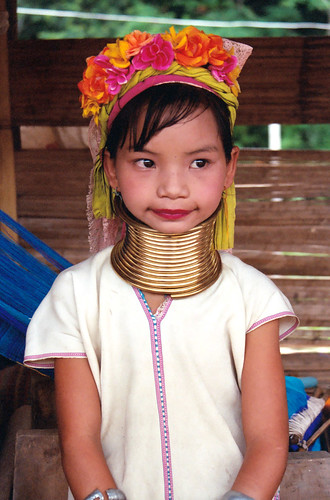
The Washington Post article is about possible human rights abuses of Padaung women in northern Thailand. Their necks are elongated by wearing a stack of brass coils. They have long been an attraction to outsiders — photographers, journalists, tourists, and other voyeurs. Human rights activists and some eco-tourist company owners have expressed concern that unscrupulous businessmen are keeping Padaung women in “human zoos” across a wide area of northern Thailand.

The author of the article visited one village in which the women told him they are paid to live there and wear traditional clothing including their brass rings. It’s a village created for and sustained by tourists. The author asks: “So it is unethical to visit the long-necked women?” (p F4). The author notes that the women he talked with said that their life in the fake village where they earn money is preferable to poverty.

The New York Times article on the Navajo highlights the value, to indigenous people, of controlling tourism including the narrative conveyed to the tourists in terms of the complicated concept of “authenticity” and the profits generated from tourism. The contrasts with the situation of the Padaung women are clear. While the Navajo in this article are also putting parts of their culture on display for outsiders, they are in control of what to make publicly available and how, including an emphasis on respect for heritage and environmental concerns which responds to a new generation of tourists.

Wouldn’t it be wonderful if the Padaung could be liberated from the “businessmen” and become in charge of their heritage and its consumption by outsiders?

Image: “Padaung Village,” licensed under Creative Commons from Flickr.

Anthro in the news 8/24

Cognitive anthropologist has a message for Obama about health care reform

Cognitive linguistic anthropologist George Lakoff lists nine things that the Obama administration should have done earlier on in the campaign to reform health care. He also offers specific advice for how to win the campaign through a more effective communications system, including a brilliant suggestion to rename the “public option” as the “American Plan,” which will remove any taint of “socialism” and instead invoke feelings of patriotism.

This blogger likes Lakoff’s idea very much but wonders about the chances of a label change in reminding Americans that patriotism and love of country can include compassion to fellow Americans who have less than they do.

Economic development can exacerbate gender inequality.

In many patriarchal situations (patriarchy is when men dominate most or all social domains including the economy, politics, family, and belief systems), sons are highly preferred to the extent that people opt to abort female fetuses or systematically neglect daughters in terms of food, health care, and affection.

Areas where such preferences are particularly include northern India’s richest states: Punjab and Haryana.

An article in a special issue of The New York Times Magazine (August 23, 2009, pp. 23- 25) devoted to women’s rights internationally highlights the field research of cultural anthropologist Monica Das Gupta in rural Punjab in the 1980s.

Her data revealed the double-edged sword of development: richer, more-educated people have fewer children than poorer, less-educated families, but they still want to have at least one son. So the pressure to avoid having a daughter is more extreme. Das Gupta is currently a senior social scientist in the World Bank’s Development Research Group.

The article offers no recommendations, just a faint note of hope that the “clash” between modernity and exacerbated masculine bias in infant and child sex ratios in highly patriarchal situations may be a problem of only “the short and medium terms” (p. 25). Whatever that means.

Note: For historical context on northern India’s extremely unbalanced sex ratios, see Chapter 2 of my book, The Endangered Sex: Neglect of Female Children in Rural North India, 2nd ed., Delhi: Oxford University Press, 1997; originally published by Cornell University Press, 1981.