Pro-“Yes” protests outside the Dutch embassy in Turkey. Credit: Wikipedia
macho-man Erdogan
BBC News reported on how Turks in the Netherlands feel about Turkey’s controversial referendum on April 16.The article quotes Thijl Sunier, professor of cultural anthropology at the Free University of Amsterdam: “It just makes them more passionate about him.” He says that Dutch-Turks see Erdogan through rose-tinted glasses: “They don’t experience the negatives caused by his policies, all the economic crumbling… they’re looking at him from a distance, they’re impressed by the macho way he does politics.”
gender rights
Transgender model Natachat Chanchiew. Credit: The Bangkok Post.
An article in The Bangkok Post described how The Face Thailand, a reality model contestant show, will feature a transgender model among the remaining nine contestants.It is the first time that the reality model competition has allowed transgenders to compete alongside other aspiring female models. The article includes a comment from Wipavee Phongpin, a gender expert from Thammasat University’s faculty of sociology and anthropology: “Compared to other countries, Thailand is considered quite open for the LGBT community, but it has still has some way to go.”
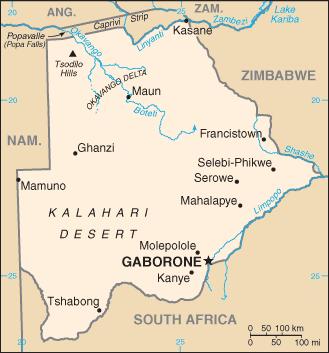
Colgate students and faculty assembled in the Persson Hall Auditorium on Wednesday, March 29 to listen to a talk given by Professor of Sociology and Anthropology and Co-Director of Global Health at Depauw University Dr. Rebecca L. Upton. A Colgate alumna with a degree in anthropology, Upton discussed the ways in which the complexities of masculinity and fertility fears might be taken into consideration as Botswana moves forward with different HIV/AIDS prevention programs and policies.
Upton began her lecture familiarizing the audience with male infertility, a topic that is vastly understudied around the world. After spending 20 years in northern Botswana, Upton gathered enough ethnographic data to uncover ways in which Botswanan men discussed voluntary medical male circumcision (VMMC), a practice that contributes greatly to insights on the potential success of HIV/AIDS prevention programs such as the “magic bullet” and new public health strategies of voluntary adult male circumcision.
Tomahawk Block IV cruise missile during a flight test Credit: U.S. Navy, Wikimedia Commons
Trump strike on Syria
Two newspaper reports on Trump’s April 6 missile attack on Syria included commentary from cultural anthropologists. An article in The Providence Journal (Rhode Island) offered several points of view on the effectiveness of the attack from experts in Providence, Rhode Island including that of Catherine Lutz, Thomas J. Watson Jr. Family Professor of Anthropology and International Studies at Brown University: “The launch of 59 Tomahawk missiles is not only a major act of war that threatens to have killed as many people as the recent heinous chemical attack, but it is in violation of the War Powers Act…The financial cost is not insignificant, either: at an estimated $1.4 million each, that makes for a total of $83 million that might have been used to assist the refugees of that war rather than to accelerate it.”
In The Press Republican (Plattsburgh, New York), James Armstrong, professor of anthropology at the State University of New York Plattsburgh commented that the attack was not the best way to effect a positive outcome: “The Syrian situation is so complicated, you can never be sure what kind of reaction your action will produce.”
who has Trump’s ear?
Credit: Ear Sound Gallery, Wikimedia Commons
The Tehran Times carried an interview with cultural anthropologist William Beeman, chair of the department of anthropology at the University of Minnesota. The topic was: who is shaping Trump’s foreign policy? Beeman comments that “Both Bannon and Miller are, in my personal opinion, extremely dangerous ideologues in a government where the president is deeply inexperienced and impressionable…Bannon and Miller seem to be the most influential people. Many of Trump’s cabinet appointees seem to be peripheral. For example, Rex Tillerson, the new Secretary of State not only seems to be almost absent from policy decisions, he has not been able to appoint a deputy, and the budget for the Department of State seems to be about to be reduced by 30% or more. This is unprecedented in U.S. history. Outside of Bannon and Miller, President Trump seems to be listening to military generals.”
women’s secret language
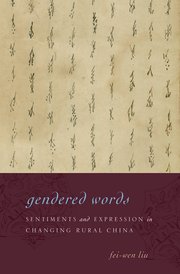
OZY magazine carried an article about Nüshu, a secret script used by women in Hunan Province, China. It started as a simple way to communicate and later became “a log of a woman’s private torment and misery. Women would often weep while writing the script, expressing fears about arranged marriages, the anguish of leaving one’s family and all of life’s misfortunes.” Fei-wen Liu, anthropology research fellow at Academia Sinica in Taiwan and author of Gendered Words: Sentiments and Expression in Changing Rural China, says that Nüshu was meant to be written in verse and sung or chanted aloud: “The core of Nüshu are feelings of misery and bitter experiences.” It provided a rare window into the everyday misgivings of rural daughters, wives and mothers as they transmitted life lessons on how to survive in a society that was harsh to women.“Nüshu was about sisterhood,” and they called themselves “sworn sisters,” using Nüshu as “a way to bind them together.”
book launch
The Montreal Gazette reported on the launch of a new book by Homa Hoodfar, professor emerita of anthropology at Concordia University in Toronto. Publication was delayed by a year because of her imprisonment in Iran on specious allegations that were eventually dropped. The book, an edited collection, focuses on how women fighting for their rights in sports extends into the political arena. IT was originally planned to appear before the run-up to the 2016 Olympics as a contribution to the discussion about women in sport accompanying the Rio Games. Hoodfar commented that there are many parallels between the sports arena and the political sphere when it comes to women negotiating their rights. In the Muslim world, women have often had to fight just to be able to participate in sports.In Iran, she said, women pushed back against the notion that it was “un-Islamic” for them to play sports by arguing physical activity is a part of healthy living, “and taking care of health is everyone’s responsibility because health is a gift from God.”
take that anthro degree and…
…become a professor of religion and Middle East Studies. Amira Mittermaier is an associate professor in the Department for the Study of Religion and the Department of Near and Middle Eastern Civilizations, with a cross-appointment to the Anthropology Department, at the University of Toronto. Bringing together textual analysis and ethnographic fieldwork, her research has focused on modern Islam in Egypt. Her first book, Dreams that Matter: Egyptian Landscapes of the Imagination explores Muslim practices of dream interpretation, as they are inflected by Islamic reformism, Western psychology, and mass mediation. Professor Mittermaier’s current book project, tentatively titled The Ethics of Giving: Islamic Charity in Contemporary Egypt, examines different Islamic modes of giving in post-revolutionary Egypt. Mittermaier provides opportunities for student supervision in areas such as modern and postcolonial Islam, Sufism, anthropological approaches to religion, and ethnographic method and writing. She has a B.A. from the University of Michigan (major unspecified) and an M.A. and Ph.D. in socio-cultural anthropology from Columbia University.
being a woman archaeologist
The Lake County News (California) interviewed archaeologist Seetha Reddy in honor of International Women’s History Month which was in March. Reddy, president of Reddy Consulting, commented:
“In terms of role models, there are several women who I hold in great regard and respect – of particular mention are Dr. Diane Gifford Gonzales (UC Santa Cruz), and Dr. Kathleen Morrison (University of Pennsylvania). These women have been active in fieldwork and laboratory research, and have demonstrated how women make valuable contributions to the field while balancing other aspects of life.”
DNA and the First Americans
The Columbus Dispatch (Ohio) reported on recent DNA findings about the first peoples of the Americas published in the American Journal of Physical Anthropology. Biological anthropologists Connie Mulligan, of the University of Florida, and Emoke Szathmary, of the University of Manitoba, consider how genetics informs current understandings of the population history of the Americas. In addition to describing the DNA findings, the authors address the perspectives of American Indians on genetic research as it affects their identity. Mulligan and Szathmary suggest that the use of the term “migration” to describe the initial movement of peoples from Asia into the Americas can be interpreted to imply that indigenous Americans are simply another immigrant population with no special rights to the lands their ancestors were the first to discover. They suggest dropping the word “migration” to describe a process that involved “occupation over several millennia of a consolidated Asian-American land mass.
U.S. birth rate rising among 30 year-olds
The St. Louis Dispatch (Missouri) reported on changes in the U.S. birth rate including the fact that women in their 30s are having babies at the highest rate since the 1960s. Otherwise, the population is generally stagnating. In Missouri, the number of births to women in their 30s increased 17.3 percent, while births among other age groups dropped by 18.4 percent. The article included commentary from biological anthropologist Sarah Lacy, assistant professor at the University of Missouri-St. Louis. She points out that the population of Missouri has gotten older and whiter than in other parts of the country that have added more Hispanic immigrants. “If the state is getting older, you are already pushing the fertility numbers back because younger people are living elsewhere.”
parent-child co-sleeping debate fired up by a post
Oklahoma City resident David Brinkley posted a photo of his wife, Alora, on Facebook in a post that went viral. Credit: Facebook/Alora Brinkley
The pros and cons of parent-child co-sleeping (usually glossed as mother-child co-sleeping) are matters of ongoing debate among scholars and regular people. A father recently posted on social media a photo of his two children sleeping with their mother: it went viral. A CBS article on the topic quotes biological anthropologist James J. McKenna, professor of anthropology and the director of the Mother-Baby Behavioral Sleep Laboratory at the University of Notre Dame. McKenna, a supporter of co-sleeping, says statistics and warnings against co-sleeping shouldn’t be used to scare parents: “You have to go out of your way to make [co-sleeping] dangerous…No matter how many warnings or misrepresentations of inherent dangers moms and babies find themselves… Babies have always slept and always will sleep next to their mothers.”
credit: Creative Commons, The Blue Diamond Gallery
cultural anthropologists make great politicians
The Huffington Post published an article by Debra Rodman, associate professor of cultural anthropology and director of women’s studies at Randolph-Macon College in Virginia. She is also an asylum expert witness and cultural consultant. Rodman argues that cultural anthropologists have a lot to offer to politics: “In order to create positive, progressive, empirically-based policy decisions, we need science. In a time when fear and bigotry has blurred the line between fact and fiction, it seems like a pretty good time to count on people who have to get their facts straight before they say anything.” Rodman is running for Virginia Delegate for the 73rd district.
trashed: pollution in Indonesia
Beach scene in Malaysia. Credit: Wikimedia Commons
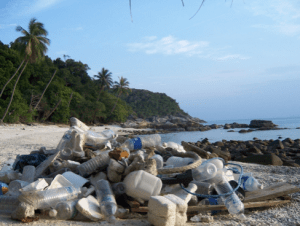
Channel News Asia carried a piece by Thomas Wright, doctoral candidate in Anthropology at the University of Queensland. He describes the growing environmental problems in Bali such as pollution and freshwater scarcity. Popular tourist destination beaches are covered in waste, most of which is plastic that washes ashore during the rainy season.Indonesia is the world’s second-biggest marine polluter after China, discarding 3.22 million metric tons of waste annually, accounting for 10 per cent of the world’s marine pollution. Wright describes volunteer and NGO efforts to raise awareness about trash pollution and a conference in February organized by The Economist that left out such voices.
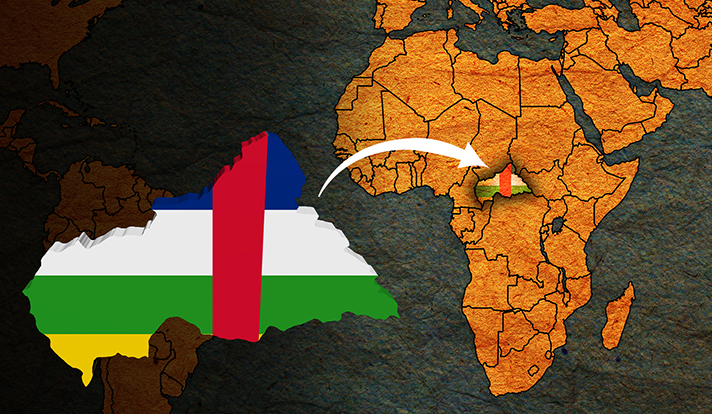
Beginning in 2012, fighting between various factions in the Central African Republic (CAR) caused widespread bloodshed and displaced hundreds of thousands in the Texas-sized nation of 4.7 million people.
Scholars, journalists, and politicians have struggled to make sense of the conflict in the rural, landlocked country — a former French colony.
Louisa Lombard, assistant professor of anthropology at Yale, has spent 13 years conducting ethnographic research in CAR. Her latest book, “State of Rebellion,” puts the recent uprising in social, cultural, and historical context. She examines the role that international organizations and nongovernmental organizations have played in sustaining conflict in the little-known country.
Lombard recently spoke with YaleNews about her book. An edited transcript follows.
In a piece in The New York Times, medical anthropologist and professor at Harvard University, doctor, and health care advocate Paul Farmer writes: “One of TB’s lamentable champions is a common strain of public-health expertise, which has long lowballed what it takes to cure tuberculosis and halt transmission of increasingly resistant strains of it. A host of ill-conceived and unambitious policies have all but ignored TB’s innovations. That’s why humans aren’t winning the war against TB, which last year killed 1.8 million people, regaining its old title as the world’s leading infectious killer of adults. Happy World TB Day.”
World TB Day was March 24.
Society for Applied Anthropology meetings
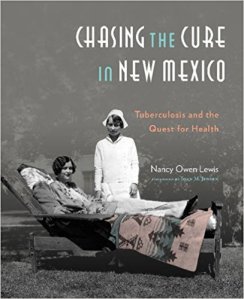
The Santa Fe New Mexican reported on the annual meeting of the Society for Applied Anthropology, being held in Santa Fe from March 28 through April 1. The article spotlighted the work of Nancy Owen Lewis including her comments from an interview. Lewis is a School for Advanced Research (SAR) scholar-in-residence and chairwoman of the SfAA conference. The conference has the theme of Trails, Traditions, and New Directions. Its 280 page-long program lists scores of presentations by experts on topics in physical anthropology, archaeology, and cultural anthropology. Lewis’ most recent book, Chasing the Cure in New Mexico: Tuberculosis and the Quest for Health, was published last year by the Museum of New Mexico Press.In the interview, she said discussions related to Trump administration policies “will thread through the conference,” noting that one presentation confronts a White House initiative head-on: the Crucial Conversations roundtable on Sanctuary vs. Sanctions looks at Trump’s xenophobic stance on sanctuary cities like Santa Fe.
celebrating St. Patrick’s Day in Baton Rouge, Louisiana, 2013 Source: thepipe26, Wikimedia
holidays and sociality
The Daily Item (Sunbury, PA) carried an article about local celebrations of St. Patrick’s Day, noting thatrestaurant and pub owners don’t need much Irish luck when it comes to bringing the crowds out on St. Patrick’s Day, especially when it falls on a Friday. The article quotes Clare Sammells, associate professor of anthropology at Bucknell University, who said holidays are designed to bring people together: “Consuming something with someone re-enforces kinship.” Sammells explained St. Patrick’s Day started out as a more somber holiday in Ireland, but it became more lively and communal in the United States as more Irish immigrants arrived: “St. Patrick’s Day became a way to celebrate their Irish- American heritage and their recent immigration to the United States.” But it was also an opportunity to show their fidelity to their new country and improve their public image. [Blogger’s note: I have a hunch that, at least in the DC area, people who have no genetic or cultural connection to Ireland nevertheless find St. Patrick’s day a good reason to party – a kind of social solidarity with fuzzy social boundaries, and often the fuzziness is created by Guinness perhaps].
salad cake
Caption: Mitsuki Moriyasu, a cafe owner and food stylist, invented the Vegedeco Salad as a guilt-free alternative to traditional baked goods.
CNN reported on a food innovation from Japan: salad cake. It is made to look like a sugary dessert cake but the ingredients are vegetables including tofu. Salad cakes, which can be eaten for breakfast, lunch, or dinner, are said to have a unique taste.The article includes comments by cultural anthropologist Merry White of Boston University: “The salad cakes represent attention to detail … and perfectionism…Food is, and has always been, a place for creativity and innovation in Japan. Salad cakes are just one manifestation of food play in that nation.”
Al Jazeera published an op-ed by Alex Shams, anthropology doctoral student at the University of Chicago:“Earlier this week, Donald Trump announced a new executive order to ban refugees and immigrants from six Muslim-majority countries. Hidden in the new order is a clause that says the United Statesgovernment will begin tracking and publicizing, “honour killings” committed by foreign nationals in the US. The idea draws upon a programme Trump unveiled last week that will track crimes committed by undocumented immigrants, part of an effort to show the unique threat they pose to American lives. These laws are not intended to protect these lives. They rest on the idea that human life has a different value based on nationality, and that the life of an American killed by a foreigner has greater worth than a foreigner killed by an American. There is no other way to justify a law that intends only to highlight victims based on the national origin.”
standing up, speaking up
Source: Rony Michaud, Google Images Commons
CBC News (British Columbia) reported on the contribution of John Wagner, professor of anthropology at the University of British Columbia, in detailing problems with the new water city plan in Kelowna, Canada. Wagner argues that areas like the South East Kelowna Irrigation District where he lives will be left underfunded and unable to accomplish upgrades needed to improve water quality: “I feel like I’m being discriminated against because my water utility, unlike the City of Kelowna or regional district water utilities, cannot get the infrastructure support we need to upgrade our service.”
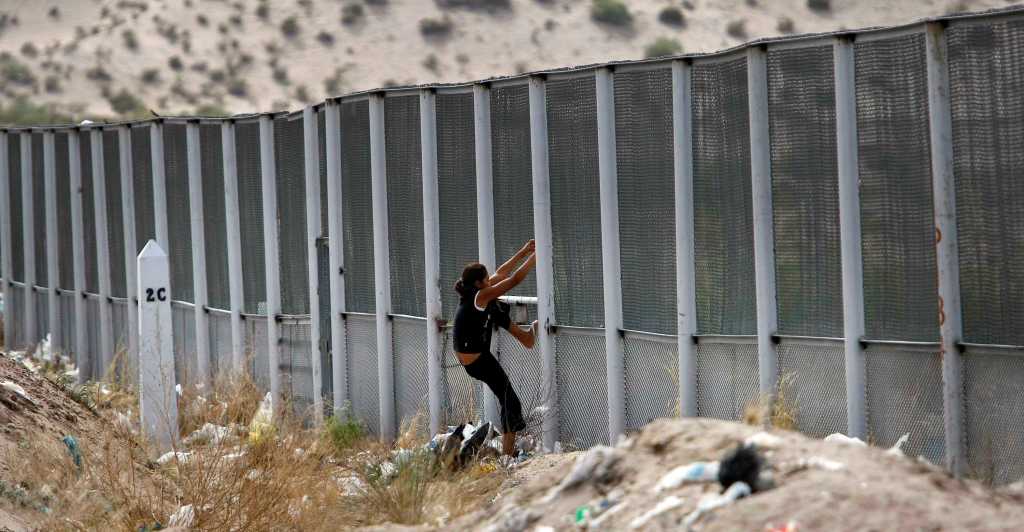
A young Mexican national climbs on a section of old pedestrian barrier fencing on the U.S. and Mexico border near Rancho Anapra, Chihuahua Mexico Tuesday, May 6, 2008. The young woman was climbing the fence to get a better look at US Porder Patrol agents working the other side. (Tom Pennington/Fort Worth Star-Telegram/MCT)
Jason De Leon, an anthropology professor at the University of Michigan, journeyed to San Diego State to host the 23rd annual Adams Lecture in the Humanities, held by the SDSU Department of Classics and Humanities on Feb. 7.
De Leon is the director of the Undocumented Migration Project, which is an anthropological study of border crossings into the United States from Latin America, according to the University of Michigan website.
The study uses ethnographic, archaeological and forensic approaches to scrutinize these movements along both the U.S.-Mexico border in Arizona, and the southern border of Mexico with Guatemala.
The Idaho Statesman published an op-ed by John Ziker, chair of the anthropology department at Boise State University in Idaho, with contributing writers Katherine Reedy, anthropology chair at Idaho State University, and archaeologist Mark Warner of the University of Idaho Moscow. They write: “We urge the Idaho Legislature to adopt the standards for Idaho’s K-12 science students that include the science of human activities on the global environment. Preparation of the next generation to tackle this great challenge of the 21st century is at stake.”
Trump deters international scholars
As reported in The Albuquerque Journal (New Mexico), Trump’s immigration policies and statements are having a negative effect on international scholars. [Blogger’s note: I realize that Trump would not be at all concerned about this situation because he is anti-scholarship, but “we” are]. Nancy Owen Lewis, research associate at Santa Fe’s School for Advanced Research and program chair for the annual Society for Applied Anthropology (SFAA) conference, said a frequent conference attendee who is Muslim, Mexican scholar Salomon Nahmad, will not come this year. She is quoted as saying that Nahmad “was so distressed with Trump’s policies and attitudes towards immigrants,” he didn’t want to risk it.





 OZY magazine


 The Santa Fe New Mexican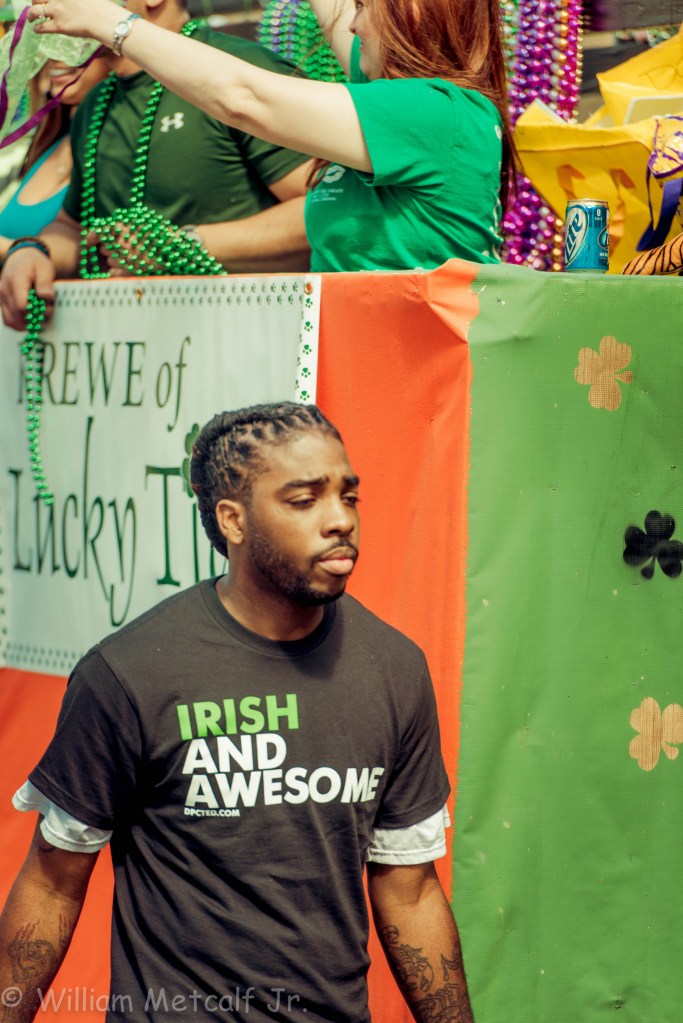




 anthropologyworks