Anthro in the news 6/21/10

• Anthropologists offer insights into the Uzbek situation
“There is no way but to bring them back,” says Sergei Abashin, senior researcher at the RAN (Russian Academy of Sciences) Institute of Ethnology and Anthropology in Moscow, referring to the refugees who recently fled to Uzbekistan. He told BBC that the Kyrgyz state has been either unwilling or unable to stop the conflict and that the world powers have also shown irresponsibility. Vladimir Zorn, deputy director of the Institute, points to economics and history as being underlying causes of the recent violence.

• Afghanistan: land of hope and sorrow
Marc Edelman, professor of cultural anthropology at City University of New York, points out in a letter to the New York Times, that recently published reports of huge mineral wealth in Afghanistan are not likely to bring prosperity to the country as a whole. Rather, as in similar contexts, wealth under the ground will probably bring more conflict on the ground.

• Sebastian Junger’s anthropological zeal
A review in the New Zealand Herald of Sebastian Junger’s latest book, War, which is based on 14 months in Afghanistan, says that Junger “…explores the nature of sexual deprivation, courage, boredom and the sheer excitement of war with an almost anthropological zeal.” What in the world is “anthropological zeal”? The next line says, “His meticulous, pared down prose is deliberately unemotional.” This blogger is a bit confused. Let it be noted for the record, however: Junger earned a BA in cultural anthropology from Wesleyan University in 1984. Whether or not that degree is responsible for his reputed anthropological zeal and/or his unemotional prose, who knows.

• Suckers for babies
The lead article in the New York Times science section on paternal behavior among nonhuman primates quotes Sarah Hrdy, biological anthropologist and professor emerita in the Anthropology Department of the University of California at Davis: “Lots of primates are suckers for babies.”

• A good gringo
Fluent in the Cofan language, Randy Borman, son of American missionaries, has helped the Cofan Indians acquire substantial territory in northern Ecuador. Michael Cepek, cultural anthropologist at the University of Texas at San Antonio comments about the Cofan in the Washington Post: “In the 1980s, some people thought they’ll disappear. They were small, monolingual; they didn’t have a strong political structure…Lo and behold, 20 years later, they are not just surviving, they are thriving.”

President Obama: What would your mother say?

Guest post by Eben Kirksey

President Obama turned his back on Indonesia recently — canceling his visit there for the second time this year. His mother, Ann Soetoro, was a cultural anthropologist who spent much of her adult life helping economically-marginalized people of Indonesia. If she were still alive, she might well be disappointed in her son.

As President Obama turns his attention to the oil spill in the Gulf, the U.S. Congress is reminding him of other important issues in a seemingly remote corner of Indonesia. A resolution introduced by Rep. Patrick Kennedy (H.Res. 1355) calls attention to the human rights problems in West Papua [Google map], the half of New Guinea that was invaded by Indonesia in 1962.


Image: West Papua has idyllic scenes like this one, but also significant human rights problems. “Asmat boat.” Creative commons licensed content on Flickr.

In the President’s autobiography, Dreams from My Father, he recalls a conversation with Lolo Soetoro, his step-father who had just returned home after a tour of duty with the Indonesian military in West Papua. Obama asked his step-father: “Have you ever seen a man killed?” Lolo responded affirmatively, recounting the bloody death of “weak” men.

Ann Soetoro never spoke out publicly about Indonesian atrocities in West Papua, but she divorced her husband shortly after he came back from the frontlines of this war.

Papuan intellectuals and political activists, kin of the “weak” men killed by Lolo Soetoro, have read Obama’s autobiography with keen interest. They still embrace the message of hope from the Presidential campaign and the slogan, “Yes We Can.”

At a moment when many Americans are questioning whether Obama will be able to fulfill his campaign promises, when everyone is wondering if he can reign in the hubris of the corporate executives who produced the disaster in the Gulf, it is worth considering these enduring hopes in West Papua.

Perhaps it is time for those of us who were drawn in by the slogan “Yes We Can” to remind the President that grassroots political movements still have power.

Many people, including some anthropologists, do not know the difference between West Papua* and Papua New Guinea. The subject of several classic anthropology books — from Margaret Mead’s Growing Up in New Guinea to Marilyn Strathern’s Gender of the Gift — the independent nation of Papua New Guinea is familiar to almost anyone who has taken an introductory anthropology class. Indonesia is also well known among academics who study culture or politics. Cultural anthropologist Clifford Geertz told us tales of Balinese cockfights and Javanese religious systems, and political scientist Benedict Anderson famously wrote about imagined communities and power in Indonesia.

At the edge of national and scholarly boundaries, West Papua, in contrast, falls through the cracks.

Anthropologists and scholars in allied disciplines should join human rights advocates and others in noticing West Papua. Amnesty International is currently working with Representative Kennedy’s office to pass his Resolution which calls attention to many pressing problems:

    “Whereas Amnesty International has identified numerous prisoners of conscience in Indonesian prisons, among them Papuans such as Filep Karma and Yusak Pakage, imprisoned for peaceful political protests including the display of the ‘‘morning star’’ flag which has historic, cultural, and political meaning for Papuans…

    “Whereas a Human Rights Watch report on June 5, 2009, noted ‘‘torture and abuse of prisoners in jails in Papua is rampant’’;

    “and Whereas prominent Indonesian leaders have called for a national dialogue and Papuan leaders have called for an internationally-mediated dialogue to address long-standing grievances in Papua and West Papua.”
    If passed, this Resolution would give President Obama some issues of substance to talk about with Indonesian leaders once he does make a return trip to Southeast Asia. Resolutions are non-binding acts that convey the sentiments of Congress.

Amnesty International, and the other human rights groups advocating for this resolution, are up against powerful forces. Transnational companies have been lobbying for stronger military ties with Indonesia. The same company that brought us the disaster in the Gulf of Mexico, BP, has a huge natural gas field in West Papua called Tangguh. Starting this year, BP is scheduled to start shipping super-cooled gas from this site (liquid natural gas or LNG) to North America where it will be piped into the homes of millions in California, Oregon and other westerns states.

BP has been a major donor to the U.S.-Indonesia Society, an organization committed to educating congressional staff and administration officials about the “importance of the United States-Indonesia relationship.” The U.S.-Indonesia Society is also supported by Freeport McMoRan, a company that operates one of the world’s largest gold and copper mines in West Papua.

The American public is starting to reign in the irresponsible behavior of companies like BP that have created domestic disasters. American must also reckon with the foreign entanglements of the companies supplying the U.S. natural resources and should question the politicians who have led the United States into a series of environmental catastrophes and debacles on foreign soil.
Continue reading “President Obama: What would your mother say?”

Love you dad, but…

Anyone who has been reading this blog knows that the blogger doesn’t see much use in country-level data. But if that’s the only thing you have, and the topic is compelling, let’s see what it says.

Take a look at the findings from a Pew Research Center Report of 2006, with the unlikely but intriguing title “Gauging Family Intimacy: Dogs Edge Cats (Dads Trail Both). ” The report is based on telephone interviews with a sample of 3,014 adults in the United States. Questions posed to the respondents included: “Do you feel close to your cat, dog?” “Do you feel close to your mom, dad?”

Dogs are the paws-down winners in the closeness competition. Owners of dogs are the most likely (94 percent) to describe their relationship with their pet as “close.”


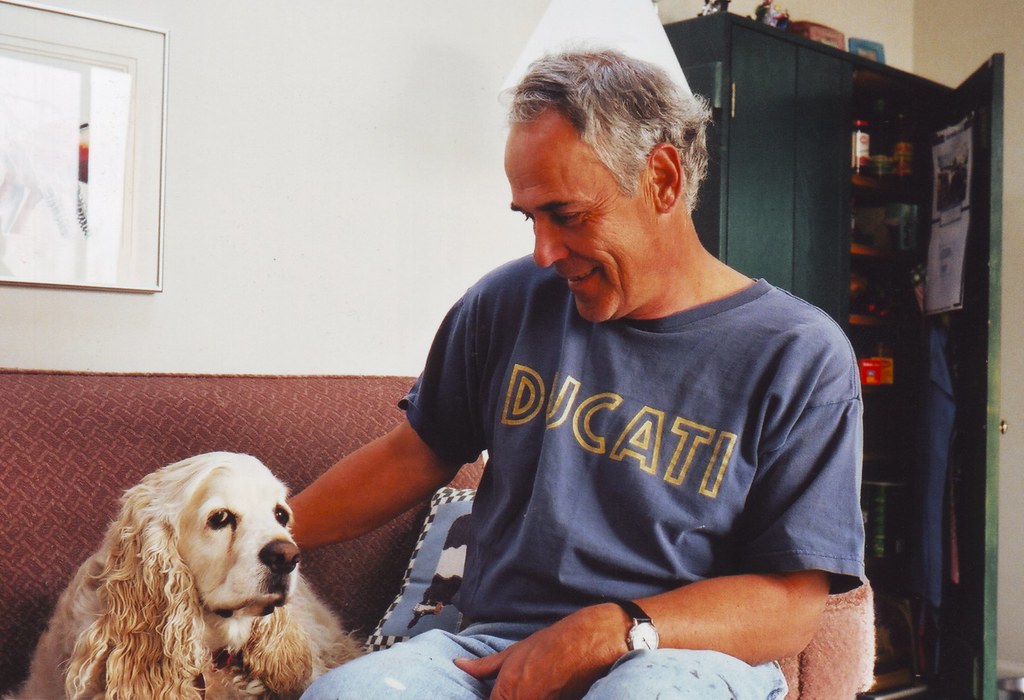
Dad and dog seem to be getting along in this photo (creative commons licensed Flickr content by Kim Scarborough), but don’t let that fool you. According to a recent report, they are rivals.

What do the same people say about feeling close to their parents? Answer: 87 percent say they feel close to mom, and 74 percent say they feel close to dad.

Final score (out of 100) on family intimacy based on the Pew 2006 survey:

    Dog: 94
    Mom: 87
    Cat: 84
    Dad: 74

Dads: What’s going on? Do you want to be a loser in this competition or what?

Maybe the survey just asked the wrong questions. Maybe the question should have been: Who do you feel is the most cool and detached member of your household? Can dad win on this one? Don’t think so. I’m betting on cats. Meow.

Happy father’s day out there!

Blood ties: a father forsaken

Patricide, or the murder of one’s father, is often associated with political intrigue at high levels: a son seeks his father’s throne and doesn’t want to wait for his father’s natural death.

The reported murder of an Iraqi man by his son and a nephew because he worked for the U.S. military as a translator is a tragic case of how kinship ties, supposedly involving love and avoidance of harm, can be over-ridden by other powerful interests and motivations with deadly results.

If you use the two search terms “killing” and “father” in Google, you will find many entries for so-called honor killings in which a father kills a daughter for perceived transgressions such as pre-marital sex or marrying someone of the wrong caste or other kinship category. These murders are all too common and the murderers all too often go free.

In this case, a father was killed because he chose to work for the “wrong” people. An honor killing of a different sort, but just as dishonorable and heinous. A son and nephew are in custody. Another son is being pursued.

My deep condolences to the victim’s widow.

One of the most famous literary references to patricide is portrayed in Gustave Moreau’s Oedipus and the Sphinx (1864). Creative commons licensed.

Tweetography: FIFA, can we blow our horns?

Guest post by Graham Hough-Cornwell

The World Cup is all of six days old and already the controversy rages. Not over the best team, the most skillful player, the biggest disappointment, or the prettiest goal, but over the vuvuzela, a thin plastic horn popular at South African soccer matches and blaring by the thousands at every World Cup game so far.

The French national team, following a disappointing scoreless tie against Uruguay, blamed the instrument for their poor play. After a lackluster showing in a narrow 1-0 win over Nigeria, Argentinian star and 2010 World Player of the Year Lionel Messi claimed, “It is impossible to communicate, it’s like being deaf.”

Twitter provides the main outlet for people around the world to express their hatred (or, less often, their love) for the vuvuzela. A simple search on Twitter for “#vuvuzela” reveals thousands of tweets posted daily around the globe. Most tweets are humorous:

JonahFisher: Girl in front of me is blowing #vuvuzela and has earplugs in. Strikes me as rather unfair. #wc2010

lee_Kern: The kazoo has more grace than the Vuvuzela, and the kazoo is a f***ing stupid instrument… http://youtu.be/gjQ0MzWH4Ss #vuvuzela

The complaints came as no surprise. Following public outcry over the vuvuzela during last summer’s World Cup warmup tournament in South Africa FIFA (soccer’s world governing body) President Sepp Blatter decided not to ban the horn because he did not want to “Europeanize the first African World Cup.”

Continue reading “Tweetography: FIFA, can we blow our horns?”

The World Cup’s bittersweet draught

Nelson Mandela worked hard to bring the World Cup to South Africa. But he didn’t attend the opening game, as was highly anticipated. Instead, he stayed at home mourning the death of his granddaughter, Zenani, who was killed by a car allegedly driven by a drunken driver on the eve of the opening game.


Jets fly over the opening ceremony of the 2010 FIFA World Cup at Soccer City in Johannesburg. It was a happy occasion, to be sure, but not for one South African icon. Creative commons licensed photo by Flickr user Shine 2010 – 2010 World Cup good news.

Heavy drinking and certain sports seem inextricably linked around the world. In my home town of Washington, D.C., the local government agreed to let bars open at 7 a.m. for early games, though you can’t get a drink until 8 a.m. weekdays and Saturdays, and 10 a.m. Sundays. Curious, I asked the college-age assistants in my office: “Is it essential to drink while watching the World Cup?” The chorus of replies was, “Yes, essential.”

As the World Cup games proceed, bars around the world, not just South Africa’s bars and shebeens, will be far busier than usual. And there will be far more drunk drivers on the roads. Sports rivalry and risk-taking seem to go hand in hand: risky games, risky drinking, risky driving, risky sex and who knows what else.

The thrill of it all. For many. But not for everyone.

Anthro in the news 6/14/10

• The not-so-Human Terrain System
The Huffington Post quotes Hugh Gusterson in a piece on the Human Terrain System:  Gusterson says that the HTS is marketed as a way to build a more secure world, in fact it does the opposite in terms of supporting a “brutal war of occupation.”

• Not just any dame
Biological anthropologist and specialist in lemurs, Alison Richard was appointed a Dame Commander of the Order of the British Empire on Saturday during Queen Elizabeth II’s 2010 Birthday Honours. Congratulations, Dame Richard.

• Let’s go: gladiator cemetery
Category: best preserved gladiator cemetery. Current winner: York, England, with more than 80 Roman warriors in a just-discovered cemetery.  Fascinating details include a “high incidence of substantial arm asymmetry” in the skeletons and evidence of a “large carnivore bite…an injury which must have been sustained in an arena context.”  The discovery of the cemetery, according to Gillian Cruddas, chief executive of Visit York, says, “This is yet another great York story to add to the city’s exciting and colorful heritage.”

• A very old shoe
Category: oldest shoe. Current winner: a 5,500 year-old shoe found by archaeologists in a cave in Armenia. Lead researcher, Dr. Ron Pinhasi of University College Cork, Ireland, estimates that the shoe was European size 37, or US size 7. It’s up for grabs as to whether it was for him or for her.

• In recognition and memoriam
Shelton Davis, aged 67, died on May 27, in Falls Church, Virginia. He earned a PhD in anthropology from Harvard University, with a dissertation based on fieldwork among a Maya community in highland Guatemala. An activist anthropologist and indigenous rights advocate, he founded the Anthropology Resource Center, an early contribution to “public interest” anthropology. His 1978 book, Victims of the Miracle, is  a classic account of the social and environmental costs of development in the Brazilian Amazon in the 1970s. Blogger’s note: I read Victims when I was in college. It offers a vivid story. I recommend it to you.

Eugene I. Knez, aged 94, died in Honolulu. He worked at the Smithsonian Institution’s National Museum of Natural History from 1959 to 1979 and launched its first permanent Asian exhibitions.  He earned his PhD in anthropology from Syracuse University in 1959.

Raymond Allchin, archaeologist and cultural historian of India, aged 86 years, died on June 4. Allchin was a leading force in promoting scholarly recognition of South Asian prehistory. He also sought to reach a wider audience by writing in an engaging way about everyday topics such as cow dung.

Anthro in the news 6/7/10

• Spilling our Gulf
The millions and millions of crude oil gushing into the Gulf of Mexico will lead to “extreme human suffering as well as extreme property damage,” according to Gregory Button, professor of cultural anthropology at the University of Tennessee. He has done research on other oil-related disasters including the Exxon Valdez oil spill in 1989 and the collapse of an oil storage tank during Hurricane Katrina in 2005. Furthermore, he notes that the people most hurt by the Gulf-area hurricanes of 2005 are likely to suffer most from the oil spill: “They’ve already lost their homes, their livelihood, their income, and their communities.” Spill workers are at risk to their health from direct exposure. Other repercussions, similar to those following the Exxon Valdez disaster are likely: alcohol and substance abuse, divorce, suicide, and mental health problems.

• Follow the (BP) money
Three years ago, Laura Nader, cultural anthropology professor at UC Berkeley, argued that the university should not take money from BP to support research at its Energy Biosciences Institute because BP is a “criminal corporation,” as quoted in the Sacramento Bee. The funding, perhaps ironically, goes for research to find green fuels and reduce oil use. Critics say this is simply “greenwashing.” Scientists say it allows them to do important research. A post-doctoral student who works at the Institute is quoted as saying that she has to first run her findings past BP: “There have been a few things that they’ve asked me to be a little more vague about.”

• Maya were early materials scientists
Early Maya were the first polymer scientists according to MIT materials science researchers. Their study was prompted by a question from undergraduate student, Michael Tarkanian, in a freshman archaeology class: How did the Maya produce bouncy rubber balls? The research will be reported in the journal Latin American Antiquity.

• Big bird lives on in rock art
Arnhem Land, in Australia’s Northern Territory, contains the oldest known works of art in Australia. A recent discovery of a rock art depiction of what is likely a bird that went extinct 40,000 years ago is another example affirming Arnhem Land’s invaluable prehistoric art heritage.

• Ancient brain food
Archaeologists have found that early humans, around two million years ago, ate crocodiles, turtles and fish. This oldest evidence for a diet containing aquatic animals was discovered by researchers including Andy Herries of Australia’s University of New South Wales. The aquatic animals are rich in omega-3 fatty acids that are critical to human brain growth. Findings will be published in the Proceedings of the National Academy of Sciences.

• Neanderthals in the sceptred isle
A discovery in Kent (the part of England closest to the European mainland) by Dr. Francis Wenban-Smith, shows that Neanderthals were in residence around 100,000 years ago. The evidence is some flint hand tools. The Neanderthals apparently arrived from what is now France via a land bridge.

• Bonobo mojo
Vanessa Woods concludes her series of guest posts for Discover with a post about bonobo sex in which she responds to skeptics who say that reports of frequent sex among bonobos are inflated. Woods provides data to support her position, including a histogram of different bonobo sex positions. She refers to a supporting hormonal study. Blogger’s query: why is it so difficult for many people to free themselves from their chimp-based model? [Possible answer: because the chimp model validates human male violence and mercurial male sexual affect?].

• In recognition and memoriam
Professor Gilbert Kushner, founder of the first graduate program in applied anthropology in the United States, passed away this week. As a youth, in the 1950s, he was a beatnik, singing protest songs in Greenwich Village. After earning a doctorate in anthropology from the University of North Carolina, he joined the Department of Anthropology at the University of South Florida in 1970, was the department chair for many years and served as associate dean in USF’s College of Social and Behavioral Sciences. In the face of widespread objections to his idea of establishing of an MA degree in applied anthropology, from Margaret Mead among others, he pursued his vision. A passionate supporter of anthropology and social activism, he once wrote, “Anthropology (is) not only a scientific and humanistic discipline, but a way to contemplate humankind’s place on Earth.”

Just walk away…

Jeffrey Cohen, associate professor of cultural anthropology at Ohio State University, is an expert on Mexican-U.S. migration. In an interview published in his university’s faculty and staff newspaper, he critiques Arizona’s new immigration law, SB1070.


U.S.-Mexican border, by Flick user Nathan Gibbs, creative commons licensed.

Cohen argues that such a law is unjust, inefficient and actually irrational given the demand for labor in the United States.

On this side of the fence, Cohen says that U.S. citizens who support SB1070 have to walk away from thinking that immigrants are all bad news.

Where did our love go?

Vice President Al Gore and Tipper Gore, married for 40 years and an iconic couple of marital endurance against high odds, are quietly separating. I am sure that thousands of other people join me in wishing them both the best as they move on into new directions.

While the media buzz about the separation, I note the absence of insights from any cultural anthropologists. An article in today’s New York Times Style section, for example, includes comments from psycho-physiologist Robert Levenson of UC Berkeley, neuroscientist Bianca Acevedo of UC Santa Barbara, marriage historian Stephanie Coontz of Evergreen State College and economist Betsey Stevenson of the University of Pennsylvania.

Hello anthropology?

A quick scan of my library’s Anthropology Plus database of journal articles (going back to 2005) revealed nothing by cultural anthropologists on marriage in the United States. And nothing on marriage resilience or durability anywhere in the world.

“Marriage and the family” were core topics of cultural anthropology when I went to college, though typically the subject matter was “other” cultures. Nevertheless, as cultural anthropology has, since then, included in its purview cultures everywhere, including industrialized contexts, it seems to have missed out on love among the Nacirema.

It seems cultural anthropologists have yet to study the shadow (both positive and negative) cast by marriage. Image: “Love and Marriage” by Flickr user hammer51012, creative commons licensed.