chimps’ behavior following death disturbing to ISU anthropologist

Iowa State Anthropologist Jill Pruetz describes the disturbing behavior following the death of a chimpanzee at her research site in Senegal. She and her colleagues captured what happened on video. Interview by Dave Olson. Video courtesy of Jill Pruetz

Shocking is one word Jill Pruetz uses to describe the behavior she witnessed after a chimp was killed at her research site in Fongoli, Senegal. The fact that chimps would kill a member of their own community is extremely rare – most aggression is between communities – but the abuse that followed was completely unexpected.

“It was very difficult and quite gruesome to watch,” said Pruetz, a professor of anthropology at Iowa State University. “I couldn’t initially make sense of what was happening, and I didn’t expect them to be so aggressive with the body.”

Pruetz has witnessed many things since establishing her research site in 2001. She was the first to document chimps using tools to hunt prey. However, what she observed in 2013 was different. Pruetz and her research team documented the chimps’ behavior after discovering the body of Foudouko, a former leader of the Fongoli community, who was exiled from the group for five years. As Pruetz explains in the video above, the chimps – many of which Pruetz suspects killed Foudouko – abused and cannibalized his body for nearly four hours. Continue reading “chimps’ behavior following death disturbing to ISU anthropologist”
the U.S. inauguration 2017 from the ground through foreign eyes

Source: Crystal H. Rie
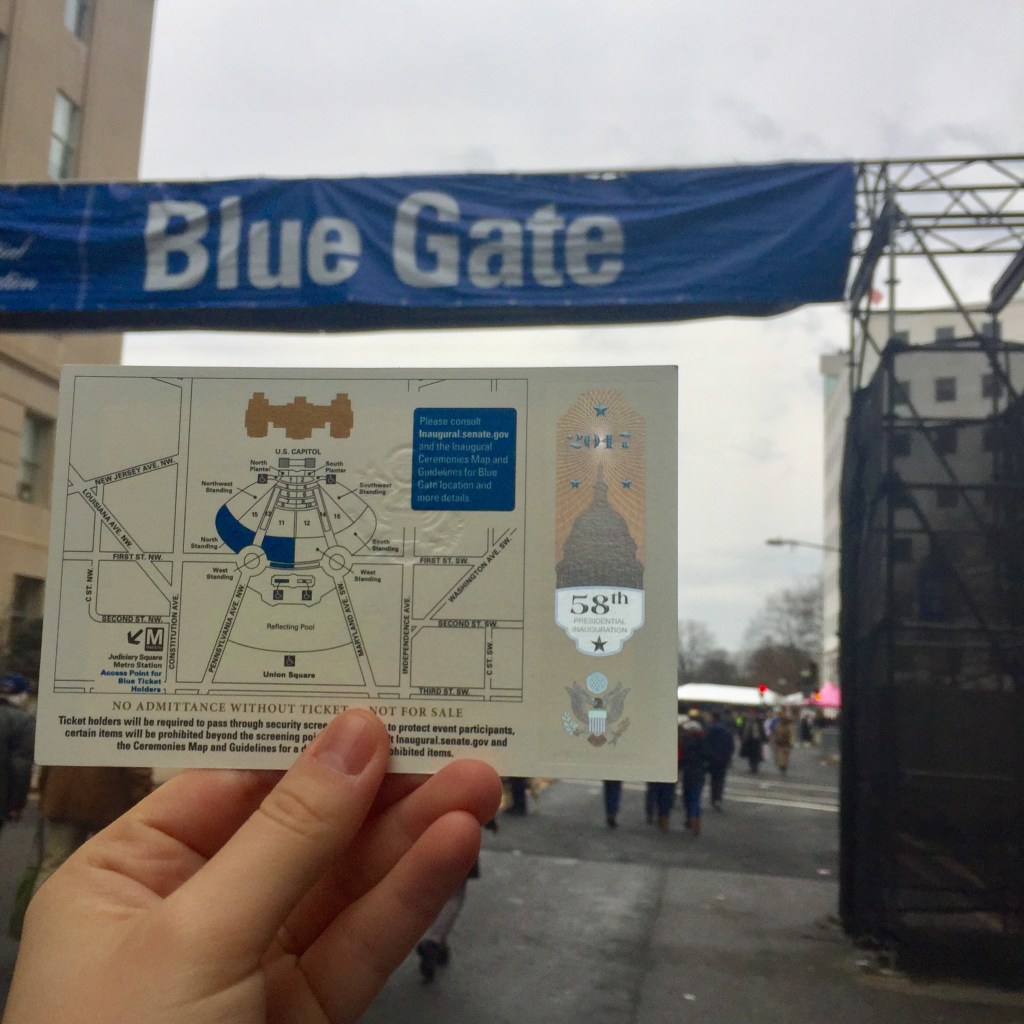
The blue ticket for the 2017 Inauguration Source: Crystal H. Rie

On January 20th 2017, Donald J. Trump became the 45th President of the United States. This was a historic moment for the U.S. in many different ways and depending on your political views you can judge the context around this inauguration, and the 2016 election as a whole, for yourself. But I am not here to do that. What I am here to do is to talk about what I observed on that fateful day. First, however, I would like to tell you a little bit about my background to illuminate the position which I was observing this event from.

I am a South Korean national who came to the United States to attend college in 2008, and I have alternated living in the U.S. and Korea since then. In 2015, I came to Washington, D.C. to pursue a master’s degree in Asian Studies. Although I live in the hub of politics and policy, my interests and passions diverge from what the city is typically known for. I am enthusiastic about studying the transformation of culture in historical contexts. As a result, this post does not intend to analyze politics or policies behind the inauguration; rather, this is my personal observations of the events of that day, from a foreigner’s perspective. Continue reading “the U.S. inauguration 2017 from the ground through foreign eyes”

anthro in the news 1/30/17

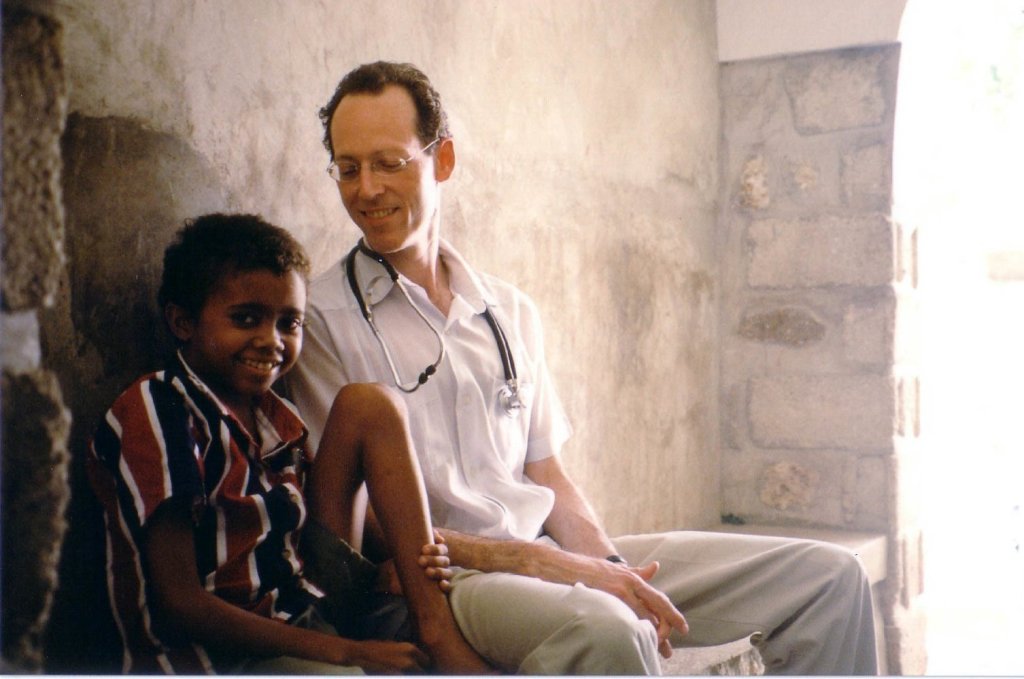
Paul Farmer, physician and medical anthropologist, at a Partners in Health clinic Source: Bending the Arc website
Paul Farmer, physician and medical anthropologist, at a Partners in Health clinic
Source: Bending the Arc website

documenting care and hope

As reported in the Salt Lake Tribune the Sundance Film Festival premiered a documentary, called Bending the Arc, about Partners in Health (PIH). Co-founded by medical anthropologists Paul Farmer and Jim Yong Kim, PIH employs 18,000 people and brings health care to many  communities around the world.

fact checking

The Earth is Flat After All, by Ray. Flickr Creative Commons

Barbara J. King, professor emerita of anthropology at the College of William and Mary, contributed a piece to National Public Radio (U.S.) in which she discusses recent statements made and actions taken by the Trump team, providing a science fact check for each. Topics include climate change, vaccines and autism, human rights, and human evolution.


Continue reading “anthro in the news 1/30/17”

anthro in the news 1/13/17

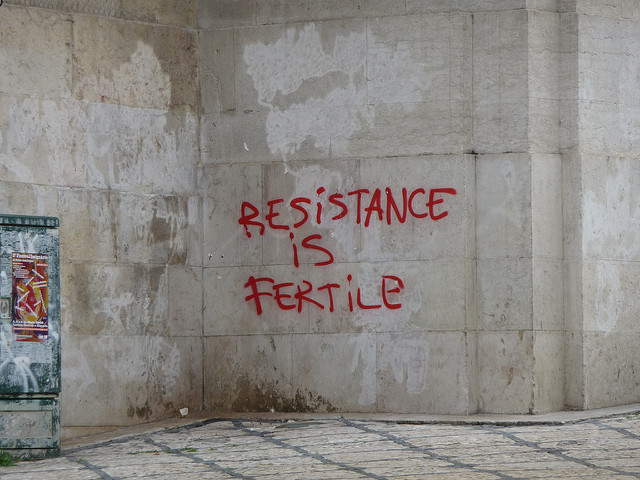
 Graffiti in Lisbon, 2009 Source: Dan Benton, Flickr Commons
Graffiti in Lisbon, 2009
Source: Dan Benton, Flickr Commons

public anthropology in the time of Trump

Paul Stoller, professor of anthropology at West Chester University, published a piece in The Huffington Post, describing some public events organized by anthropologists around the Trump inauguration. He argues that anthropologists and other social scientists have the responsibility not to just produce knowledge but to move it into the public domain, and that this task is especially urgent now as a form of resistance to anti-social policies. [Note: one such event, hosted by Georgetown University, included a cultural anthropologist among the panelists; it has been headlined by Breitbart.com as a session for “instructing students” in “how to resist the Trump presidency” – in other words, it was more like brain washing than consciousness raising in their view. Thanks to Graham Hough-Cornwell of Georgetown for alerting me, via Facebook, to the Breitbart article.]

rethinking schizophrenia

Foreign Policy published an article reviewing new research on schizophrenia that offers a culturally-informed critique of the bio-psychiatric model. The article mentions the work of Juli McGruder, professor emerita of anthropology and occupational therapy at the University of Puget Sound. Her research in Zanzibar indicates that anyone who violated social norms, including speaking out of turn to hallucinating, is viewed as possessed by a spirit. Rather than stigmatizing them, their communities offer support. Research by Stanford University anthropology professor Tanya Luhrmann points in a similar direction. She and colleagues interviewed voice-hearers in the United States, India, and West Africa. Americans were more likely to hear voices that threatened and belittled, while participants in other countries heard family members, friends, or deities, and engaged in conversations with them. Luhrmann is quoted as saying: “I think the consequence of the American idea that the mind is broken is so horrifying and upsetting for people that they feel assaulted by these voices.”


Continue reading “anthro in the news 1/13/17”

anthro in the news 1/17/17

Friday the 13th fears

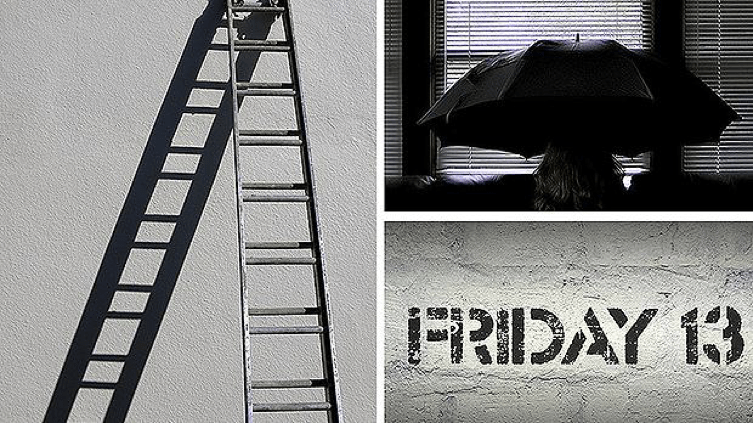
The Apopka Voice (Florida) carried an article about the roots of fear surrounding the date of Friday the 13th. The article includes commentary from Phillips Stevens Jr., associate professor of anthropology at Buffalo University:  “Most buildings don’t have a 13th floor, you won’t find 13 people seated a table and some airlines don’t have a 13th row…The taboo comes directly from Biblical stories.” The main story is that of the Last Supper.

picture1
source: The Telegraph

silencing sanctuary

picture2
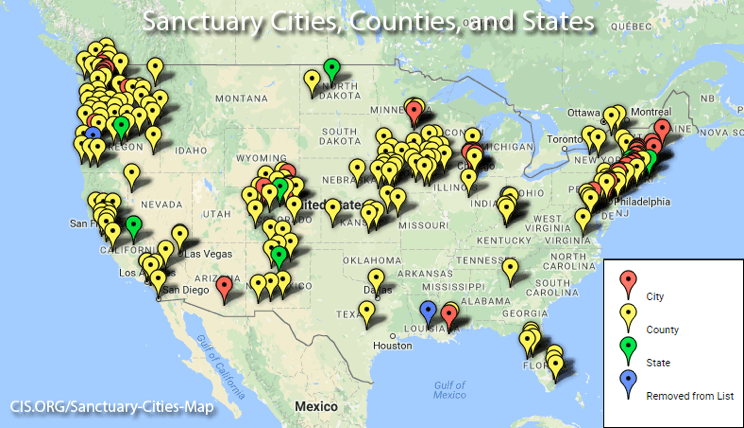
Sanctuary sites in the U.S., January 2016. source: Center for Immigration Studies

The Centre Daily (Pennsylvania) reported on a teach-in on immigrants’ rights held at Penn State University and organized by its Immigrants’ Rights Clinic. One speaker, Linda Rabben, associate research professor of anthropology at the University of Maryland and author of Sanctuary and Asylum: A Social and Political History, said universities are often directed by their lawyers not to use the term “sanctuary.” She referenced a letter signed in December by Penn State President Eric Barron, and more than 400 other university presidents in support of DACA (the policy on deferred action for childhood arrivals), noting that nowhere in the letter was “sanctuary” mentioned. “But just because it isn’t mentioned, doesn’t mean people aren’t going to seek it,” Rabben said.

Continue reading “anthro in the news 1/17/17”

why we throw coins in fountains: a cultural explanation

by Peter Wogan

Why do so many of us get pleasant, uncanny sensations when we throw a coin in a fountain and see it resting in the water below? What’s the cultural psychology here? What do such coins have to do, for example, with rock concerts and the movie “It’s a Wonderful Life”?

3669437380_7d0847b32b_o
source: Kevin Krejci

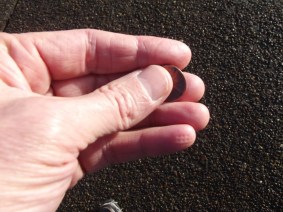
It’s best to start by reviewing the shift in perspective that occurs when the coin moves out of our hands and into the fountain (or pond…but fountains make better pictures). When we grip that penny or other coin in our hands, we’re totally in control. The coin is literally “in the palm of our hands.” It’s also intimately connected with us through what anthropologists call “contagious magic,” the principle that physical contact creates a bond between people and objects, a principle that’s affirmed every time someone pays thousands of dollars for a piece of clothing worn by Jackie Robinson or John Lennon, or avoids the chair recently used by someone they don’t like. The same principle applies at the edge of the fountain. We’ve kept our coins close to our bodies in our pockets and purses, and now we’re holding them in our hands. Through physical contact, these coins have become an extension of ourselves—a light-hearted, personal avatar.penny-in-fingers

Then we throw the coin in the water and the whole picture changes. We lose control. We let go of our avatar, and suddenly it looks tiny in the water, much smaller than it did in our fingers a second ago. Often we can’t even be sure which coin is ours, lying there among all the others. Our individual coin is now just one of many. What do you call this reversal in perspective?

Continue reading “why we throw coins in fountains: a cultural explanation”

anthro in the news 1/11/17

22GENDERLESS-4-1482326457051-master675.jpg
Toman Sasaki, a genderless danshi, at a Japanese shopping mall where he performed with his band, XOX. source: Ko Sasaki for The New York Times

gender blending in Japan

The New York Times carried an article describing how some young Japanese men are bending fashion gender norms, coloring their hair, wearing colored contacts, and applying brightly colored lipstick. The small but growing group of “genderless danshi” (danshi means young men in Japanese) are developing a public identity and sometimes a career out of a new androgynous style. The article quotes Jennifer Robertson, professor of anthropology and the history of art at the University of Michigan: “It’s about blurring the boundaries that have defined pink and blue masculinity and femininity…They are trying to increase the scope of what someone with male anatomy can wear.”


Monsanto as the “big bad” of GMOs

An article in World Finance on GMOs spotlights Monsanto as the “big bad” of GMO manufacturers and distributors. The article quotes Glenn Davis Stone, professor of anthropology and environmental studies at Washington University in St. Louis:

“Herbicide tolerance is by far the most widely planted GM trait. Its advantage is not in yield – it actually tends to have a yield drag – but because it makes the use of cheap herbicide convenient.”

150622_gmohero-jpg-crop-fresca2-xlarge
source: Slate

Continue reading “anthro in the news 1/11/17”

anthro in the news 1/2/17

Source: Google Images

too much complexity

The Guardian carried an op-ed arguing that greatly increased social complexity and global connections are recipes for disaster: “…the endless marketisation and contracting-out that now define policies across the planet have only made things worse.” The author includes a quotation from social anthropologist David Graeber, professor at the London School of Economics, defining his “iron law of liberalism”: “Any market reform, any government initiative intended to reduce red tape and promote market forces will have the ultimate effect of increasing the total number of … regulations, the total amount of paperwork, and the total number of bureaucrats the government employs.” 

politics and policies in Nepal

Earthquake destruction in a village. Source: Practical Action

Catch News (India) published a piece describing the political and policy failures of Nepal following the 2015 earthquake. It points to the focus on getting a constitution approved instead of placing a priority on disaster relief and reconstruction. The related growth in state power did little to help improve people’s lives. The article includes insights from cultural anthropologist Sara Shneiderman of the University of British Columbia which she offered at the second annual conference of the Central Department of Anthropology of Tribhuvan University in Kathmandu. In the Dolakha region, where she has done research for several years, in order to receive paltry grants or soft loans from commercial banks, a survivor has to strictly adhere to guidelines set by government agencies. Compliance with the conditions of assistance is checked before releasing every tranche of the loan.


Continue reading “anthro in the news 1/2/17”

anthro in the news 12/26/16


Roma in Poland
Roma in Poland, Source: The New Yorker

blaming Roma

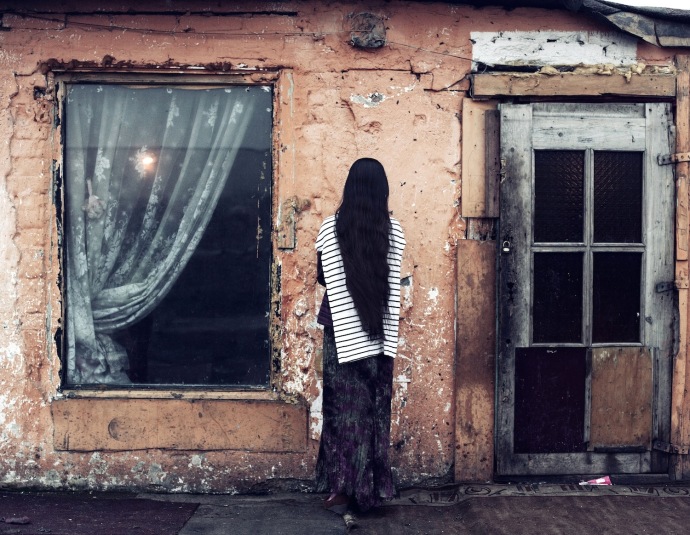
Al Jazeera published an op-ed by Andrzej Mirga, anthropologist and chair of the Roma Education Fund, and a Roma from Poland. He argues that racism is the reason why Europeans fear refugees, not the failed integration of Roma into society. Muslims and Roma share the condition of being the most hated minorities in the region. A recent study by the Pew Research Center shows that 64 percent of Hungarians hold unfavorable views of Roma and 72 percent have a negative opinion of Muslims. Mirga writes, “In Poland, my home country, these figures are 47 percent and 66 percent respectively, even though both groups together total just 40,000 in a country of close to 40 million, mostly white Catholics.” According to a report by the Polish National Prosecutor’s Office, hate crimes increased by 13 percent in the first half of 2016 in Poland, affecting primarily Muslims, but also Roma, Jews, and blacks.

land conflict in Mexico

Source: Google Images

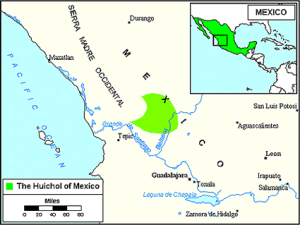
An article in Reuters described the conflict between ranchers and Huichol Indians in Mexico over the ranchers’ intensive grazing and planting. Deforestation, and use of chemicals. It includes commentary from Paul Liffman, a research associate professor of anthropology at Rice University in Texas and Huichol expert:  The conflict echoes the Standing Rock dispute in the U.S. state of North Dakota where Native American activists and supporters have demanded a halt to an oil pipeline project. He noted that indigenous groups have been making land claims more forcefully since a 1989 United Nations convention provided a legal framework.


Continue reading “anthro in the news 12/26/16”

anthro in the news 12/19/16

Source: Getty Images

beware the messenger

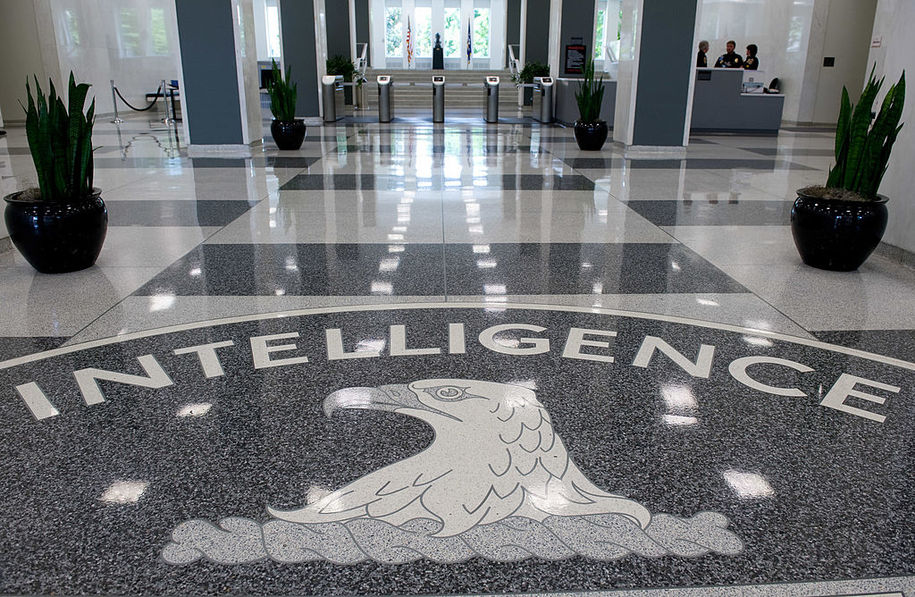
The Herald (Zimbabwe) published a piece about recent CIA reports on Russian hacking by social anthropologist David Price, professor at St. Martin’s University in Washington State. He argues that the U.S. Central Intelligence Agency is a tool of American hegemony, not an unbiased source of information: “I remain agnostic in these matters and highly recommend others do too. While we know nothing about the truth of these reports, we know a lot about the messenger delivering this news, and what we know should give us pause before accepting news of a Russian electoral coup here at home. As a scholar with two decades of academic research studying the CIA, I think many on the American left are letting their dire fear of the damage Trump will surely bring to not fully consider how the CIA is playing these events.  Many on the American left misunderstand what the CIA is and isn’t.  It isn’t some sort of right wing agency, it is an agency filled with bright people with beliefs across the mainstream political spectrum…” [Blogger’s note: The article previously appeared in CounterPunch Magazine].

where health is a human right

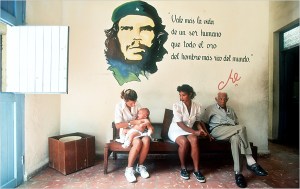
Health clinic in Cuba. Source: Eric Weaver

An article in The Atlantic describes the success of Cuba in ensuring the people’s health according to its constitution which says health is a fundamental human right:  Cuba has long had a nearly identical life expectancy to the United States, despite widespread poverty. The humanitarian-physician Paul Farmer notes in his book Pathologies of Power that there’s a saying in Cuba: ‘We live like poor people, but we die like rich people.’ Farmer also notes that the rate of infant mortality in Cuba has been lower than in the Boston neighborhood of his own prestigious hospital, Harvard’s Brigham and Women’s.”


Continue reading “anthro in the news 12/19/16”