anthro in the news 4/18/16

Global mental health and economics

Source: Flickr

USA Today carried an article about a report from the World Health Organization claiming that every U.S. dollar invested in mental health treatment can quadruple returns in work productivity. The article quotes Jim Kim, World Bank president, medical anthropologist, and doctor: “Despite hundreds of millions of people around the world living with mental disorders, mental health has remained in the shadows…This is not just a public health issue — it’s a development issue.” Also quoted is Arthur Kleinman, professor of medical anthropology and psychiatry at Harvard University: “Mental health needs to be a global humanitarian and development priority… We need to provide treatment, now, to those who need it most, and in the communities where they live…Until we do, mental illness will continue to eclipse the potential of people and economies.”  [Blogger’s note: Sounds like a boon for Big Pharma?]


China’s food industry: Not relevant to the U.S.?

Made in China, sold around the world.

The Huffington Post carried an article about two contrasting zones of presenting the value of scientific research in Washington, DC, this past week. In the White House, President Barack Obama gathered with young students to celebrate scientific discovery. On the opposite end of Pennsylvania Avenue, adult scientists put on an exhibit illustrating the negative effects of politics on research. One exhibitor was Megan Tracy, assistant professor of anthropology at James Madison University. She received an award of $150,000 from the U.S. National Science Foundation to study the effects of China’s poorly regulated milk market. Some U.S. congressional critics asked what good it did the American taxpayers to help China with its dairy. In response, Tracy notes that the U.S. imported more than $28 billion worth of food from China in 2013.


Continue reading “anthro in the news 4/18/16”

DC event: world heritage day on protecting and preserving cultural heritage in the middle east

Protecting, Preserving, and Presenting the Cultural Heritage of the Near East 

When: April 18, 8:30am – 12:30pm
Who: AIA, ASOR, The Smithsonian Institution, and the GWU Capitol Archaeological Institute
Where: Ring Auditorium, Hirshhorn Museum
The Smithsonian Institution, Washington D.C.

This event is free and open to the public 

ASOR (The American Schools of Oriental Research) and AIA (The Archaeological Institute of America), in cooperation with the Smithsonian Institution and The George Washington University Capitol Archaeological Institute, will commemorate International Day for Monuments and Sites (also called World Heritage Day) with programming at the Ring Auditorium at the Hirshhorn Museum and Sculpture Garden of the Smithsonian Institution on Monday, April 18, 8:30AM-12:30PM.

The symposium will report on efforts to document, protect, and preserve cultural heritage sites in the Near East, and will build upon conversations started at a NEH-funded summit held by AIA and ASOR in Washington in December 2015. Topics will include assessing the damage suffered by Near Eastern cultural heritage sites imperiled by conflict and by looting; technological strategies for documenting and preserving the cultural heritage record; and conservation projects, especially those that engage local communities and stakeholders.

Speakers and topics will include:

  • Hanan Charaf, University of Paris I-Sorbonne, Cultural Heritage in Lebanon
  • Michael Danti, ASOR Cultural Heritage Initiatives, Cultural Heritage in Syria and Iraq
  • Susan Kane, Oberlin College, Cultural Heritage in Libya
  • Salam Al Kuntar, Penn Cultural Heritage Center, The Safeguarding the Heritage of Syria and Iraq Program (SHOSI)
  • Oystein LaBianca, Andrews University, Cultural Heritage in Jordan
  • Alexander Nagel, Smithsonian Institution, Cultural Heritage in Yemen
  • Katie A. Paul, Antiquities Coalition, Cultural Heritage in Egypt
  • Gil Stein, Oriental Institute of the University of Chicago, Cultural Heritage in Afghanistan
  • Christopher Tuttle, Council of American Overseas Research Centers, Cultural Heritage and the Role of American Research Centers

Click here to register.

distance learning opportunity in cultural anthropology research methods from the university of florida

Research Methods in Anthropology Header

Registration: Research Methods in Cultural Anthropology

Registration for courses in the Research Methods in Cultural Anthropology program at the University of Florida is open. Four courses (listed below) are offered in Summer 2016. To explore the courses being offered this summer, and for information on registration and tuition, please visit the Research Methods in Cultural Anthropology. These courses are offered 100% online and no on-campus visits are required. The courses carry 3 graduate credits at the University of Florida and may be taken for credit or without credit. Courses are limited to 20 participants.

Courses Available for Summer 2016: 

Summer A:

  • Registration Now Open
  • May 9th– Classes Start
Summer B:

  • Registration Now Open
  • June 27th– Classes Start

anthro in the news 4/11/16

Sex trafficking and tea

CNN carried an article following up on a series of videos it did last month about how girls growing up on tea plantations in Assam, India, are often targeted by human traffickers. The current article poses selected questions, sent in by viewers of the videos, to several experts including cultural anthropologist Sarah Besky, professor at Brown University and author of The Darjeeling Distinction: Labor and Justice on Fair-Trade Tea Plantations in India. She responds: “Human trafficking in Northeast India does not only happen on tea plantations. It happens across rural and urban areas…poverty and a lack of employment opportunities are important factors — this goes for anyone, not just girls who grow up on tea plantations.”

Continue reading “anthro in the news 4/11/16”

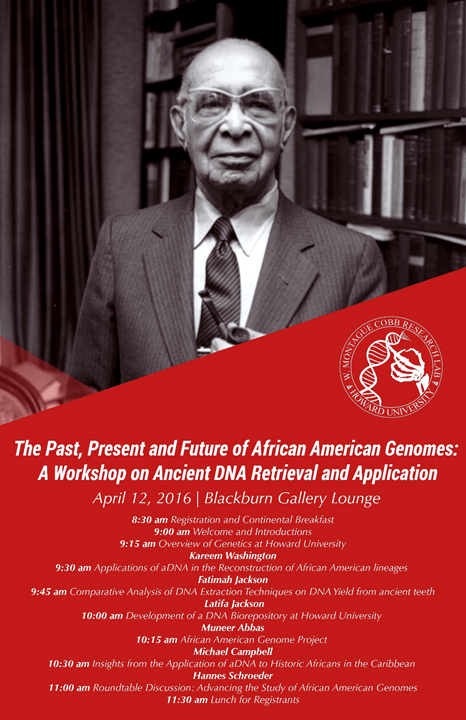
talk in DC at howard university on african american genomes

The Past, Present and Future of African American Genomes: A Workshop on Ancient DNA Retrieval and Application 

When: April 12, 9am
Who: 
The Howard University Cobb Research Laboratory
Where: Gallery Lounge, Armour J. Blackburn University Center
2397 6th St NW, Washington, DC 20059

The Cobb Research Laboratory will be hosting this workshop on Ancient DNA Retrieval and Application. This ground-breaking workshop will cover the latest advances at Howard University in ancient DNA assessment and will feature a presentation by Dr. Hannes Schroeder, University of Copenhagen’s Center for Geo-Genetics. He will cover his discovery of the genetic backgrounds of three Afro-Caribbean individuals from the 17th century. Howard University faculty including Dr. Latifa Jackson, Dr. Muneer Abbas and Dr. Michael Campbell will also present on research projects supporting the Cobb Research Laboratory. Lunch will be provided for all participants. Advanced registration is required. Email cobbresearchlab@howard.edu

unnamed.png

anthro in the news 4/4/16

Take that trash and…

6834386184_5a800bb8bd_o
Liberty Landfill. Source: Ian Burt, Flickr

The Atlantic interviewed cultural anthropologist Joshua Reno, assistant professor at Binghamton University about his research on landfills and social aspects of waste disposal in the U.S. and Canada. He worked in a landfill for nine months and learned about the intricate process of managing waste. He suggests that the effectiveness of landfills allows people to forget about the waste they produce.  Reno is the author of Waste Away: Working and Living with a North American Landfill which seeks to reconnect people with their waste.

Continue reading “anthro in the news 4/4/16”

The latest from cultural survival

Reprinted from Cultural Survival

Source: Cultural Survival

Indigenous community radio stations in Guatemala have found themselves in the midst of a hopeful period regarding their legalizations, as the new government entered in January 2016. Bill 4087, Community Media Law, which was brought to the table in Congress after years of lobbying, has achieved significant advances as it passed its first and second readings in Congress. It is within this context that a new community radio was born in the Maya Mam territory of Quetzaltenango, in the community of Huitan.

Continue reading “The latest from cultural survival”

anthro in the news 3/28/16

One of the worst disasters

1
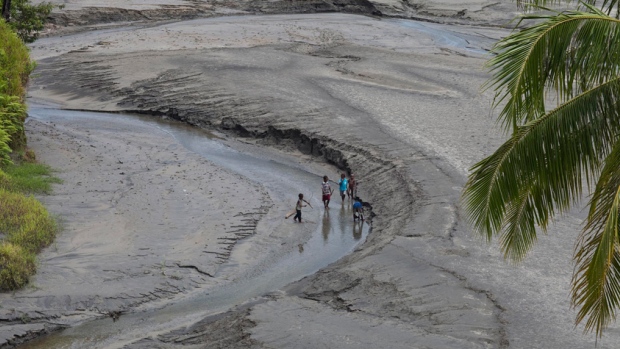
Children playing in tailings downstream from the Ok Tedi Mine in Papua New Guinea, 2009. Source: Brent Stirton/Getty Images

CBC radio (Canada) presented commentary from Stuart Kirsch, professor of anthropology at the University of Michigan. Kirsch has spent decades working with native peoples living along the Ok Tedi River in Papua New Guinea and recording their experience of the social and environmental disaster created by an enormous open-pit copper mine situated near the river’s source. Kirsch describes what he and the Ok Tedi people learned in the process of taking on a multi-national mining giant, and what the people of PNG taught him. He asks whether “responsible mining” is possible and reveals the dubious science that supports the mining industry. His latest book is Mining Capitalism: The Relationship between Corporations and Their Critics. [with audio]

Continue reading “anthro in the news 3/28/16”

anthro in the news 3/21/16

Sorry is not enough

1
Source: Pixabay

The Star Phoenix of Saskatoon (Canada) reported on a lecture at the University of Saskatchewan by Audra Simpson, professor of anthropology at Columbia University. She raised the question: How can reconciliation succeed if the wrongs against indigenous people continue to go on? Emotional apologies from the government of Canada and churches that ran the Indian residential schools have evoked emotional responses in indigenous people and are expected to somehow make up for their stolen land and lives, Simpson said in an interview. Also: “It’s governing through an appeal to emotions … to allow the same things to continue and still allow for extractive industry in our territories (and) not address fully the problem of our murdered and missing indigenous women…Apology is not sufficient because it attempts to stop time between the past and the present and pretend like the suffering is over. It’s not over.”

Continue reading “anthro in the news 3/21/16”