anthro in the news 9/18/17

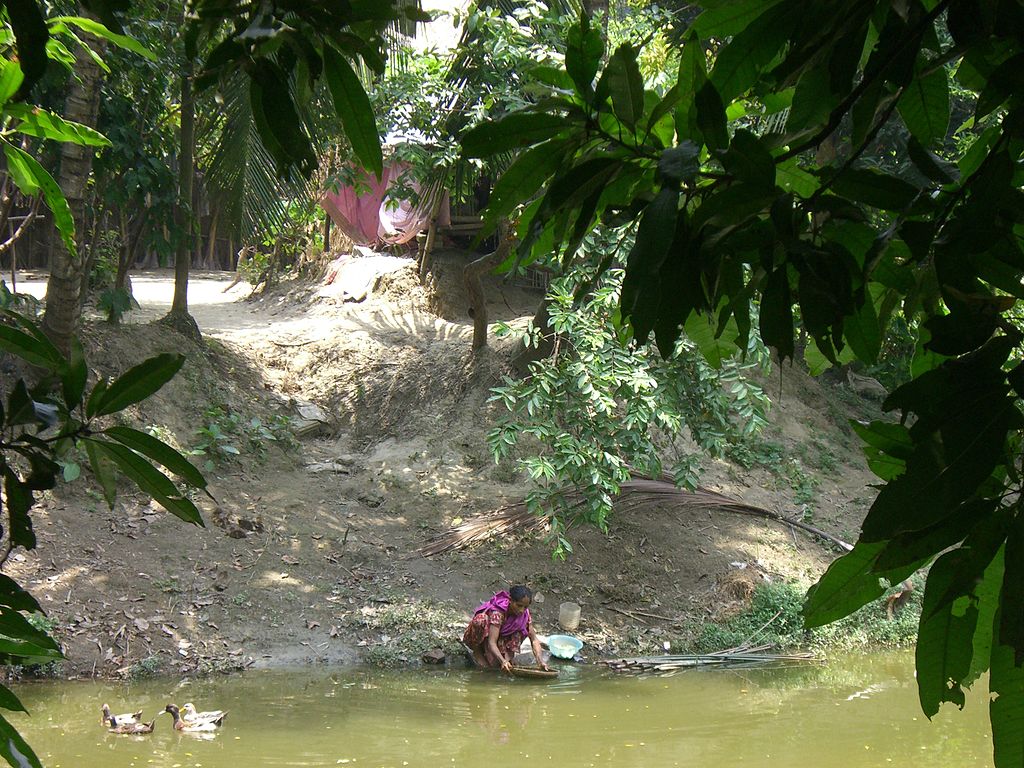
Scene in Bangladesh. Credit: Wikipedia

water problems and cholera alert 

The Conversation published commentary by medical anthropologist Lauren Carruth, assistant professor in the School of International Service, American University: “As hurricanes barrel through some of the most impoverished communities in the Western Hemisphere, and as floods ravage Yemen, Sierra Leone, Bangladesh and India, now is the time to rethink and prioritize cholera epidemic prevention and response. In the aftermath of Hurricane Matthew in 2016, a surge of cholera in Haiti increased the death toll from the disease. Officials in Haiti this week are already urging people to add bleach to their drinking water to prevent the spread of cholera in the aftermath of Irma…The WHO and its partners should lead a vigorous appeal to donors and humanitarian organizations working in several locations – in the paths of Atlantic hurricanes, in flooded regions of South Asia, and in war-torn parts of the Middle East and Africa – where cholera still kills and the risk of an outbreak is high.”

remembering Guatemala in Ohio
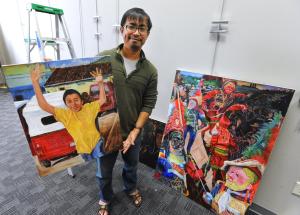
The artist with some of his paintings. Credit: The Times-Reporter/Google Images Commons

An article in The Times-Reporter (Ohio) reported on an art exhibit in Dover, Ohio, that displays paintings by Jogendro Kshetrimayum, an artist and anthropologist who teaches cultural anthropology at Eastern Michigan University in Ypsilanti. His work depicts scenes of the city of Nebaj, Guatemala, an area that resonates with many Maya immigrants in the Dover area.  Maria Luz Garcia, assistant professor of anthropology at Eastern Michigan University, gave a talk at the show’s opening about how migration to the U.S. grew from the effects of genocide that devastated the native Maya population during a 36-year civil war, a war in which the U.S. government supported the country’s army. She pointed to the need for institutional change in the U.S. to create employment opportunities for local Guatemala-born youth who might work as language instructors for example.


Continue reading “anthro in the news 9/18/17”

anthro in the news 9/11/17

Super Mario games follow player character Mario’s adventures in the fictional Mushroom Kingdom. Credit: Pixabay.

games, technology, and nostalgia

CNBC reported on the revival of some classic video games and the consoles used to play them. Retro fixtures like Atari and Sega are making a comeback, even as the new crop of video games are more sophisticated than ever. The article quotes Jared Miracle, an anthropologist and education researcher who specializes in game studies at the Ocean University of China: “After some generations, all forms of art and media become classics…Think of ‘Donkey Kong’ as having status akin to ‘Oliver Twist.'”

improving bike safety

As reported by The Herald-Sun (Durham, North Carolina), researchers at Duke University are using North Carolina bicycle crash data to improve transportation policy in the city of Durham. Their findings led them to recommend the installation of more crosswalks, additional median islands, and expansion of bike lanes on roads with a high number of reported crashes. They also developed an interactive website that demonstrates how factors such as the time of day, weather conditions, and demographics affect crash risk. The project is an offshoot of an international study conducted by Harris Solomon, associate professor of cultural anthropology and global health at Duke. He originally studied traffic accidents in India which has a large population of bicycle riders.

Continue reading “anthro in the news 9/11/17”

anthro in the news 9/4/17

The port of Houston, 2000. Credit: U.S. Coast Guard, PA2 James Dillard/Wikimedia Commons

foregrounding climate justice

The Huffington Post published a piece, prompted by Hurricane Harvey and calling for attention to climate justice, by K. Jessica Hsu, an anthropologist and solidarity activist, and Mark Schuller, associate professor of anthropology at Northern Illinois University. They write: “Ironically headquartered in Houston, the fossil fuel industry has been funding a half-billion-dollar, decades-long climate change denial campaign…Climate justice explicitly confronts basic inequalities: the world’s biggest polluters are not those directly affected by climate change. The big polluters are also the biggest “winners” in this economic system. It is no coincidence that higher climate vulnerability communities are largely communities of color and disenfranchised communities within the Global South.”

natural hazard vs. disaster

A tsunami warning sign in Japan. Credit: Uwe Aranas, CE Photo/Wikimedia Commons

National Public Radio (Carbondale, Illinois) carried an interview with Roberto Barrios, associate professor of anthropology at Southern Illinois University at Carbondale, who conducted field research in New Orleans after Hurricane Katrina. He distinguishes between a natural hazard, such as a hurricane, and a disaster, which is a hazard plus human-created practices, like building on a coast or river. He notes that climate change is adding to the frequency and intensity of hazards many of which become disasters .

Continue reading “anthro in the news 9/4/17”

anthro in the news 8/27/17

Credit: Pixabay

when the court jester is president 

The Conversation published commentary by Anthony J Pickles, British Academy Research Fellow in the Division of Social Anthropology at the University of Cambridge: “Across cultures, fools, clowns, and court jesters are powerful critics of any existing order. But what happens when they take power?…A joker in charge is very difficult to challenge. Allow him to rile you up, and he wins; laugh with him, and you reinforce his nihilistic agenda. If the president’s opponents want his presidency to reinforce the US’s norms and institutions rather than destroy them, they can only respond one way: concentrate on achievable, serious goals, and refuse to get distracted by the absurd, surreal personality show with which their president is mocking them.”

monument wars are nothing new

Benedict Arnold memorial at the Saratoga National Battlefield. Arnold, who originally fought for the American Continental Army, was wounded in the foot during the Battle of Saratoga. He later defected to the British, and his name became a synonym for traitor. Credit: Wikimedia

An article in The New York Times discusses monument removal in Europe’s history and includes a comment by Ivaylo Dichev, professor of cultural anthropology at Sofia University in Bulgaria, for whom recent scenes in the United States have a clear resonance: “Eastern Europe went through a similar period in the ’90s, when a lot of Communist-era monuments were removed…”

An article in The San Diego Union Tribune quoted Seth Mallios, an archaeologist and professor at San Diego State University. He earned his doctorate at the University of Virginia and well remembers the Confederate monuments in Charlottesville: “As a kid from California, when Martin Luther King Day was called (Robert E.) Lee-(Andrew) Jackson-King Day, I…didn’t believe what was going on.”

Continue reading “anthro in the news 8/27/17”

anthro in the news 8/22/17

Sunset on Guam. Yuki Yagimura/Wikpedia Commons

peril in paradise

KCET TV (California) broadcast a program about growing resistance in Guam to the U.S. military presence there. It includes comments from David Vine, professor of anthropology at American University: “…many in the U.S. military consider Guam, to this day, to be the most important base in the world, certainly one of the most important U.S. military bases…people in Washington and in the 50 states weren’t embarrassed in past decades to call Guam a colony. Today it’s referred to as a territory, but it is a colonized territory. There’s a colonial relationship, and the people of Guam effectively have a kind of third-class citizenship. They can’t vote for president. They don’t have meaningful representation in Congress.”

the many meanings of solar eclipses 

National Public Radio (U.S.) interviewed Anthony Aveni, professor of anthropology, astronomy, and Native American Studies at Colgate University, about solar eclipses and their meaning in different cultures: “People banging pans and making noise and pinching their dogs to make them howl at the eclipse. And an anthropologist asked them about this and said, you know, are you chasing away the demons with your noise? And one responded, said, no, we’re not chasing away the demons. We’re trying to get the sun’s attention.”

Continue reading “anthro in the news 8/22/17”

anthro in the news 8/14/17

Closed due to heat wave. Credit: MTSOfan/Flickr

summer in the city

The Conversation published an article on heat waves, urban life, and social inequality by Merrill Singer, professor of anthropology at the University of Connecticut. He reports on findings from a qualitative study and several of his students conducted in Hartford:  “…our participants often lacked clear knowledge about the nature of climate change, what drives it, how climate change differs from other forms of urban pollution or how people can prepare themselves for limiting its harmful effects. Their strongest concerns were about how oppressive summer heat waves would make their children sick and their own ability to cope with ever-higher temperatures and longer heat spells as they grew older. Some described feeling powerless given the scale of the social and climatic forces aligned against them.” [Blogger’s note: See also a book detailing social patterns of heat wave deaths in Chicago in 1995 by sociologist Eric Klinenberg].

sugar daddies as “blessers”

This hashtag has diverse meanings worldwide. In South Africa, it can convey a blesse role. Credit: The Odyssey Online/Google Images Commons.

North Carolina Public Radio carried a piece about transactional sexual relationships, called blesser/blessee relationships, in South Africa. The blesser is a man who gives money and gifts to a woman in exchange for companionship and sex. Lebohang Masango, poet, writer, and M.A. candidate in anthropology at the University of Witswatersrand, studies blesser culture. Although many see the blesser/blessee relationship as exploiting women, she finds that many young women in such relationships are educated, ambitious and see their time as being valuable: “They understand the risk of HIV, they understand the risk of multiple concurrent partnerships, but there’s this postfeminist sensibility that’s beginning to be entrenched especially among young women of the middle class where they are choosing to do this, even against all of the other stigmas that exist.”

Continue reading “anthro in the news 8/14/17”

anthro in the news 8/7/17

Credit: Canadian Liver Foundation/Google Images Commons.

undetected, untreated, deadly

The Washington Post published an article co-authored by medical anthropologist Paul Farmer, the Kolokotrones University Professor at Harvard University, an infectious-disease physician at the Brigham and Women’s Hospital, and co-founder of Partners in Health: “Three years ago, we wrote about the wide gap in access to hepatitis C treatment, hoping that mistakes made in the world’s response to AIDS would not be repeated in another epidemic of a lethal, blood-borne disease. Our worst fears have been realized. The World Health Organization now reports that 4 out of 5 people infected with hepatitis C aren’t even aware of it. Of those who do know, fewer than 1 in 50 have received treatment…This is a failure not of science but of delivery.”

Trump family honor code

Gillian Tett, social anthropologist and writer for The Financial Times, discusses the anthropological model of family honor cultures of the Mediterranean region versus rule of law cultures of northern Europe. She links Trump’s behavior to the Mediterranean model and cites Matthew Engelke, an anthropologist at the London School of Economics, who writes in his new book, Think Like an Anthropologist, that power and status in the Mediterranean region “were often made in the form of bravado and raw assertions of might.” [Blogger’s note: the Mediterranean model clearly has wider regional applicability. Think, for example, of the longstanding family feud between the Scot-Irish Hatfields and McCoys].
Continue reading “anthro in the news 8/7/17”

anthro in the news 7/31/17

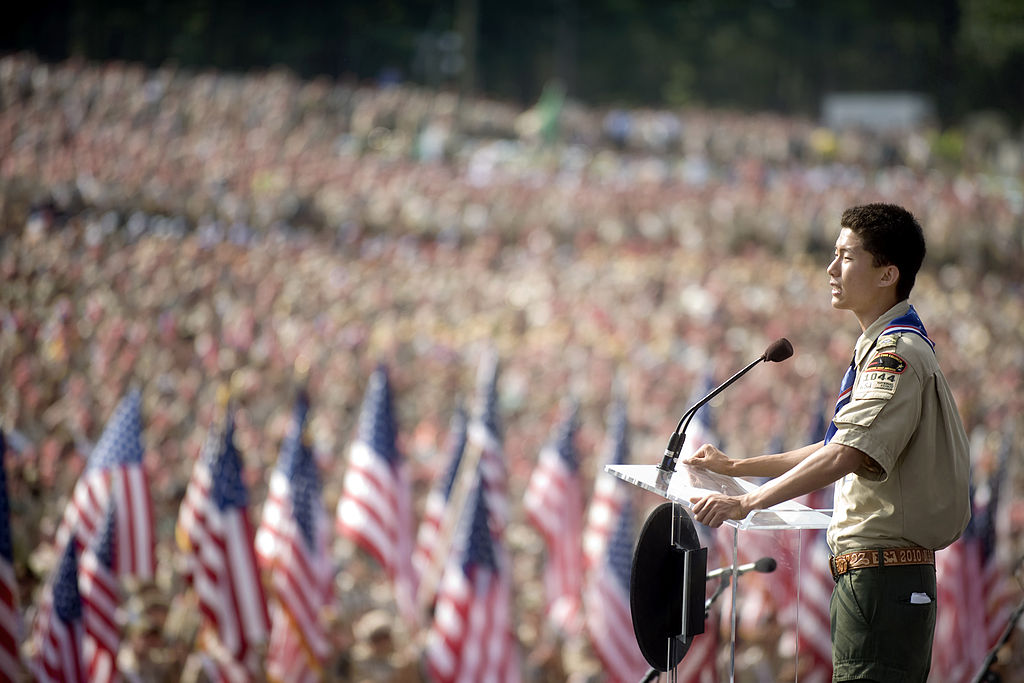
Anthony Thomas, the two millionth Eagle Scout, addresses a crowd of over 45,000 at the 2010 National Scout Jamboree. Credit: Cherie Cullen, U.S. Department of Defense/Wikimedia

a letter to the Boy Scouts, a letter to everyone

Mica Pollock, an anthropologist, education professor, and director of the Center for Research on Educational Equity, Assessment and Teaching Excellence at the University of California San Diego, wrote an open letter to the Boy Scouts following Donald Trump’s speech at the 2017 Jamboree: “Dear Boy Scouts, I write to you as a mom and as an educator who thinks about how we talk, I ask a basic question about everything people say. Does this talk support each and all of us, or not?” She offers four critical thinking questions to apply to the speech and to any speaker. She then asks, “How do we respond when we hear words that violate key values?”

who owns Tibetan medicine?

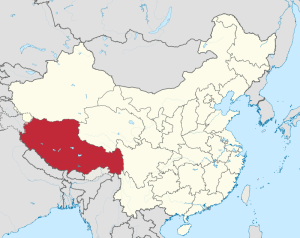
Tibet Autonomous Region within China. Credit: TUBS/Wikipedia.

A New York Times article quotes two anthropologists in its coverage of conflicting claims between China and India to commercial rights in Tibetan medicine. Stephan Kloos, a medical anthropologist at the Austrian Academy of Sciences in Vienna, said his preliminary calculations suggest that the industry’s value could be approaching $1 billion. Sienna Radha Craig, associate professor of anthropology at Dartmouth College, said that Unesco recognition could stimulate the industry’s growth without the proper environmental safeguards. In India, China, and Nepal, the effort to expand the industry far outstrips “serious cultivation and conservation…At a certain point that becomes completely untenable.”


Continue reading “anthro in the news 7/31/17”

anthro in the news 7/24/17

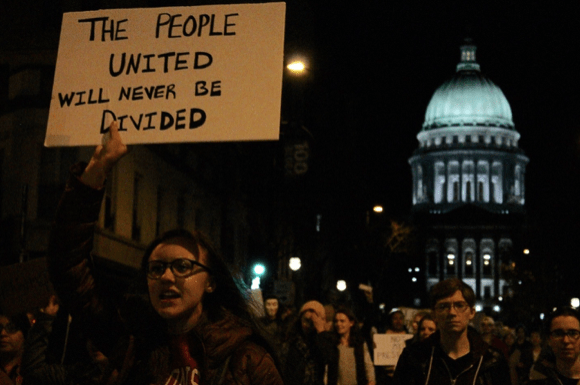
University of Wisconsin students protesting Trump’s presidency and proposed policies. Credit: The Badger Herald/Google Images Commons.

run for it: anthropologists in politics

The Huffington Post published an article by Tori Jennings, adjunct professor of anthropology at the University of Wisconsin Stevens Point, about the need for anthropologists to seek political roles in the U.S. After watching with dismay the effects of a conservative takeover in Wisconsin including the state university system, she decided to get involved in local politics the night Trump was elected. Now a member of the Stevens Point City Council, she writes: “An anthropologist running for city council should hardly be that surprising. Our discipline after all, is highly applied. Not only is anthropology interesting we tell our students, it’s useful for tackling real-world problems. Two decades before Laura Nader challenged anthropology to ‘study up’ in her provocative 1972 essay Up Anthropology, the idea of ‘action anthropology’ had already taken root in the renowned work of American anthropologist Sol Tax.”

no jobs, no babies

An article in The Atlantic proposes that a key neglected factor in explaining Japan’s low and declining birth rate is the lack of well paid jobs for men in a context in which men are still largely understood to be the family income-earner. The article quotes Anne Allison, professor of cultural anthropology at Duke University and author of Precarious Japan: “The gender stuff is pretty consistent with trends around the world—men are having a harder time…The birth rate is down, even the coupling rate is down. And people will say the number-one reason is economic insecurity.” 

Continue reading “anthro in the news 7/24/17”

anthro in the news 7/17/17

Credit: Brazil Law Blog/Google Images Commons.

labor rights in Brazil under attack

An article in the Los Angeles Times reported that Brazil’s Senate approved an end to unemployment insurance, longer working hours, and reduced vacation time. The article quotes Silas Fiorotti, an anthropology researcher at the University of Sao Paulo: “…I will not support the dismantling of labor justice…The intention is to reduce the number of labor lawsuits against employers. They just want to impose criteria that make it so that workers don’t have free access to labor justice.”

liberation cricket vs. neoliberal cricket

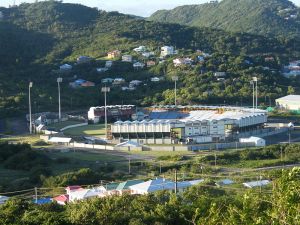
Beausejour Cricket Stadium, St. Lucia. Credit: Timothy Barton (timtranslates.com)/Creative Commons.

The Huffington Post published commentary by Adnan Hossain, a postdoctoral fellow in socio-cultural anthropology at the University of Amsterdam. He writes about changes in Caribbean cricket: “Once a site for anti-colonial resistance and consolidation of a West Indian identity, contemporary Caribbean cricket is devoid of such political connotations. This paradigmatic shift may account for the sad state of the West Indies cricket team this year. It seems that neoliberal cricket just can’t compete with the liberation cricket of yore.”

Continue reading “anthro in the news 7/17/17”