anthro in the news 10/10/16

Land rights are key in Colombia
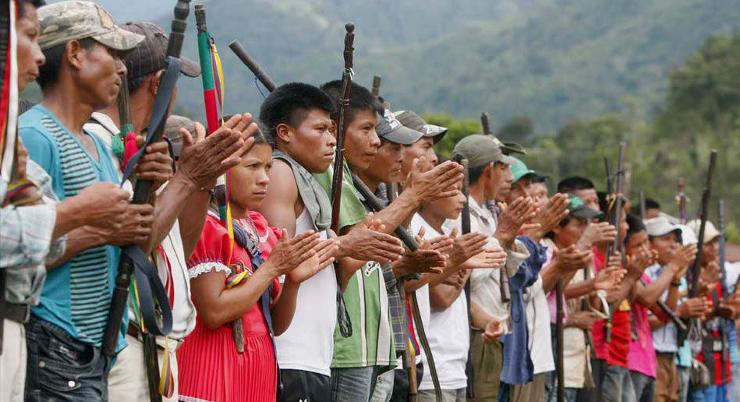
Indigenous people want land rights. Source: Bluedotpost.com

The Washington Post published an op-ed by cultural anthropologist Omaira Bolaños, Latin America program director for the Rights and Resources Initiative. She argues for property rights reform: “One of the most devastating aspects of the war for me was to see indigenous, peasant, and Afro-Colombian communities who spent their entire lives investing in and caring for their territories suddenly left with nothing. Displacement has a particularly destructive impact, leading to the loss of livelihoods, languages and cultures, and to the tearing apart of social fabrics — in addition to the lives lost to violence. For a lasting peace to take root, the legal recognition of collective property rights for indigenous and Afro-Colombian communities would be an important step in addressing the war’s damages and in continuing a process of comprehensive land reform.”


Disney-ification of Tibetan culture
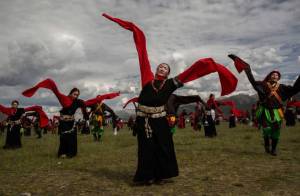
Tibetans perform for tourists. Source: Getty Images/Kevin Frayer

An article in The Washington Post described the effects of the ever-growing number of Chinese tourists in Tibet. It quotes P. Christiaan Klieger, a San-Francisco-based cultural anthropologist, historian, and writer:  “It is very similar to how the United States treated its developing West 100 years ago…They are commodifying the native people and bringing them out as an ethnic display for the consumption of people back east.” Other critics point out that such domestic tourism is part of a plan to bind Tibet ever more tightly into China. Tourism development trivializes Tibet’s culture, marginalizes its people, and pollutes the environment. Tibetans are neither consulted nor empowered in this process. The top jobs and most of the profits go to companies and people from elsewhere in China.

Continue reading “anthro in the news 10/10/16”

Washington, DC event: Briefing on Explosions of Violence in Latin America — Landmines & the Context of Conflict in Latin America

When: Friday, December 13, 2013 at 10 AM

Where: Congressional Meeting Room South, Capitol Visitors Center

This briefing is part of the monthly briefing series hosted by Sam Farr, Member of Congress, called Latin America on the Rise, which brings in speakers to address issues in the Western Hemisphere.

Latin America struggles with chronic violence and insecurity. In 2012, 1 in 3 citizens reported being impacted by violent crime and 50% perceived a deterioration in security. While insecurity has many manifestations, the presence of landmines in one third of Latin American countries contributes to the face of violence in many parts of the Western Hemisphere.

Colombia alone has the second highest number of landmine victims in the world, surpassed only by Afghanistan. Since 1990, over 10,000 citizens, including nearly 1,000 children, have been wounded or killed by landmines and estimates suggest clearing all the active mines in Colombia could take over a decade.

Colombia is not the only Latin American country affected by landmines. For the seven mine-affected states in the Americas, the context of this violence is a complicated picture of civilian, military, economic, and development factors. Addressing this larger context of violence is essential to resolving the conflicts and insecurity that can result in the use of landmines.

Panelists:
Elizabeth MacNairn, Executive Director, Handicap International

Dr. Suzanne Fiederlein, Associate Director, Center for International Stabilization & Recovery, James Madison University

Beth Cole, Director, Office of Civilian-Military Cooperation, United States Agency for International Development

Moderator:
June Beittel, Analyst in Latin American Affairs, Congressional Research Service

If you have any questions, please contact Caitie Whelan (caitie.whelan@mail.house.gov).