anthro in the news 10/10/16

Land rights are key in Colombia
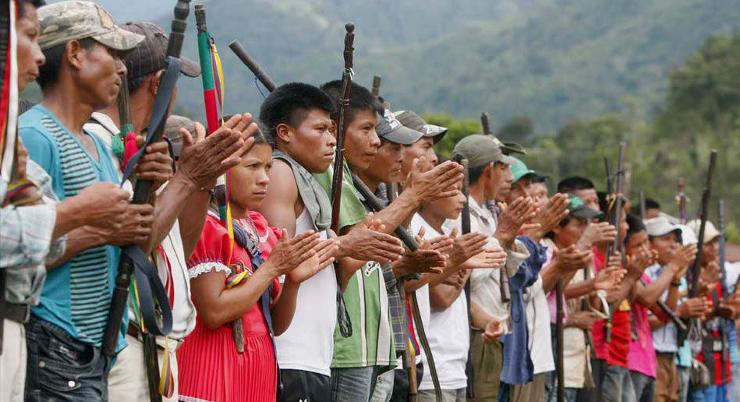
Indigenous people want land rights. Source: Bluedotpost.com

The Washington Post published an op-ed by cultural anthropologist Omaira Bolaños, Latin America program director for the Rights and Resources Initiative. She argues for property rights reform: “One of the most devastating aspects of the war for me was to see indigenous, peasant, and Afro-Colombian communities who spent their entire lives investing in and caring for their territories suddenly left with nothing. Displacement has a particularly destructive impact, leading to the loss of livelihoods, languages and cultures, and to the tearing apart of social fabrics — in addition to the lives lost to violence. For a lasting peace to take root, the legal recognition of collective property rights for indigenous and Afro-Colombian communities would be an important step in addressing the war’s damages and in continuing a process of comprehensive land reform.”


Disney-ification of Tibetan culture
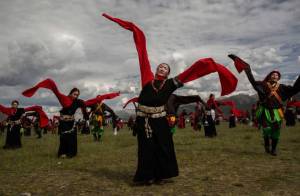
Tibetans perform for tourists. Source: Getty Images/Kevin Frayer

An article in The Washington Post described the effects of the ever-growing number of Chinese tourists in Tibet. It quotes P. Christiaan Klieger, a San-Francisco-based cultural anthropologist, historian, and writer:  “It is very similar to how the United States treated its developing West 100 years ago…They are commodifying the native people and bringing them out as an ethnic display for the consumption of people back east.” Other critics point out that such domestic tourism is part of a plan to bind Tibet ever more tightly into China. Tourism development trivializes Tibet’s culture, marginalizes its people, and pollutes the environment. Tibetans are neither consulted nor empowered in this process. The top jobs and most of the profits go to companies and people from elsewhere in China.

Continue reading “anthro in the news 10/10/16”

anthro in the news 8/24/15

  • Islamic State vision driven by dreams

An article in the Independent (U.K.) draws on a recent paper by Durham University emeritus reader in anthropology Iain Edgar regarding the role of night dreaming in Islam in general and violent sectarian offshoots in particular. Edgar follows IS twitter posts and other sources to learn about dream-motivated activities including frequent dreams about “green birds” – jihadi fighters who are on their way to paradise.

  • New Orleans cuisine ten years after Katrina

Building back better? The Australian Financial Review reported on the changes in the restaurant scene in New Orleans ten years after hurricane Katrina. The article draws on insights from cultural anthropologist David Beriss of the University of New Orleans who points out that the shuffle of post-Katrina cultural influences is just another example of Creole culture expressing itself through food:  “Creolisation – that way of adapting and being in the world – shows up everywhere.” Others express concern about gentrification and loss of a more traditional Creole menu. Continue reading “anthro in the news 8/24/15”

anthro in the news 8/18/15

  • “Blood coming out of her wherever”

National Public Radio (U.S.) carried a piece about cross-cultural attitudes toward menstruation, noting that while negative attitudes about menstruating women are widespread, they are by no means universal. The article was prompted by Donald Trump’s remark during a recent debate that Fox News host Megyn Kelly had “blood coming out of her wherever.” NPR quotes Beverly Strassmann, evolutionary anthropologist and biologist at the University of Michigan who studies menstrual taboos: “Menstrual taboos are so widespread, they’re almost a cultural universal.” Yet the exceptions, societies that treat menstruating women with respect, are important. Alma Gottlieb, professor of cultural anthropology and gender and women’s studies at the University of Illinois, is co-editor with Thomas Buckley of Blood Magic: The Anthropology of Menstruation, which includes positive examples.

  • So true: Graeberian bullshit jobs

According to an article in the Independent (U.K.), a study has found that more than a third of British workers believe their jobs are meaningless. In 2013, David Graeber, professor of anthropology at the London School of Economics, argued in his article, On the phenomenon of bullshit jobs, that increasing numbers of jobs are not socially useful and exist only for their own sake.

  • Caucasus ritual: You cannot be sober

The Independent (U.K.) carried an article about an annual summer ritual in a region in the Caucasus Mountains, in Georgia. The event includes horse racing, animal sacrifice, dancing, and beer drinking. The article focuses on the ritual leaders, or khevisberi, and provides commentary about them from Kevin Tuite, professor of anthropology at Montreal University: “Boxing with God,” as he calls it, is the defining experience in becoming a khevisberi. You are haunted by dreams and hallucinations, the deity visits calamities on you and your family, and finally you submit. [Blogger’s note: while a khevisberi is not easily recruited, it seems likely that they would not consider their work as a khevisberi to be meaningless in the Graeberian sense]. Continue reading “anthro in the news 8/18/15”