anthro in the news 10/10/16

Land rights are key in Colombia
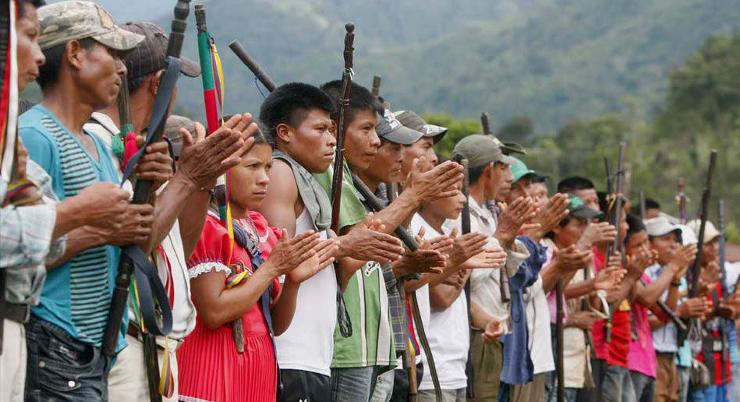
Indigenous people want land rights. Source: Bluedotpost.com

The Washington Post published an op-ed by cultural anthropologist Omaira Bolaños, Latin America program director for the Rights and Resources Initiative. She argues for property rights reform: “One of the most devastating aspects of the war for me was to see indigenous, peasant, and Afro-Colombian communities who spent their entire lives investing in and caring for their territories suddenly left with nothing. Displacement has a particularly destructive impact, leading to the loss of livelihoods, languages and cultures, and to the tearing apart of social fabrics — in addition to the lives lost to violence. For a lasting peace to take root, the legal recognition of collective property rights for indigenous and Afro-Colombian communities would be an important step in addressing the war’s damages and in continuing a process of comprehensive land reform.”


Disney-ification of Tibetan culture
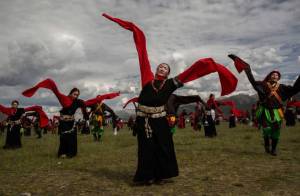
Tibetans perform for tourists. Source: Getty Images/Kevin Frayer

An article in The Washington Post described the effects of the ever-growing number of Chinese tourists in Tibet. It quotes P. Christiaan Klieger, a San-Francisco-based cultural anthropologist, historian, and writer:  “It is very similar to how the United States treated its developing West 100 years ago…They are commodifying the native people and bringing them out as an ethnic display for the consumption of people back east.” Other critics point out that such domestic tourism is part of a plan to bind Tibet ever more tightly into China. Tourism development trivializes Tibet’s culture, marginalizes its people, and pollutes the environment. Tibetans are neither consulted nor empowered in this process. The top jobs and most of the profits go to companies and people from elsewhere in China.
Continue reading “anthro in the news 10/10/16”

anthro in the news 9/26/16

Mother, mother: On police violence and race in the U.S.

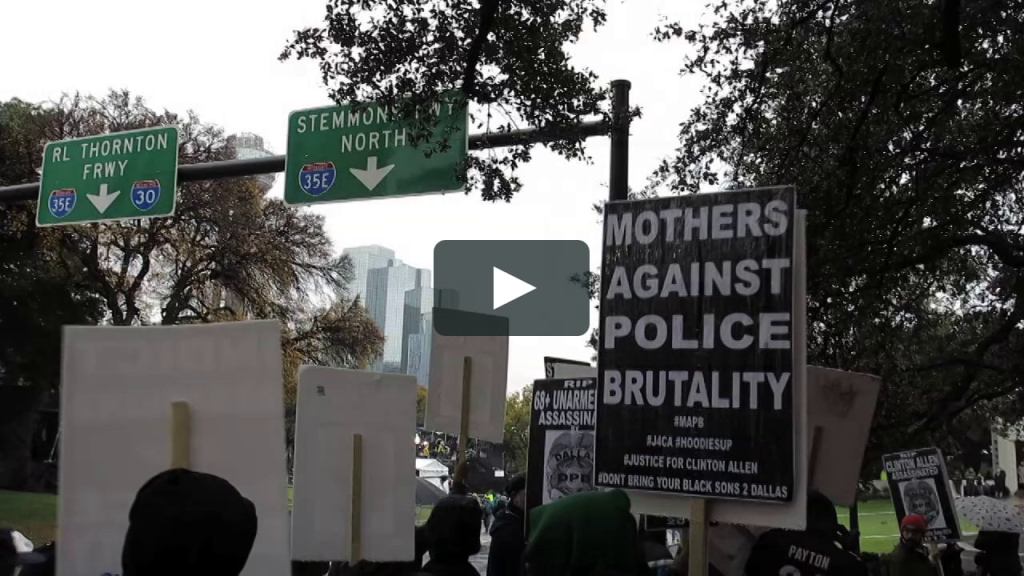
At the 50th Anniversary JFK March in 2014. Source: Google Images/Creative Commons

The Huffington Post carried an article discussing recent writings about the problem of policing and race in the U.S. It mentions the work of Christen Smith, professor of anthropology and African and African Diaspora Studies at the University of Texas Austin. She argues that addressing the problem of anti-black police violence also requires taking into account the traumatic and long-term deadly effects on the living, who are often women: “We know from the stories of black mothers who have lost their children to state violence that the lingering anguish of living in the aftermath of police violence kills black women gradually. Depression, suicide, PTSD, heart attacks, strokes and other debilitating mental and physical illnesses are just some of the diseases black women develop as they try to put their lives back together after they lose a child.”


Can cultural “appropriation” ever be called theft?

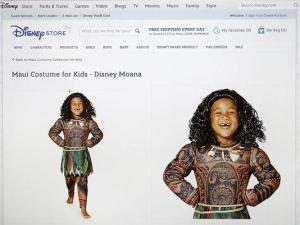
Screenshot of the costume for the character Maui from the film "Moana" on the Disney online store. It was pulled on September 21. Source: Hawaii Public Radio/AP
Screenshot of the costume for the character Maui from the film “Moana” on the Disney online store. It was pulled on September 21.
Source: Hawaii Public Radio/AP

Hawaii Public Radio reported on Disney’s pulling of its Moana costume for children because of the negative reaction to it as racist and derogatory. The piece quotes Tevita Kā‘ili, associate professor of  cultural anthropology and department chair at Brigham Young University Hawai‘i: “This costume should have never been made in the first place…It’s difficult for me to see how Disney can benefit and make a lot of money off of someone else’s culture…Especially someone as significant as Maui.”

Continue reading “anthro in the news 9/26/16”

anthro in the news 12/21/2015


Source: Google Images/Creative Commons

Syrian refugees in poverty

Marketplace (American Public Media) published a piece on the dire economic situation of Syrian refugees in Jordan and Lebanon. According to a new report from UNHCR, Syrian refugees in Lebanon and Jordan have limited opportunities to work since only a small group of refugees has work permits. It quotes Dawn Chatty, professor of anthropology and forced migration at the University of Oxford: “While refugee camps can provide a haven for the displaced population, the reality is that many Syrians in Jordan don’t have access to them…In Lebanon, refugee camps don’t exist…Many are surviving with irregular part-time jobs…and bad pay.”


No lip kissing, please, we’re Indian

James Bond gets only a half kiss in Spectre. Source: News Nation

The Times of India carried an article about a talk at the Godrej Culture Lab in Mumbai by William Mazzarella, professor of anthropology at the University of Chicago and author of Censorium: Cinema and the Open Edge of Mass Publicity. He noted how the censorship story has been unfolding in Indian film:  “Censorship itself is a kind of publicity that thrives on visibility…Censorship seems to be flourishing despite the fact that it hasn’t been able to silence or control a great deal of our public conscience space. So maybe we need to think differently about what the censors are up to.”  He speculated on James Bond’s half kiss in the version of Spectre that made it to Indian movie halls.


Continue reading “anthro in the news 12/21/2015”

Anthro in the news 11/10/14

  • Managing the Himalayan Viagra harvest

The International Business Times carried an article about the harvesting of the plant in two isolated Tibetan communities that is the basis for Viagra. The medicinal fungus is fetching big money in the Chinese market. The fungus used as an aphrodisiac, yartsa gunbu (Ophiocordyceps sinensis) results from a fungal infection in ground-burrowing ghost moth caterpillars. Research from Washington University in St. Louis reports on the unique management plan to conserve the natural resource. Most villages in the region earn 80% of their annual income during the caterpillar fungus spring harvest season. Continue reading “Anthro in the news 11/10/14”